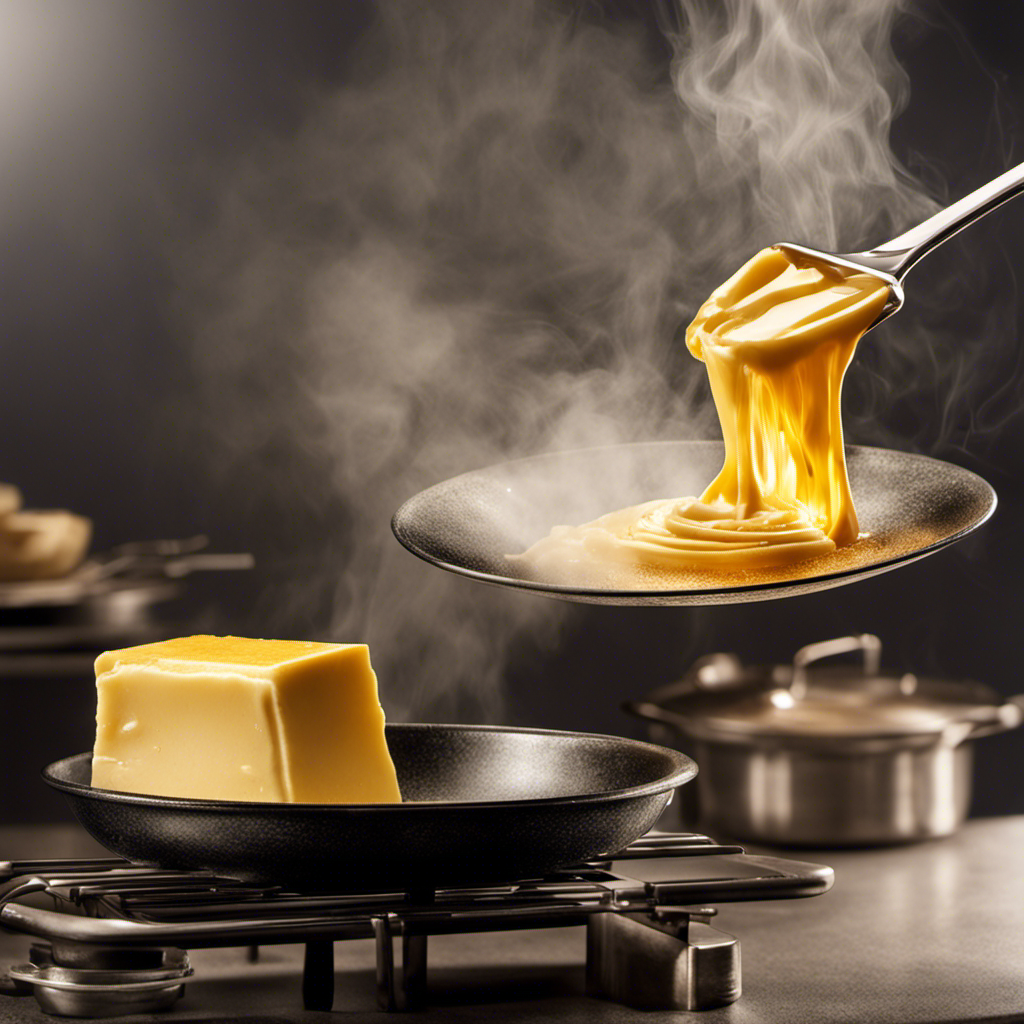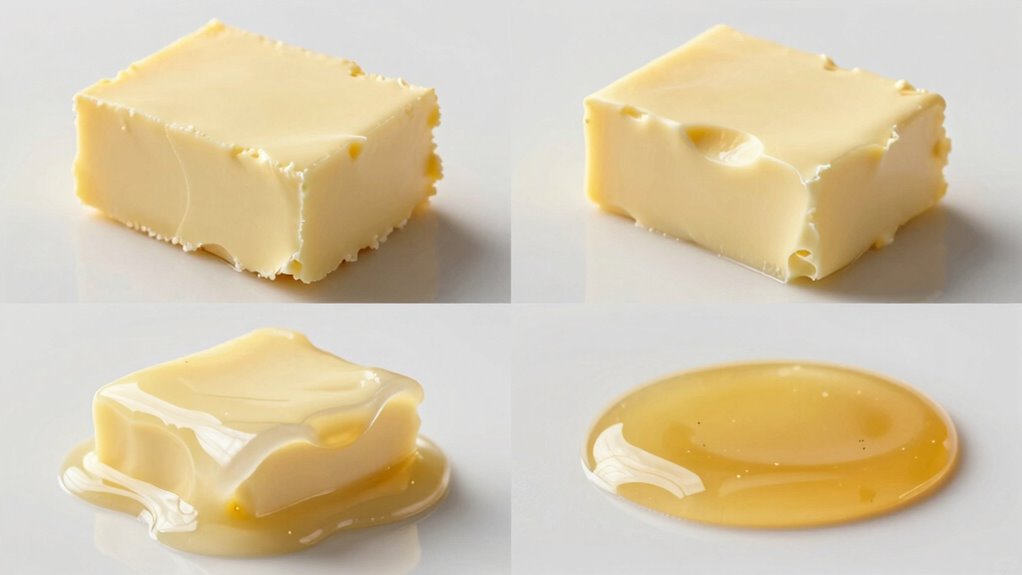

When your butter is kept at cooler room temperatures (65°F-70°F), it stays firm yet soft enough to spread easily, keeping its freshness and avoiding separation or melting issues. If the temperature rises above 70°F, it becomes softer, greasy, and more prone to melting or breaking down, with fats separating from water and solids. Exceeding 90°F causes it to liquefy, losing its structure altogether. Understanding these effects helps you choose the best storage, and there’s more to uncover if you continue exploring.

Get kitchen staples and gadgets delivered free with Prime
- Fast, free delivery on millions of items
- Prime Video, Amazon Music and more included
- Member-only deals all year
Key Takeaways
- At 65°F-70°F, butter stays firm yet spreadable, maintaining freshness and preventing spoilage.
- Above 70°F, butter begins to soften, melt, and develop a greasy surface due to increased temperature.
- Exceeding 90°F causes butter to liquefy, losing its firm, textured consistency.
- Warmer temperatures induce fat separation, creating an oily layer and runny texture.
- Proper storage at moderate temperatures preserves butter’s quality and prevents microbial growth.
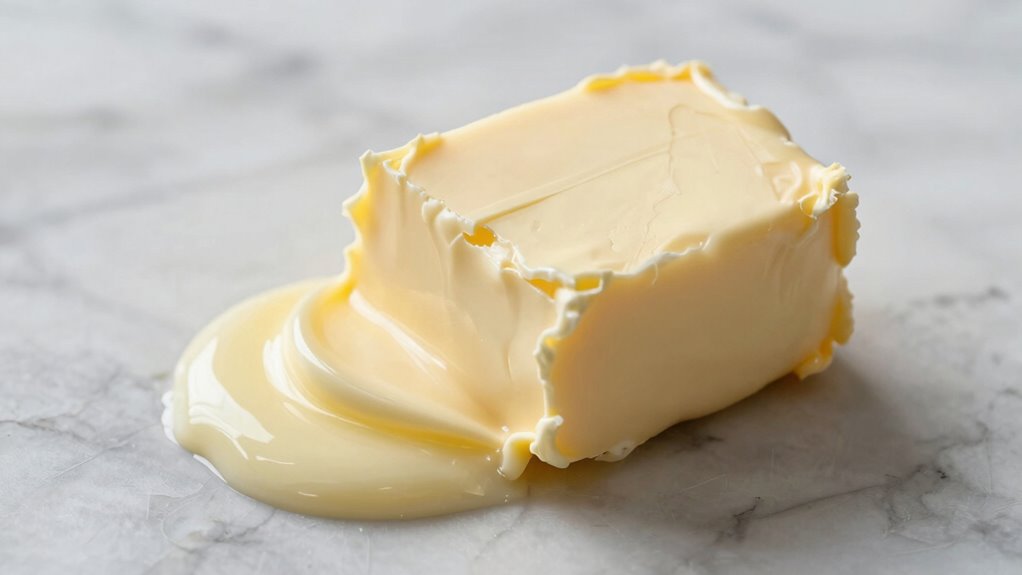
Butter’s texture and spreadability change markedly depending on the room temperature. When you take butter out of the fridge and leave it at a cool room temperature, it becomes softer, making it easier to spread on bread or toast. However, if the room gets warmer or the butter sits out too long, you might notice it starting to melt or become greasy. This change is directly related to butter’s melting point, which is typically around 90°F (32°C). Once the temperature exceeds this point, the butter begins to liquefy, losing its firm, spreadable consistency.
Butter softens at room temperature, making it easy to spread, but melts and becomes greasy if it gets too warm.
As butter warms closer to its melting point, you might observe a phenomenon called cream separation. When butter reaches higher temperatures, the fats begin to separate from the water and milk solids. This separation manifests as a greasy, oily layer on the surface and a more runny texture overall. If you’re baking or cooking and notice this separation, it’s often a sign that the butter is too warm and has started to break down, which can affect the final texture of your dish. The separation can also cause uneven melting if you’re melting butter for cooking, leading to a greasy, uneven result. Temperature control is essential in preventing such issues and maintaining butter’s optimal quality.
At cooler room temperatures—around 65°F to 70°F (18°C to 21°C)—butter stays firm but soft enough to spread with ease. This is why many people prefer to keep butter in a butter dish on the countertop for convenience. The butter remains at a stable state where it’s neither too hard nor too runny. If the temperature drops below this range, butter becomes quite firm and more difficult to spread, but it won’t suffer from cream separation or melting issues. Conversely, if the temperature rises above this range, the butter becomes increasingly prone to melting and separation, making it less suitable for spreading and more prone to spoilage if left out too long. Maintaining proper storage temperature is crucial to prevent spoilage and preserve freshness. Proper storage and temperature management also help prevent microbial growth and rancidity, which can compromise quality.
Understanding these temperature effects helps you decide how to store and use butter. Keeping it at moderate room temperature guarantees it remains soft enough for spreading without risking unwanted melting or separation. When butter melts or begins to separate, it can influence the texture and flavor of your recipes, especially in baking where consistency matters. Proper storage temperature is crucial to maintaining butter’s quality and avoiding spoilage. So, paying attention to room temperature isn’t just about convenience; it’s about maintaining the quality and integrity of your butter, ensuring your culinary creations turn out just right.
butter dish for countertop storage
As an affiliate, we earn on qualifying purchases.
As an affiliate, we earn on qualifying purchases.
Frequently Asked Questions
How Does Room Temperature Affect Butter’s Shelf Life?
Room temperature considerably affects butter’s shelf life. When kept warm, butter softens, becoming more susceptible to spoilage, especially since its texture changes and may develop mold or rancidity faster. Since butter’s melting point is around 90-95°F, it starts melting at higher temperatures, increasing the risk of spoilage. To prolong shelf life, store butter in a cool, dark place, ideally below room temperature, to maintain its texture and freshness longer.
Can Butter Be Stored Safely at High Room Temperatures?
Storing butter at high room temperatures is like trying to hold onto a snowflake—it’s risky. When the temperature exceeds butter’s melting point, its texture turns from firm to greasy, making it unsafe and less flavorful. The warmth accelerates spoilage and encourages bacterial growth. For best quality and safety, keep butter below 70°F; otherwise, it’s prone to spoilage, and its texture becomes unappetizing and unstable.
Does Butter’s Flavor Change With Temperature Fluctuations?
Yes, butter’s flavor profile changes with temperature fluctuations. When it’s cold, it tastes rich and creamy, but as it approaches its melting point, the flavor becomes more intense and slightly richer due to increased aroma release. At higher temperatures, butter melts, which can cause a loss of flavor and a greasy texture. So, keeping butter at a stable temperature helps preserve its delicate flavor and ideal texture.
How Quickly Does Butter Spoil at Various Room Temperatures?
At room temperatures above 70°F, butter can spoil within a day or two, especially if exposed to light and air. As butter melts, it becomes more vulnerable to bacterial growth, speeding up spoilage. Cooler room temperatures slow down butter crystallization, preserving freshness longer. If kept in a warm environment, butter’s flavor and texture change quickly, and it may develop off-flavors or rancidity in just a few days.
Is It Better to Store Salted or Unsalted Butter at Room Temperature?
You’ll find salted butter is better to store at room temperature because its added salt helps preserve its butter texture and extends its melting point, keeping it firm and spreadable longer. Unsalted butter, lacking preservatives, quickly softens and spoils, making it less ideal for room temperature storage. Keep salted butter nearby for convenience, ensuring it stays fresh, smooth, and ready to spread, while unsalted butter benefits from refrigeration.
Conclusion
So, next time you leave butter out, think about what’s really happening beneath the surface. Will it stay firm and fresh or soften into a tempting spread? The answer depends on those fleeting hours and the temperature’s sneaky influence. Keep a close eye—you might be surprised by what’s unfolding right in front of you. Your butter’s story isn’t over yet, and the next move could change everything. Are you ready to discover its secret?
NFL season / tailgating Picks
team gear
As an affiliate, we earn on qualifying purchases.