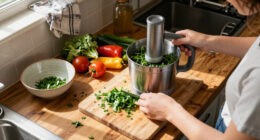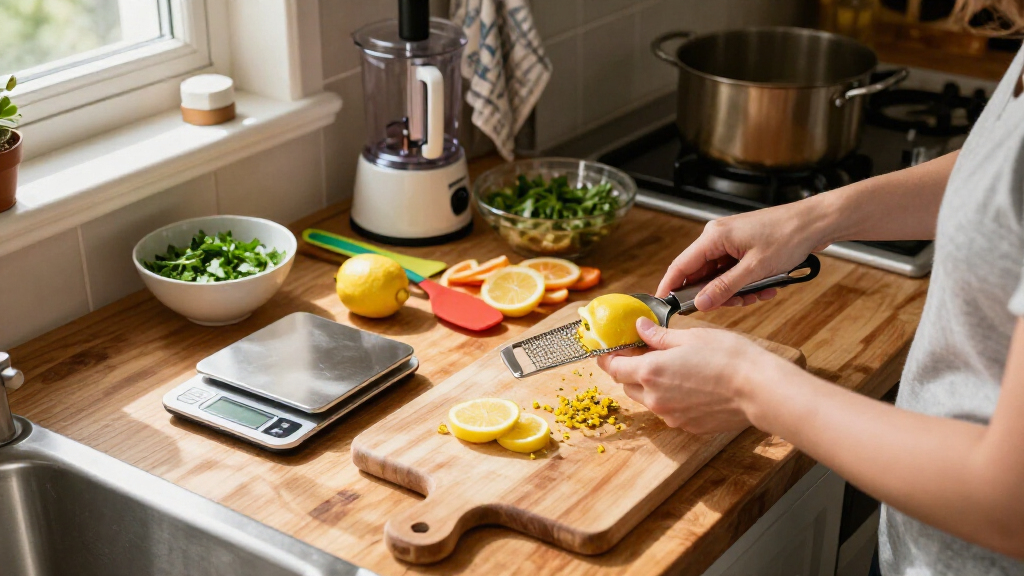
Home cooks comparing kitchen gadgets are usually deciding whether to buy a few tools that serve many purposes or add specialized devices that make particular jobs faster. Versatile everyday gadgets—such as a chef’s knife, digital scale, instant-read thermometer, and sturdy peeler—support a wide range of meals. Specialty tools, such as an immersion blender, mandoline, rice cooker, or garlic press, can simplify a narrower set of tasks.

Get kitchen staples and gadgets delivered free with Prime
- Fast, free delivery on millions of items
- Prime Video, Amazon Music and more included
- Member-only deals all year

Umite Chef 26-Piece Stainless Steel Mixing Bowl Set with Airtight Lids and Grater Attachments
- ✔ Bowl sizes: 1, 1.5, 2, 2.5, 4, and 7 qt
- ✔ Pieces: 26
- ✔ Material: Stainless steel

Fullstar Pro Original Vegetable Chopper and Spiralizer
- ✔ Capacity: 5 cups
- ✔ Blade material: 420 stainless steel
- ✔ Body material: BPA-free and PFAS-free ABS plastic

TrendPlain 16 oz Olive Oil Sprayer and Dispenser with Silicone Pad, Black
- ✔ Capacity: 470 ml (16 oz)
- ✔ Materials: Glass, plastic, metal, and fabric
- ✔ Dimensions: 4.08 in W × 7.21 in H
The practical difference is how often a tool earns its space. A reliable thermometer can improve weeknight chicken, weekend roasts, and candy making; a specialty appliance may save meaningful time if its task appears on your menu every week, but sit unused otherwise. Choose versatile basics if you want a compact, adaptable kitchen. Choose specialty tools when a repeated cooking habit gives a particular device a clear job. The right setup is usually built around actual routines rather than a long gadget list.
At a Glance
| Criteria | Versatile everyday kitchen gadgets | Specialty kitchen gadgets | Winner |
|---|---|---|---|
| Range of tasks | Broad; useful across many ingredients and recipes | Narrower; designed around particular jobs | A |
| Speed on a specific task | Good, though often requires manual work | Often excellent for its intended task | B |
| Upfront cost | Usually lower for a useful starter set | Can rise quickly as devices accumulate | A |
| Storage needs | Generally compact and easy to store | Ranges from compact to bulky appliances | A |
| Learning curve | Low to moderate; familiar techniques transfer | Varies; settings or technique may take practice | A |
| Cleaning and upkeep | Often simple, with fewer parts | Can involve blades, attachments, or extra parts | A |
| Value over time | Strong when the tools are used regularly | Strong when the task is frequent; weak when it is rare | Depends |
Umite Chef 26-Piece Stainless Steel Mixing Bowl Set with Airtight Lids and Grater Attachments
For home cooks who want one purchase to support several stages of a meal, the Umite Chef 26-piece set covers more ground than either the Fullstar chopper or the TrendPlain dispenser. Six nesting bowls handle different batch sizes, while the grater attachments let us slice or grate directly into a bowl. Airtight lids extend that work into ingredient storage and leftovers, giving the set a role beyond mixing.Its breadth comes with a care routine to understand. The bowls are dishwasher safe, but the lids should be hand washed, and the stainless steel bowls should be dried promptly to help avoid stains or corrosion. Compared with Fullstar, this set is less specialized for fast, repeat dicing; compared with TrendPlain, it takes more cupboard space and has more components to manage. It makes the strongest overall case when a cook needs versatile prep vessels and storage in one kit, not when they want a single compact tool.
Pros:
- Six nesting bowl sizes support small ingredients through larger batches.
- Airtight lids make the bowls useful for storing ingredients and leftovers.
- Three grater attachments allow grating or slicing directly into a bowl.
- Non-slip silicone bottoms help steady bowls while mixing.
Cons:
- Lids require hand washing and may warp if put in the dishwasher.
- Bowls need prompt cleaning and drying to help prevent rust stains or corrosion.
Best for: Home cooks who regularly mix, stage, grate, and store ingredients and have room to keep a nested bowl set.
Not ideal for: Cooks who already own adequate mixing bowls, want a single-purpose gadget, or prefer dishwasher-safe lids.
Bottom line: Choose the Umite Chef set when broad prep and storage coverage matters more than minimizing pieces or cleanup steps.
“Choose the Umite Chef set when broad prep and storage coverage matters more than minimizing pieces or cleanup steps.”
Fullstar Pro Original Vegetable Chopper and Spiralizer
When chopping vegetables is the repetitive step a home cook most wants to shorten, the Fullstar Pro Original has a clearer purpose than the other picks. Its stainless steel blades dice into a five-cup container, which can also serve as a storage bowl. A spiralizer adds another way to prepare vegetables, and the blades store inside the container to keep the compact kit together.That focused design is also its main limit. The classic model emphasizes dicing and spiralizing; buyers seeking mandoline-style slicing should compare other variations. Unlike Umite Chef, it does not provide a collection of mixing bowls for multiple cooking stages. And unlike TrendPlain, it is not about controlling a finishing ingredient: it earns its space when vegetables are chopped often enough to justify a dedicated tool. Top-rack dishwasher-safe parts support easier cleanup, while the included cleaning tools are useful around the blades.
Pros:
- Rust-resistant 420 stainless steel blades support repeat vegetable prep.
- Five-cup container catches chopped food and doubles as a storage bowl.
- Blades store inside the container to keep parts together compactly.
- Non-skid base and soft-grip handle support steadier use.
Cons:
- The classic model focuses on dicing rather than mandoline and slicing tasks.
- The blade assembly still needs careful cleaning after use.
Best for: Home cooks who frequently dice vegetables and want a contained, compact chopper with a spiralizer option.
Not ideal for: Anyone who primarily needs slicing or mandoline functions, or who prefers a knife and has little use for a dedicated chopper.
Bottom line: Pick Fullstar when dicing is the recurring kitchen bottleneck and a specialized tool is more useful than a versatile bowl set.
“Pick Fullstar when dicing is the recurring kitchen bottleneck and a specialized tool is more useful than a versatile bowl set.”
TrendPlain 16 oz Olive Oil Sprayer and Dispenser with Silicone Pad, Black
The TrendPlain Oil Sprayer addresses a smaller but distinct cooking decision: whether oil should be spread as a mist or poured in a stream. Its two dispensing modes let us use the same bottle for broad coverage or more direct application, and the stated 0.15 g per full press gives a reference point for repeatable use. A wide opening also makes refilling more straightforward than a narrow-neck bottle.Compared with the Fullstar chopper, TrendPlain does not speed up ingredient preparation; its value comes in how oil is applied. It is less broadly useful than the Umite Chef set, but it occupies a narrower role and includes a silicone pad to help steady it on the counter. The tradeoff is upkeep: the glass bottle and lid require hand washing, and the filter needs regular cleaning. Choose it for dispensing control, not if dishwasher convenience or a single low-maintenance pour bottle is the priority.
Pros:
- Fine mist and steady pour modes handle different oiling tasks.
- A full press dispenses a stated 0.15 g for more controlled application.
- Wide opening supports refilling and cleaning the glass bottle.
- Included silicone pad helps steady the bottle and protect the counter.
Cons:
- Bottle and lid require hand washing; the lid is not dishwasher safe.
- The filter needs regular cleaning to maintain dispensing.
- Its focused function covers fewer kitchen tasks than the bowl set or chopper.
Best for: Home cooks who alternate between misting and pouring oil and want a refillable bottle with a stated spray amount per press.
Not ideal for: Anyone who wants dishwasher-safe parts, does not want to clean a filter, or rarely uses a spray application.
Bottom line: Choose TrendPlain when oil application control is a regular need and its hand-wash maintenance fits your routine.
“Choose TrendPlain when oil application control is a regular need and its hand-wash maintenance fits your routine.”
As an Amazon Associate we earn from qualifying purchases.
Key Differences
The biggest distinction is breadth versus speed. A scale, knife, and thermometer contribute to many recipes, so they tend to earn their place even as a cook’s interests change. A mandoline or rice cooker can outperform a general-purpose tool at one job, but only if that job comes up often enough. Specialty tools win on convenience within their lane; everyday tools win on flexibility across the kitchen.
Cost and storage amplify that difference. Buying a few durable basics typically costs less than collecting appliances and single-use gadgets, and compact tools are easier to keep accessible. But price alone does not determine value: if a rice cooker replaces a troublesome stovetop routine several times a week, the space and purchase cost may be worthwhile. The useful question is how much recurring effort the device removes, not how many features it advertises.
For many home cooks, a sensible sequence is to cover common needs first, then add one specialty tool at a time when a repeated task makes its benefit clear. This avoids clutter while leaving room for tools that genuinely change the cooking experience. A gadget that makes vegetables easier to prepare every evening can be more valuable than a theoretically versatile tool that stays in a drawer.
Detailed Comparison
Range of tasks (Versatile everyday kitchen gadgets wins — major)
Versatile gadgets win by a major margin in range. A chef’s knife can prep vegetables, herbs, and proteins; a digital scale helps with baking, portioning, and coffee; a thermometer works across multiple cooking methods. Specialty tools usually target a smaller set of tasks. That focus is useful, but it does not substitute for a flexible foundation.
Speed on a specific task (Specialty kitchen gadgets wins — moderate)
Specialty gadgets usually win, with a moderate to major advantage when the tool matches the task. A rice cooker can manage rice with little attention, and an immersion blender can puree soup directly in the pot. A general-purpose knife still works, but may take more hands-on time for repetitive slicing or chopping. The benefit matters most when the task is frequent.
Upfront cost (Versatile everyday kitchen gadgets wins — moderate)
Versatile basics win by a moderate margin for cooks starting from scratch. A small set of quality hand tools can cover everyday needs without the expense of several appliances. Specialty gadgets vary widely in price, and accumulating several can raise the total. A single well-chosen appliance can still be a sensible purchase if it replaces a task the cook regularly dislikes.
Storage needs (Versatile everyday kitchen gadgets wins — moderate)
Versatile gadgets generally win by a moderate margin. A scale, peeler, and thermometer fit in a drawer, while an appliance or mandoline may need a dedicated shelf and safe blade storage. Some specialty items are compact, so the gap is not universal. In a small kitchen, measure available storage and consider whether the tool can stay accessible without crowding everyday work areas.
Learning curve (Versatile everyday kitchen gadgets wins — minor)
Versatile tools usually have a minor advantage because they support familiar, adaptable techniques. Specialty gadgets may involve settings, attachments, or safe handling practices; a mandoline, for example, requires care around its exposed blade. Once learned, a device can simplify the task. The difference is small for an intuitive tool and larger for equipment with multiple functions.
Cleaning and upkeep (Versatile everyday kitchen gadgets wins — moderate)
Versatile hand tools tend to win by a moderate margin. A knife or peeler is quick to wash, while appliances with lids, seals, or attachments can require more disassembly. A specialty device may still reduce the mess—for example, blending soup in its pot avoids transferring it to a countertop blender. Check whether removable parts are easy to clean before buying.
Value over time (major difference)
This depends on use frequency. Everyday gadgets often provide reliable value because they suit many recipes and remain useful as cooking habits change. A specialty tool can deliver better value if it repeatedly saves time or makes a preferred dish easier. If it handles a rare task, its effective cost per use may be high, regardless of its initial price.
Versatile everyday kitchen gadgets: Pros and Cons
Pros:
- Supports many recipes and cooking styles
- Usually takes little storage space
- A small starter set can keep costs manageable
- Simple tools are often quick to clean
Cons:
- Manual prep can take longer for repetitive jobs
- May not deliver the speed or consistency of a dedicated device
- A versatile tool still needs proper technique
Specialty kitchen gadgets: Pros and Cons
Pros:
- Can make a frequent task faster and easier
- Often gives consistent results for its intended use
- May reduce hands-on attention or simplify a cooking routine
Cons:
- Adds purchase cost and may take up storage space
- Some models have parts that take longer to clean
- A narrow-purpose gadget can go unused if habits change
Who Should Choose What
Choose Versatile everyday kitchen gadgets if:
- You are equipping a first kitchen and need tools for varied meals
- You have limited counter or cupboard space
- You want to keep spending focused on items with broad use
- You prefer hands-on techniques and simple cleanup
Choose Specialty kitchen gadgets if:
- You prepare the same specialty dish or ingredient often
- A particular repetitive task takes time or makes cooking less enjoyable
- You have enough storage and can name a regular use for the device
- Convenience for a specific job matters more than maximum versatility
Skip both if: Skip adding gadgets if your current tools already handle the meals you cook; replace a worn essential or borrow a specialty tool before buying one for an occasional recipe.
Value for Money
Paying more for a specialty gadget is worthwhile when it solves a recurring problem. If a rice cooker is used several times a week, or an immersion blender makes homemade soup practical, its convenience may justify both its price and its storage footprint. The same device is poor value for someone who makes rice or blended soup only a few times a year. For new cooks and anyone unsure of their habits, versatile basics usually offer better value because they serve more recipes and are less likely to become dead weight. Buy the specialty tool when repeated use—not novelty—makes the savings in time, effort, or consistency clear.
Final Verdict
For most home cooks building a kitchen, versatile everyday gadgets are the better starting point. A good knife, scale, thermometer, and peeler cover more situations, cost less as a group than a collection of appliances, and are easier to store. Add specialty tools selectively when a recurring task gives them a reliable role. The deciding factor is frequency: choose breadth when your cooking varies, and buy task-specific convenience when you repeat the task often enough to benefit.
Frequently Asked Questions
Which kitchen gadgets should a home cook buy first?
Start with tools that support your regular meals, such as a chef’s knife, cutting board, digital scale if you bake, and instant-read thermometer. Priorities depend on what you cook, but a tool with uses across many recipes is a safer first purchase than a device for an occasional task.
Are specialty kitchen gadgets worth the extra cost?
They can be, when they make a repeated job faster, easier, or more consistent. Think about how often you would use the device and where it will live. A gadget used weekly can justify its cost; one used for a single holiday recipe may be better borrowed.
Should I buy a mandoline or just use a knife?
A knife is more flexible and does not require a dedicated slicer, but a mandoline can produce fast, even slices for frequent prep. Choose the mandoline if that consistency saves meaningful time and you can store and handle it safely. For occasional slicing, a sharp knife is usually enough.
How can I avoid buying kitchen gadgets I will not use?
Name the recurring task the gadget would handle and estimate how often it appears in your cooking. Check whether a tool you already own can do the job adequately. If the task is rare, borrow or rent the device first; if it becomes routine, buying it has a clearer case.
Evergreen bestsellers Picks

Bose QuietComfort Ultra Wireless Noise Cancelling Earbuds, 2nd Gen, with 20W 2-Port Wall Charger

iRobot Roomba 105 Combo Robot Vacuum and Mop with AutoEmpty Dock

KitchenAid Commercial Series 8-Quart Bowl-Lift Stand Mixer, White
As an affiliate, we earn on qualifying purchases.