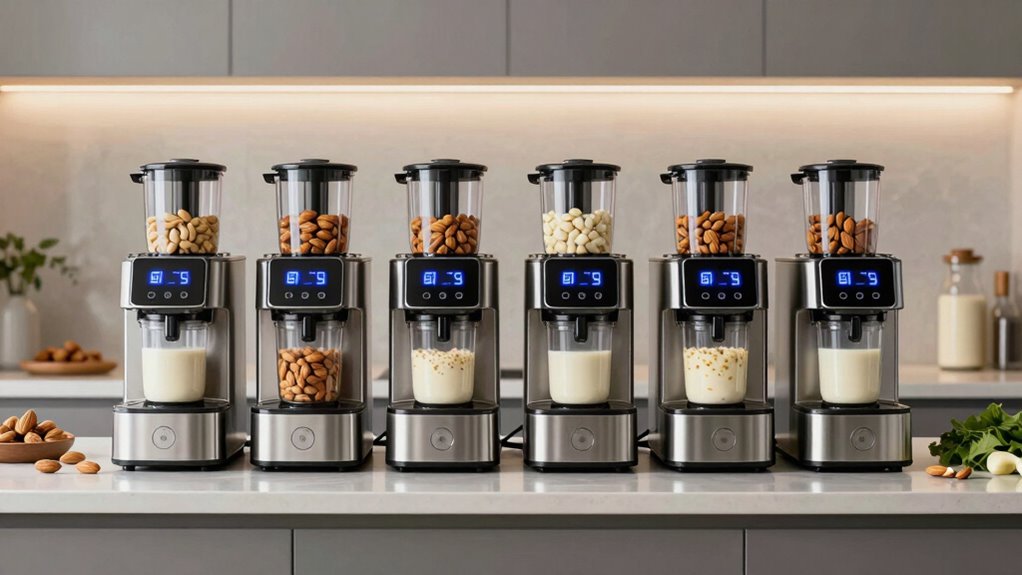

If you run a café, juice bar, small tofu shop, or market stall that sells fresh nut or soy milk, a commercial nut milk maker machine can replace slow blender-and-cheesecloth workflows with a single unit that grinds and filters in one pass. After comparing the current field, two machines stand out for different reasons. The Commercial Soy Milk Maker with 1100W Stainless Steel Wet Grinder earns my top spot because its dual corundum grinding wheels, adjustable grinding gap, and higher-output motor give you more texture control and more throughput. The Moongiantgo Commercial Soy Milk Maker is the value pick: it delivers a similar 25 kg-per-hour capacity and grind-and-filter operation at a more accessible price point, making it the smarter entry into commercial production. The main tradeoff between them comes down to control and durability versus simplicity and cost — and both demand the same discipline of pre-soaking beans and immediate cleanup after use.

Get kitchen staples and gadgets delivered free — and shop member deals
- Fast, free delivery on millions of items
- Access to Prime Big Deal Days deals on October 6–7
- Prime Video, Amazon Music and more included
Key Takeaways
- Both machines wet-grind and filter in a single pass at a stated 25 kg of soaked soybeans per hour, so throughput alone should not decide your purchase.
- The 1100W Stainless Steel Wet Grinder separates itself with dual 100 mm corundum wheels and an adjustable grinding gap for finer texture control — the better choice for serious daily production.
- The Moongiantgo offers the same capacity class with emery wheels and a bundled accessory kit, making it the lower-commitment option for first-time commercial buyers.
- Neither machine supports dry grinding, so you must plan for 6–12 hours of bean soaking before every production run.
- Both require immediate disassembly and rinsing after use; dried pulp in the filter mesh is the most common cause of degraded performance.
- Both run on 110V power, so buyers outside North America will need a voltage converter or a regional model.
| Commercial Soy Milk Maker, 1100W Stainless Steel Wet Grinder with Automatic Pulp Separation |  | Best Overall | Motor power: 1100W | Motor speed: 2800 RPM | Processing capacity: Up to 25 kg (55 lbs) of soaked soybeans per hour | VIEW ON AMAZON | See Our Full Breakdown |
| Moongiantgo Commercial Soy Milk Maker |  | Best Value | Motor speed: 2800 RPM | Stated capacity: 25 kg per hour | Grinding wheels: 100 mm emery | VIEW ON AMAZON | See Our Full Breakdown |
| commercial nut milk maker machine | Motor speed | Grinding wheels | Filtration | Included accessories |
|---|---|---|---|---|
| Commercial Soy Milk Maker | 2800 RPM | Dual 100 mm white corundum | 100-mesh filter system with automatic pulp separation | Spare grinding wheels, filter screens, wrench, instruction manual |
| Moongiantgo Commercial Soy Mil | 2800 RPM | 100 mm emery | 100-mesh internal filter | 2 grinding wheels, filter, bean residue storage bag, wrench, 5 screws, instruction manual |
More Details on Our Top Picks
Commercial Soy Milk Maker, 1100W Stainless Steel Wet Grinder with Automatic Pulp Separation
This is the machine I would put at the center of a busy operation. The 1100W motor spinning at 2800 RPM feeds a pair of 100 mm white corundum grinding wheels, and that two-wheel setup is what separates it from the Moongiantgo. Dual wheels give the slurry two passes through the grinding gap, which translates to a smoother, more consistent milk texture without running the beans through twice — a real time saver when you are processing batch after batch.
The feature that matters most day to day, though, is the adjustable grinding gap. If your customers want silky soy milk for drinking, you tighten it; if you are feeding a tofu press or want a coarser nut milk with more body, you open it up. The Moongiantgo offers no equivalent adjustment, so its texture is what it is. That single difference makes this machine far more flexible for a menu that spans drinks, tofu, and plant-based cooking bases.
The automatic pulp separation with a 100-mesh filter works during grinding, so milk exits ready for boiling while dry-ish pulp collects for disposal or repurposing. Compared with the Moongiantgo’s similar internal filter, this unit’s stainless steel housing and overload protection feel more built for sustained commercial duty, and the included spare grinding wheels and filter screens mean you are not scrambling for replacements mid-season. The tradeoffs are the same as any wet grinder: no dry grinding, a mandatory 6–12 hour soak, and hands-on cleaning immediately after every run. This pick makes the most sense for producers who will use the machine hard and want texture control the cheaper option cannot offer.
Pros:- Dual corundum grinding wheels deliver a finer, more consistent grind in a single pass
- Adjustable grinding gap lets you control texture for drinking milk, tofu, or cooking bases
- Processes up to 25 kg of soaked soybeans per hour with grinding and pulp separation in one operation
- Includes spare grinding wheels and filter screens, reducing downtime when parts wear
Cons:- Wet grinding only — no dry grinding capability
- Beans require 6–12 hours of soaking before use, so production must be planned ahead
- Requires immediate disassembly and cleaning after each use to prevent pulp buildup
Best for: Cafés, tofu producers, and market vendors running multiple batches daily who need texture flexibility and a machine built for sustained commercial use.
Not ideal for: Home users or occasional makers who find the capacity oversized, or anyone hoping to grind dry grains or skip the overnight soaking step.
- Motor power:1100W
- Motor speed:2800 RPM
- Processing capacity:Up to 25 kg (55 lbs) of soaked soybeans per hour
- Grinding wheels:Dual 100 mm white corundum
- Filtration:100-mesh filter system with automatic pulp separation
- Power supply:110V / 60Hz
- Grinding type:Wet grinding only
- Housing:Stainless steel with overload protection
- Included accessories:Spare grinding wheels, filter screens, wrench, instruction manual
Our verdict“The strongest all-round choice: more power, more control, and more spare parts than its rival justify the top spot for serious daily production.”
Moongiantgo Commercial Soy Milk Maker
Where the 1100W grinder earns its keep through control and heavy-duty parts, the Moongiantgo Commercial Soy Milk Maker wins on simplicity and price-to-capacity ratio. It matches the same stated 25 kg-per-hour throughput at the same 2800 RPM motor speed, so a small shop that simply needs steady volume of fresh soy or nut milk is not sacrificing output by choosing it. The grinding comes from 100 mm emery wheels paired with an internal 100-mesh filter, so milk and pulp separate inside the machine just like on the top pick.
The honest difference is refinement. Emery wheels are a proven, long-lasting grinding surface, but the single fixed-grind design means you cannot tune texture the way the adjustable gap on the 1100W model allows. For most soy milk and almond milk applications that fixed setting is perfectly fine; if your menu depends on very fine drinking milk versus coarse bases, the top pick pulls ahead. What Moongiantgo does well is the out-of-box experience: the package includes a second grinding wheel, filter, bean residue storage bag, wrench, screws, and a manual, so you have everything needed to start and maintain a production run on day one.
At 32.3 pounds and under 28 inches in its longest dimension, it is also slightly easier to position on a counter or move for cleaning than bulkier stainless units. This model is better suited to first-time commercial buyers, smaller cafés, and anyone testing fresh nut milk as a menu item before committing to a bigger investment. The discipline it demands — soaking beans in advance and rinsing the grinding components immediately after use — is identical to its rival, so treat cleanup as part of the workflow rather than an afterthought.
Pros:- Matches the 25 kg-per-hour capacity class of pricier machines at a lower cost of entry
- Grinds and filters inside the machine, eliminating manual straining
- Complete accessory kit includes a spare grinding wheel, filter, residue bag, and tools
- Compact 32.3 lb build is easier to place and move than larger stainless units
Cons:- Fixed grind setting with no adjustable gap for texture control
- Beans must be soaked in advance and components cleaned immediately after every use
- No dry grinding support, same as the category standard
Best for: First-time commercial buyers, small cafés, and startups that want full 25 kg/hour capacity at a lower entry cost without needing adjustable grind settings.
Not ideal for: Producers who need fine texture control for varied products, or operators unwilling to commit to strict soaking and immediate-cleaning routines.
- Motor speed:2800 RPM
- Stated capacity:25 kg per hour
- Grinding wheels:100 mm emery
- Filtration:100-mesh internal filter
- Voltage:110V
- Item weight:32.3 lbs
- Package dimensions:27.9 x 13.3 x 13.25 inches
- Included accessories:2 grinding wheels, filter, bean residue storage bag, wrench, 5 screws, instruction manual
Our verdict“The smart entry point into commercial nut milk production: same capacity class as the top pick, fewer adjustments, and a friendlier price for smaller operations.”

How We Picked
Because only two machines fit this niche well, my comparison focuses on the differences that actually affect a daily production schedule rather than padding the list with borderline options. I judged each machine on five criteria: throughput under realistic conditions, texture control, pulp separation quality, ease of cleaning, and what comes in the box. I also weighed each machine against the realities of commercial use — soaking schedules, staff training, and the wear items like grinding wheels and filter screens that will need replacing over time. Motor specs mattered less than how the grinding system translates power into consistent milk texture, and included spare parts counted heavily because downtime on a busy machine is costly. Finally, I prioritized machines built for continuous wet grinding rather than repurposed home appliances, since heat, moisture, and daily disassembly quickly expose anything not designed for commercial duty.
Factors to Consider When Choosing Commercial Nut Milk Maker Machine
Both machines in this comparison belong to the same category of commercial wet grinders, so the real decision comes down to how you will use one. Here are the factors I would weigh before clicking buy.Throughput and Your Real Batch Sizes
A 25 kg-per-hour rating sounds generous, but translate it into your own schedule. One kilogram of soaked soybeans yields roughly two liters of soy milk, so 25 kg per hour means around 50 liters — far more than most small cafés need in a session. If your daily volume is under 20 liters, either machine is comfortably sufficient, and paying more for the 1100W model’s extra capability makes sense only for its texture control and durability, not its raw speed. Both machines share the same 2800 RPM motor speed, so throughput alone will not separate them.
Grind Adjustability and Texture
This is the biggest genuine difference between the two picks. The adjustable grinding gap on the 1100W model lets you move between fine drinking milk and coarser grinds for tofu or cooking bases. The Moongiantgo uses a fixed grind that suits standard soy and nut milk but cannot be tuned. If your menu is straightforward soy or almond milk, fixed is fine. If you produce multiple textures or plan to experiment, adjustability earns its price premium quickly.
Wet-Only Grinding and Soaking Logistics
Neither machine grinds dry ingredients, full stop. Beans and nuts must soak 6–12 hours before processing, which means your production schedule is set the night before. Factor in soaking containers, refrigeration for soaked batches in warm weather, and a rhythm where beans move from soak to grind to boil without sitting too long. Skipping or shortening the soak produces gritty milk and forces the grinding wheels to work harder.
Cleaning Workflow and Spare Parts
Both machines demand immediate rinsing and disassembly after use — dried soy pulp inside a 100-mesh filter is stubborn and degrades every subsequent batch. Check whether your staff can commit to a five-minute teardown at the end of every run before buying any wet grinder. Also look at what spare parts ship in the box: both picks include backup grinding wheels and filters, which matters because these are the wear items that will eventually need replacing.
Power Supply and Placement
Both machines run on 110V power, suited to North American outlets. Buyers in 220V regions need a converter or a regional variant, and running a converter on a 1100W motor is rarely ideal long-term. Measure your counter space too: these are dedicated workstations, not appliances you shuffle in and out of a cabinet, and proximity to a sink makes the mandatory cleanup far easier.
Frequently Asked Questions
Can these machines make nut milk like almond or cashew milk, or only soy milk?
Yes, both machines handle soaked nuts and grains in addition to soybeans, because they are fundamentally wet grinders with filtration rather than soy-specific appliances. Almonds, cashews, oats, and rice all pass through the grinding wheels and 100-mesh filters in the same way soaked soybeans do. The main thing to remember is that every ingredient still needs soaking, and harder or oilier nuts may grind slightly differently than soybeans, so expect a test batch or two to dial in your preferred consistency. For nut milk specifically, the adjustable gap on the 1100W model gives you more room to chase a silky drinking texture.
Why do the beans need to be soaked first — can I skip that step?
Soaking is not a suggestion; it is how the machine is designed to work. Dry beans are too hard for the corundum or emery grinding wheels to process into a smooth slurry, and forcing them through risks stalling the motor and prematurely wearing the wheels. A 6–12 hour soak softens the bean so it breaks down into fine particles and releases the starches and proteins that make the milk creamy. If you need same-day production, soak a batch the previous evening and hold it refrigerated so it is ready when you are.
How difficult is the cleanup after each use?
Cleanup is the honest cost of owning either machine, and it must happen immediately after every run. You rinse the grinding chamber, remove and wash the filter screen, and brush pulp from the wheel surfaces before it dries and hardens. Expect roughly five to ten minutes of hands-on work per session. The good news is that both machines ship with wrenches and spare parts that make disassembly straightforward, and the Moongiantgo even includes a residue storage bag for the spent pulp. Build this step into your staff routine and neither machine will feel burdensome.
Which machine should I choose if I am just starting out with fresh nut milk?
For a first commercial setup, the Moongiantgo is the lower-risk entry point. It delivers the same 25 kg-per-hour capacity class, grinds and filters in one machine, and arrives with a complete accessory kit, so your upfront commitment is smaller while you learn whether fresh nut milk sells in your market. Once your volume grows or your menu expands into products needing different textures, the 1100W model with its adjustable grinding gap and heavier-duty stainless construction becomes the natural upgrade. Choosing the cheaper machine first is not settling; it is matching your equipment to an unproven demand.
Does either machine boil or heat the milk, or is that a separate step?
Neither machine cooks the milk — both are grinders with built-in filtration, so what comes out is raw, cold slurry that has been separated from pulp. Raw soy milk must be boiled thoroughly before serving, both for safety and for flavor, since uncooked soy milk contains compounds that taste beany and should not be consumed. Plan a separate heating kettle or stockpot as part of your station. Nut milks like almond can often be served after straining without boiling, but check the specific ingredient and your local food-safety requirements.
Conclusion
After comparing these two machines side by side, the choice maps cleanly onto buyer type. Dedicated producers — tofu makers, busy cafés, and market vendors running multiple daily batches with varied products — should buy the 1100W Stainless Steel Wet Grinder, because the adjustable grinding gap, dual corundum wheels, and heavy-duty stainless housing pay for themselves in texture control and longevity. First-time and smaller commercial buyers — startups, small cafés, and anyone adding fresh nut milk to an existing menu — get everything they need from the Moongiantgo, which matches the capacity class at a lower commitment and includes a full accessory kit. Whichever you choose, go in with clear eyes about the shared realities of this category: plan your soaking schedule the night before, budget ten minutes for cleanup after every run, and remember that the milk still needs boiling separately. Handled with that routine, either machine will turn a slow blender-and-strainer workflow into a genuine production line.
Fall Picks
fall essentials
As an affiliate, we earn on qualifying purchases.