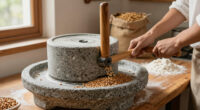
Baking steels heat up faster and transfer heat more quickly than stones, giving you quicker browning and a more aggressive bake. Stones, made from ceramic or cordierite, retain heat longer and help produce even, steady heat for a traditional crust. If you want quick results and crispy crusts, steels are ideal. For steady, consistent baking with less risk of cracking, stones work better. Keep exploring to discover tips for choosing the best option for your baking style.

Get kitchen staples and gadgets delivered free with Prime
- Fast, free delivery on millions of items
- Prime Video, Amazon Music and more included
- Member-only deals all year
Key Takeaways
- Baking steels heat up faster and transfer heat more quickly than stones, resulting in quicker baking times.
- Stones retain heat longer, providing a more stable and even baking surface over extended periods.
- Steels produce rapid browning and crisp crusts due to superior heat conduction.
- Stones deliver consistent, steady heat ideal for traditional, even crust development.
- The choice impacts baking speed, crust quality, and how quickly oven temperatures respond.
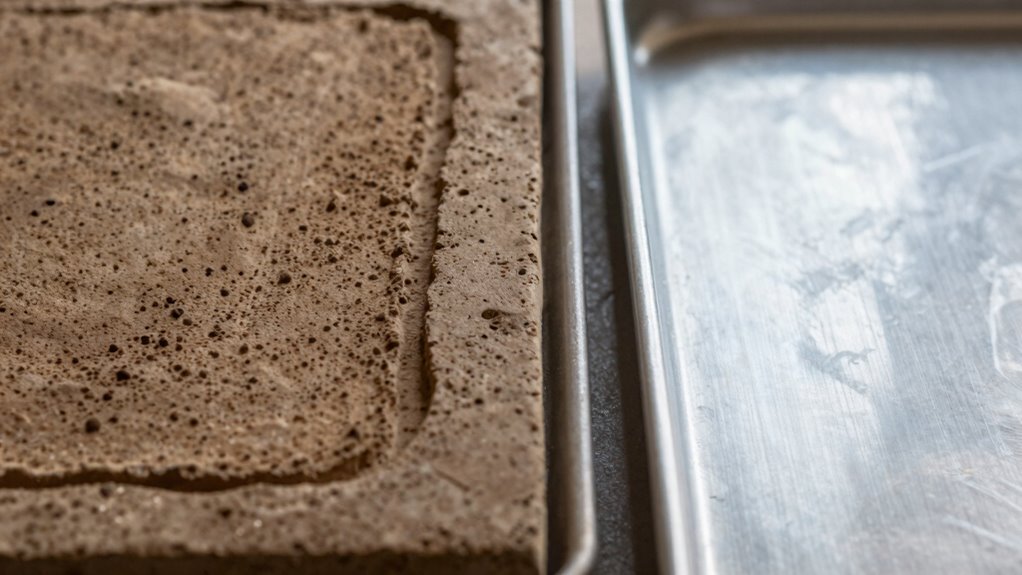
When it comes to achieving that perfect, crisp crust on your homemade bread or pizza, choosing the right baking surface makes all the difference. Baking stones and baking steels each have unique qualities that influence how your baked goods turn out, especially when it comes to heat retention and material durability. Understanding these differences helps you decide which one suits your baking style best.
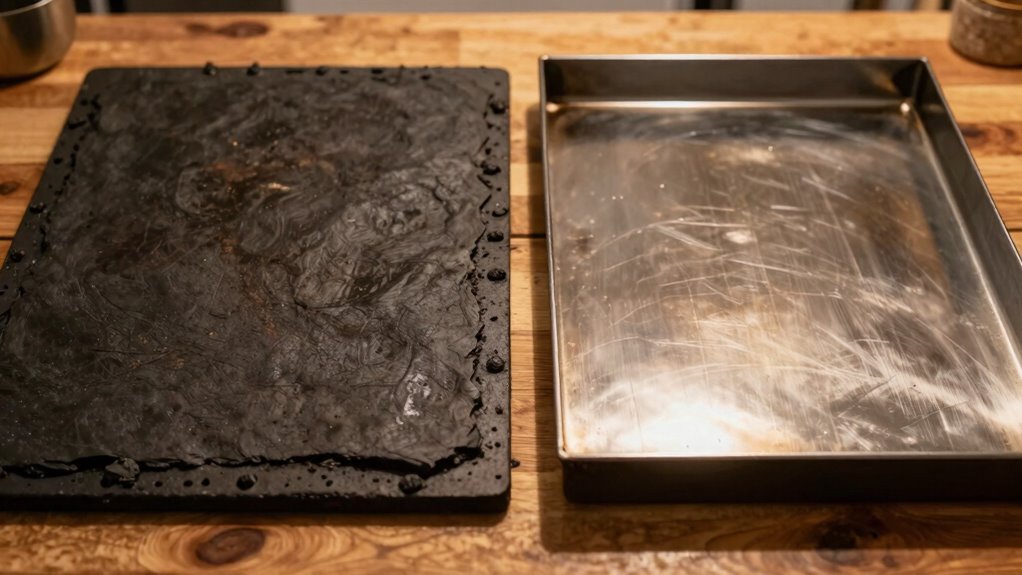
Baking stones are typically made from ceramic or cordierite, materials known for their excellent heat retention. When you preheat a stone, it absorbs and holds onto heat for a long time, creating a stable, high-temperature environment that promotes even baking. This slow, steady heat transfer allows your dough to develop that sought-after crust, mimicking traditional brick oven results. You’ll notice that once the stone reaches the right temperature, it maintains that heat consistently, which is crucial for a crispy crust. However, because of their ceramic makeup, stones are often more fragile and prone to cracking if subjected to sudden temperature changes. They require gentle handling and careful preheating to ensure durability over time. Heat retention is a key factor that influences how well a baking stone performs, and proper care and maintenance can extend the lifespan of your stone, ensuring consistent baking results. Additionally, selecting the right type of ceramic material can impact the overall performance and longevity of your stone. Proper material selection can also help prevent issues like cracking and improve the stone’s overall lifespan.
Baking stones retain heat for steady, even baking but are fragile and require gentle handling.
Baking steels, made from steel alloy, are known for their exceptional durability and superior heat conduction. Steel conducts heat much faster than ceramic or stone, meaning you’ll see a quicker rise in temperature when you place the steel in the oven, and your baked goods will start to brown faster. Their material durability makes steels a long-lasting investment—they’re resistant to cracking and can withstand sudden temperature shifts without damage. This quick heat transfer results in a more aggressive baking environment, giving you a strong, immediate heat source that’s easier to maintain over many uses. While steels don’t necessarily retain heat as long as stones, their rapid heat conduction often compensates, ensuring your crust gets that crisp texture quickly. For many bakers, the thermal conductivity of baking steels is a decisive factor, especially when aiming for quick, consistent results. Proper temperature management is essential to maximize the benefits of steel baking surfaces and avoid over-browning or burning. Maintaining consistent oven temperatures and preheating the steel thoroughly can further optimize your baking results.
As an affiliate, we earn on qualifying purchases.
Frequently Asked Questions
Which Material Retains Heat Longer During Baking?
You’ll notice that baking steels retain heat longer than stones because of their superior heat retention capabilities. In a material comparison, steels have higher thermal conductivity and can store and release heat more efficiently during baking. This means your oven stays consistently hot, helping you achieve better crusts and even baking. If long-lasting heat retention matters most to you, a baking steel is the smarter choice for consistent, professional results.
Are Baking Steels More Durable Than Stones?
Baking steels are definitely more durable than stones, standing up to the heat of your oven like a fortress. Unlike stones that crack or break over time, steels resist warping and chipping, making them perfect for consistent baking. When you’re cooking pizza with your favorite toppings, a steel can handle higher oven temperatures without damage, ensuring your crust gets that perfect, crispy finish every time.
Can I Use Both Stones and Steels Interchangeably?
You can use both stones and steels interchangeably, but keep in mind their differences. Baking steels heat faster and deliver more consistent temperatures, boosting recipe versatility for various baked goods. Stones, however, offer a rustic aesthetic appeal that enhances presentation. While you can swap them, consider your specific baking needs and aesthetic preferences to choose the best option, or even use both for different purposes in your kitchen.
How Does Thickness Affect Heat Transfer?
Thicker baking stones or steels slow heat transfer, with a 50% increase in thickness roughly doubling heat retention. This is because thermal conductivity decreases as thickness grows, meaning heat takes longer to pass through. Thicker materials store more heat, creating a stable baking surface, but they also take longer to heat up initially. So, your choice impacts how quickly your oven responds and how evenly your bread bakes.
Do Stones or Steels Require Special Cleaning Methods?
You don’t need special cleaning methods for stones or steels, but proper maintenance tips help keep them in top shape. For stones, avoid soap; instead, scrape off food residue and wipe with a damp cloth after cooling. Steel surfaces can be scrubbed with a brush and mild detergent, then dried thoroughly to prevent rust. Regular cleaning routines guarantee even heat distribution and longevity, making your baking experience consistently successful.
Conclusion
So, after all the fuss about heat differences, you might find that whether you choose a stone or a steel, your bread still turns out pretty good. Ironically, it’s not always about the tool with the highest heat retention but about how you use it. Sometimes, it’s the simple act of patience and practice that truly makes the difference—no matter what’s beneath your dough. Who knew that the secret to perfect bread was just a bit of irony?
Halloween Picks
halloween
As an affiliate, we earn on qualifying purchases.