To keep sauces stable in a bain marie, you need to maintain the correct water level at all times. Too little water causes sauces to overheat and curdle, while too much cools them too quickly, affecting texture. Regularly checking and adjusting the water guarantees even heat and prevents spills or spoilage. Proper management extends your equipment’s lifespan and keeps your sauces perfect. If you want to master this essential skill, there’s more to discover below.
Key Takeaways
- Maintaining the correct water level ensures even heat transfer, preventing sauces from overheating or cooling too quickly.
- Low water levels can cause direct contact with heat, leading to curdling or burning sauces.
- Excessive water cools sauces rapidly, affecting texture and consistency.
- Regular water level checks prevent spills, overflows, and safety hazards.
- Proper water management is essential for consistent, high-quality sauce results in bain maries.
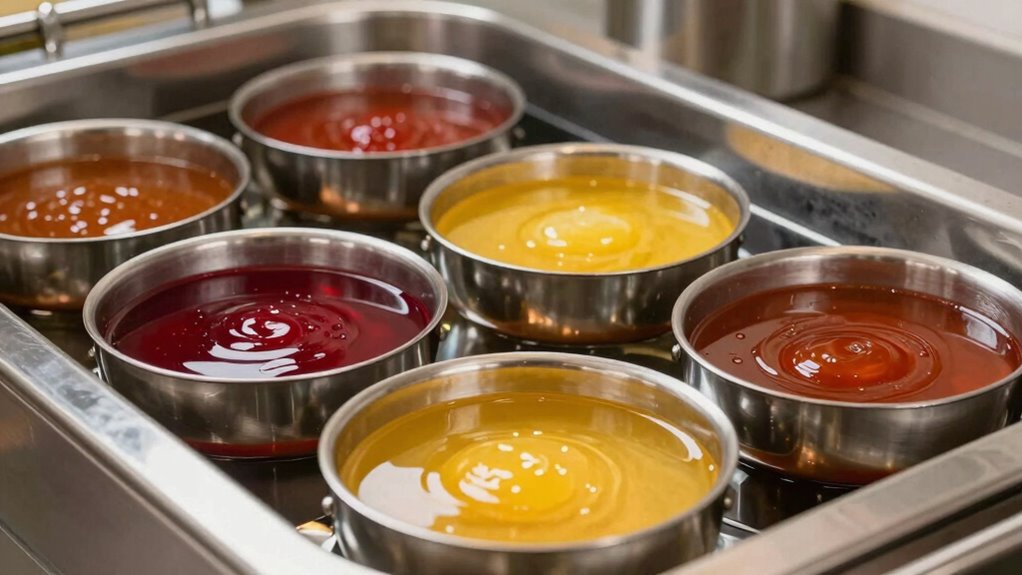
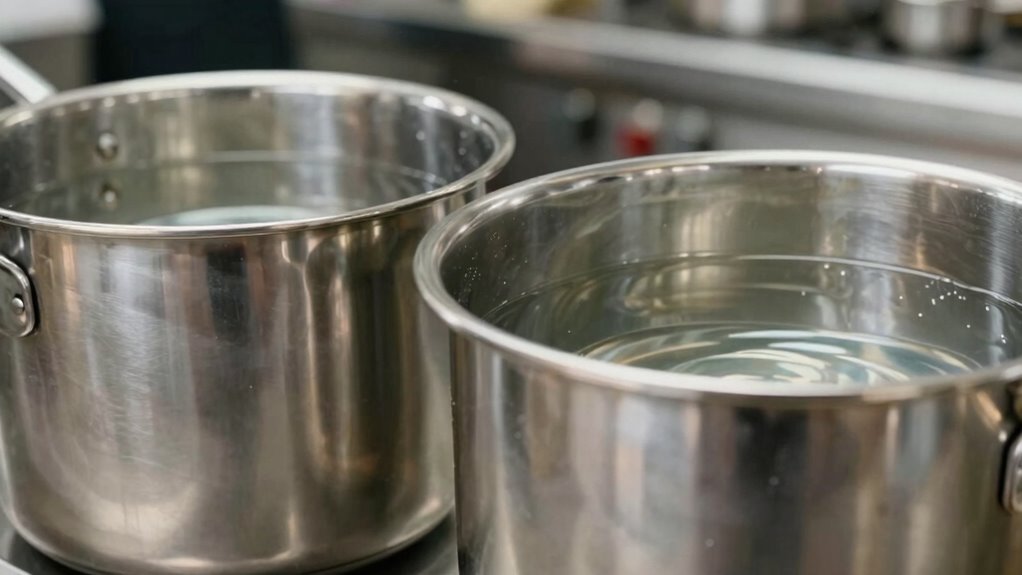
A bain marie only keeps sauces at the right temperature if the water level is maintained correctly. Without proper water levels, your sauces can either get too hot and curdle or cool down too quickly, losing their ideal texture and flavor. Understanding how to keep the water at the right level is essential to making the most of this cooking method, which has a rich history and modern adaptations. The historical origins of the bain marie trace back centuries, with its roots in alchemy and early cooking techniques. Originally, it was used in laboratories and kitchens to gently heat substances without direct contact with heat sources. Over time, this method became popular in French cuisine, where chefs recognized its ability to prepare delicate sauces and custards with precision. Today, the concept has evolved into various modern adaptations, from professional kitchen equipment to household devices. You’ll find electric bain maries that regulate water levels automatically, making it easier to maintain consistent temperatures. These modern versions are equipped with features like water level sensors and thermostats, reducing the risk of errors caused by human oversight. Despite these advancements, the core principle remains the same: maintaining the water level at an indispensable height is essential for the bain marie to function correctly. If the water level drops too low, the heat transfer becomes uneven, and the heat can directly contact your sauce or food, leading to burning or curdling. Conversely, if the water rises too high, it can spill over or cause excessive steaming, which might dilute flavors or affect cooking times. Regular water level checks are crucial to ensure consistent results, especially during extended use, as even slight variations can impact the outcome. Proper water level management is also important for preventing safety hazards, like spills or burns, especially with hot liquids. Additionally, understanding the types of containers used can help optimize heat distribution and make water level control easier. Maintaining proper water levels not only improves cooking results but also extends the lifespan of your equipment by preventing damage caused by improper use. You should also be aware of the type of container you use; shallow, wide containers allow for better heat distribution, making it easier to control water levels. Modern adaptations have made this task simpler, but the fundamental rule remains: keep the water at the right level, and you’ll enjoy stable, perfectly heated sauces every time. Whether you’re using a traditional double boiler or a sleek, electric model, understanding the importance of water level management connects you to a centuries-old technique that continues to be essential in both professional and home kitchens. By mastering this aspect, you preserve the integrity of your sauces and ensure they reach their full flavor potential. Proper water level maintenance is vital for optimal results and consistent cooking performance.
electric bain marie with water level sensor
As an affiliate, we earn on qualifying purchases.
As an affiliate, we earn on qualifying purchases.
Frequently Asked Questions
How Often Should I Check the Water Level in a Bain Marie?
You should check the water level in a bain marie at least every hour to guarantee proper temperature control and prevent overheating or drying out. Regular checks are essential for equipment maintenance, as low water levels can cause damage or uneven heating. Keep an eye on the water and top it up as needed to keep sauces stable and prevent any disruptions in service. Consistent monitoring ensures smooth operation.
Can I Reuse Water in the Bain Marie for Different Sauces?
You can reuse water in your bain marie for different sauces, but it’s not ideal. Water filtration helps remove any residue or impurities, maintaining proper sauce consistency. However, over time, reused water can affect sauce quality, leading to inconsistent textures or flavors. To guarantee the best results, change the water regularly, especially when switching sauces, and keep it at the right level to prevent temperature fluctuations and maintain stability.
What Type of Water Is Best for Maintaining Sauce Stability?
You should use filtered or distilled water in your bain marie to maintain sauce stability. Mineralized water with balanced mineral content helps prevent unwanted flavors, while proper pH balance keeps sauces from curdling or separating. Avoid tap water with high mineralization, as it can alter taste and consistency. By choosing water with the right mineralization and pH balance, you guarantee your sauces stay smooth, flavorful, and at the perfect temperature.
How Do I Prevent Water From Evaporating Quickly in a Bain Marie?
Did you know that a simple trick can prevent water from evaporating quickly in your bain marie? Regular water replenishment is key. Check the water level frequently and top it up with hot water when needed, especially during long service hours. Cover the bain marie with a lid or plastic wrap when not in use. These steps help evaporation prevention, ensuring your sauces stay warm and stable without constant refilling.
Are There Alternative Methods to Keep Sauces Warm Without Water?
You can use alternative heating methods like a double boiler or a slow cooker to keep sauces warm without water. These options provide gentle, consistent heat that prevents scorching. Additionally, guarantee good air circulation around the container to maintain even warmth. Using a heat lamp or infrared heater can also help, but always monitor temperature closely to avoid overheating. These methods help keep your sauces at the right temperature without relying on water levels.
Conclusion
If you keep the water level just right, your bain marie becomes a gentle cradle for your sauces, like a calm lake holding delicate reflections. But if the water dips or spills, it’s like a storm stirring the surface, causing chaos. Stay vigilant, and your sauces will stay smooth and steady, resting peacefully in their cozy, watery nest. When you master this balance, you’re the conductor of a culinary symphony, ensuring every note is perfectly in tune.