
🔍 Read the full analysis: Autumn Bruschette: Mushroom, Squash, And New-Oil Toasts on Mad Tasting
TL;DR
Autumn bruschette — thick charred bread topped with garlicky sautéed mushrooms or caramelized squash and finished raw with olio novo — capture Italy’s November new-olive-oil season. New oil is available only roughly mid-November through December, and it is used exclusively as a finishing oil, never for cooking.
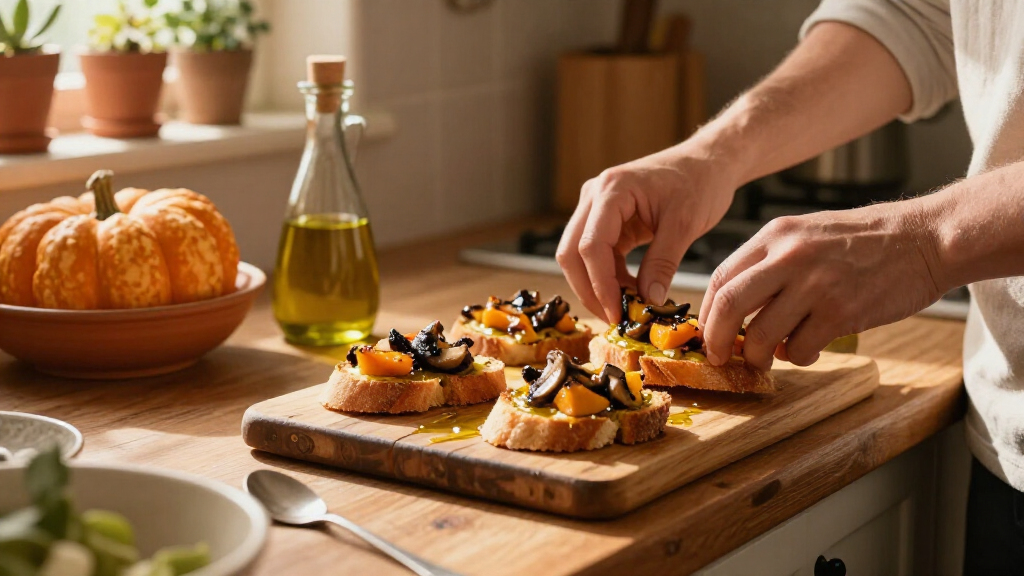
With olive presses now running across Tuscany and Umbria, Italy’s brief olio nuovo season has begun, and the dish that best captures it is the autumn bruschetta: thick charred bread piled with sautéed mushrooms or roasted squash and finished with a raw drizzle of freshly pressed, peppery new olive oil. According to a seasonal guide from Mad Tasting, the tradition hinges on a narrow window — roughly mid-November through December — when the oil’s aromatics are at their peak before they fade within two to three months.
Olio nuovo is olive oil pressed within days of the November harvest, bottled unfiltered, and consumed within weeks. It is cloudy, vividly green, and aggressively peppery — a quality oil, the guide notes, “makes you cough a little,” which Italians regard as proof of high polyphenol content and freshness. Those polyphenols and volatile aromatic compounds oxidize steadily from the moment of pressing, which is why new oil is described not as a marketing term but as a countdown.
The defining rule of the dish: new oil never touches a pan. Heat volatilizes the delicate aromatics that define the oil, and its price makes it uneconomical as a cooking fat. The method is therefore split — mushrooms are sautéed in ordinary extra-virgin oil, and the olio nuovo is drizzled raw over the finished toast at the table. The guide calls the contrast between the cooked, savory base and the sharp raw finish “the entire architecture of the dish.”
The bread is treated as equally structural. Bruschetta derives from bruscare, “to char” in Roman dialect, and the base should be a rustic, open-crumbled loaf at least a day old, cut into slices about 1 inch (2.5 cm) thick. Staleness matters: fresh bread carries too much moisture, while a day-old loaf toasts crisp and holds toppings. In Tuscany the traditional choice is pane toscano, the region’s saltless loaf — a legacy of medieval salt taxation — though the guide concedes most people prefer a salted country-style loaf. Charred grill marks are functional, not decorative: the bitter, smoky carbon primes the palate so the peppery oil tastes balanced rather than harsh.
Why the New-Oil Countdown Matters
The seasonal timing is the point. Outside its roughly two-month window, true olio nuovo is difficult to obtain abroad, and much of what is exported arrives after its aromatic peak, according to the guide. That makes November and December the only period when the dish can be made as intended in Italy — and the only time home cooks elsewhere can realistically hunt down a bottle with the peppery bite intact.
The tradition also carries a broader lesson about olive oil quality: the harvest date on the bottle matters more than price, because supermarket oil can legally sit in warehouses for over a year. An inexpensive oil pressed three months ago, the guide argues, will outperform an expensive one pressed two years ago. For vegetarian and vegan tables, the dish offers a complete seasonal centerpiece built on three or four ingredients.
From Tuscan Mills to the Table
In Tuscany and Umbria, the guide reports, the arrival of new oil is a genuine event. Frantoiani — millers — open their frantoi, or pressing facilities, for tastings, and families drive home with unlabeled bottles. The oil’s unfiltered cloudiness, which most supermarkets filter out, carries much of the fruitiest aroma in its suspended particles, at the cost of a shorter shelf life — a trade Italians accept on the principle that flavor now beats flavor later.
The window for true new oil exists because of peak aromatics, not regulation. Once the peppery bite fades after two to three months, the oil becomes ordinary extra-virgin — pleasant, but no longer the event the dish is built around.
Substitutes and Sourcing Limits
The guide is candid that real olio nuovo is hard to source outside Italy within its two-month window, and that much exported stock arrives past its aromatic peak. Its recommended substitute — a finishing-quality extra-virgin, ideally a Toscano IGP or single-estate Umbrian oil with a harvest date on the label — is a practical workaround, not an equivalent. How closely a substituted oil reproduces the dish’s intended peppery finish depends on the specific bottle and its freshness, which varies by retailer and cannot be guaranteed in advance.
Cooking Methods and Finishing Choices
Cooks planning to make the dish during the season should choose a toasting method suited to their kitchen. The guide compares options — a charcoal grill for smoky, striped authenticity on weekend cooking days, and a cast-iron grill pan for comparable char indoors — with each accepting tradeoffs in smoke and convenience. Sandwich bread, baguettes, and enriched loaves are ruled out because fat and sugar brown faster than water evaporates, causing collapse or burning. As the season progresses through December, shoppers can look for bottles with recent harvest dates, and those wanting the full experience can seek out Italian mills or specialty importers stocking olio nuovo before the aromatics decline.
Key Questions
What is olio nuovo and how long is it available?
Olio nuovo is olive oil pressed within days of the November harvest, bottled unfiltered and consumed within weeks. Genuine new oil is available roughly from mid-November through December; its peppery aromatics fade within two to three months of pressing.
Why should new oil never be cooked?
Heat volatilizes the fragile aromatic compounds that define the oil, destroying the qualities you paid a premium for. Cook the mushrooms in ordinary extra-virgin oil and drizzle the olio nuovo raw over the finished toast, as a finishing condiment like truffle oil or aged balsamic.
What is the best substitute if I can’t find olio nuovo?
Use the best finishing-quality extra-virgin olive oil you can buy — ideally a Toscano IGP or single-estate Umbrian oil. Check the harvest date on the bottle: freshness matters more than price, since supermarket oil can legally sit in storage for over a year.
What kind of bread should I use for bruschette?
A rustic, open-crumbled loaf that is at least one day old, sliced about 1 inch (2.5 cm) thick. In Tuscany, the traditional choice is the saltless pane toscano, though a salted country-style loaf works and most people prefer its flavor. Avoid sandwich bread, baguettes, and enriched loaves.
Is the dish suitable for vegans?
Yes. The guide notes the two classic autumn versions — garlicky sautéed mushrooms and caramelized squash — are built for vegetarian and vegan tables, since the core components are bread, vegetables, olive oil, and garlic.
Source: Mad Tasting