🔍 Read the full analysis: Bigoli In Salsa: Venice's Whole-Wheat Anchovy Pasta on Mad Tasting

Get kitchen staples and gadgets delivered free with Prime
- Fast, free delivery on millions of items
- Prime Video, Amazon Music and more included
- Member-only deals all year
TL;DR
Bigoli in salsa is a traditional Venetian pasta dish made with thick noodles, slow-cooked onions and preserved fish, often anchovies or sardines. Its defining balance is sweet, softened onion against the fish’s concentrated salt; pasta types and fish choices vary by recipe.
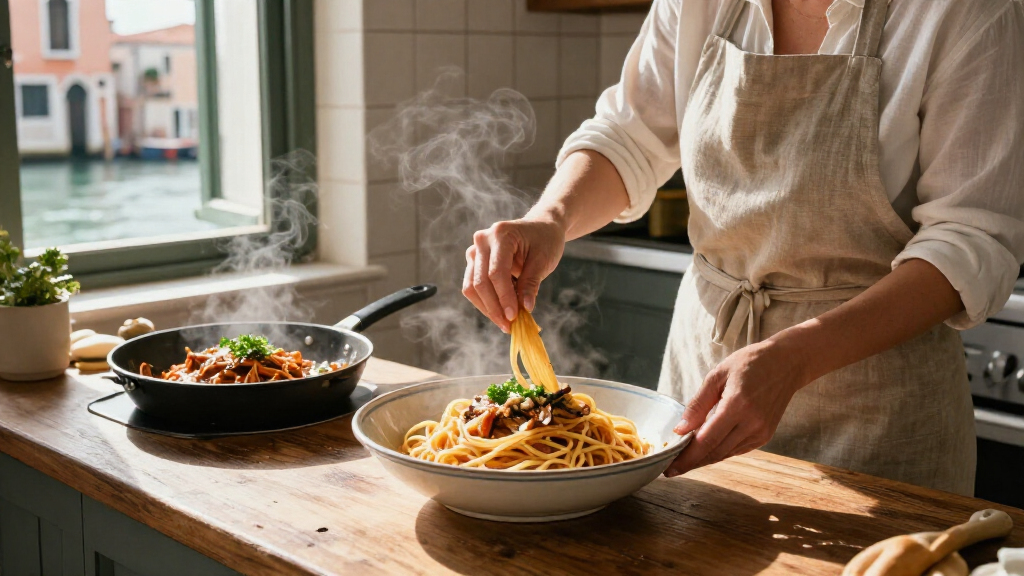
Bigoli in salsa, a traditional pasta dish from Venice, combines thick noodles with slowly cooked onions and salt-cured fish, commonly anchovies or sardines. A Mad Tasting account describes how the onions soften the fish’s saltiness and how the pasta’s substantial texture helps the sauce cling, while noting that recipes vary in both pasta flour and fish.
The sauce is built from onions cooked gently until soft and preserved fish stirred in so it can break down into the mixture. The intended result is savory and rounded, with onion sweetness tempering the fish, rather than a sharp, strongly fish-forward sauce. Pasta water can help the mixture coat the noodles; the account advises tasting before adding more salt because the fish and cooking water may already contribute plenty.
Bigoli are thick strands traditionally extruded through a tool called a bigolaro. They are often made with whole-wheat flour and water, but some versions include egg or combine flours. Dried bigoli can be used when fresh pasta or the traditional press is unavailable. The source suggests bucatini as a practical substitute, while noting that it will not match bigoli’s exact heft or surface.
Fish choice also varies. Some recipes call for salt-cured sardines; anchovies are another familiar option and may be easier to find outside the region. Their intensity differs, as do salt-packed and oil-packed products. The account recommends following package directions and holding back on extra seasoning until the fish, onions and pasta have been combined.
Bigoli in Salsa Venice’s onion and fish pasta
Thick noodles meet slowly softened onions and preserved fish. The dish balances onion sweetness with concentrated savory salt.
A simple, resourceful pairing
This traditional Venetian dish brings durable ingredients together in a filling meal.
Thick strands
Bigoli are often whole wheat, but recipes may use mixed flours or egg.
Slowly softened
Gentle cooking brings sweetness and body to the sauce.
Anchovies or sardines
The fish breaks down into a concentrated savory flavor.
What can vary
There is no single standardized ingredient list in the account.
- Whole-wheat flour
- Mixed flours
- Some versions include egg
- Salt-cured sardines
- Anchovies
- Salt-packed or oil-packed
A practical home-cooking route
The sauce gets its body from onions rather than cream or tomato.
Cook gently until soft and sweet.
Let it break down into the onions.
Pasta water can help the sauce coat the noodles.
Ordering or choosing a substitute
Ask about the ingredients if you avoid fish, eggs or particular flavors.
| Question | Why it matters |
|---|---|
| Anchovies, sardines or both? | Fish choice affects flavor and saltiness. |
| What flour is in the bigoli? | Whole wheat, mixed flours and egg pasta differ. |
| No bigolaro available? | Dried bigoli or sturdy bucatini can work; bucatini differs in heft and surface. |
A Venetian Pantry Dish
The dish shows how a small number of durable ingredients can form a filling meal. The source places it within cucina povera, or resourceful cooking, and links preserved fish to Venice’s maritime setting. Slowly softened onions provide sweetness and bulk, while preserved fish supplies concentrated savory flavor.
Bigoli in salsa is described as meatless in some customary settings, including days such as Good Friday, but it is not vegetarian: anchovies and sardines are fish. Diners avoiding fish or animal products should ask how a restaurant prepares its sauce. Asking whether it uses anchovies, sardines or both can also help set expectations about saltiness.
For cooks outside the Veneto, the account offers a way to approximate the dish without specialized equipment. Dried bigoli or a sturdy substitute can carry the onion-and-fish sauce, though flour blends and pasta shapes affect the final texture and flavor.
Products Worth Considering

Cuisinart 8-in-1 Portable Wood Pellet Grill and Smoker

De'Longhi Magnifica Duo Fully Automatic Espresso Machine with Hot and Cold Milk Frother

Philips 2200 Series Fully Automatic Espresso Machine with Classic Milk Frother
As an affiliate, we earn on qualifying purchases.
Bigoli, Flour and Fish
The name means “bigoli in sauce.” Bigoli refers to the substantial pasta strands; salsa in this dish means a sauce of onions and preserved fish, not necessarily a tomato-based preparation. The rough surface and thickness of the noodles suit a sauce that gets its body from softened onions rather than cream or tomato.
“Whole-wheat anchovy pasta” is a useful shorthand, but it does not describe every version. The source says recipes may use sardines instead of anchovies, and bigoli may be whole wheat, made with a blend of flours or include egg. The pasta’s flavor can therefore range from earthy and nutty to milder. Checking the package or asking a pasta shop about the flour is a practical way to know what to expect.
The account focuses on cooking guidance rather than a documented new event or a single standardized recipe. It describes the traditional pairing and offers substitutions, but does not establish one definitive ingredient list for every household or restaurant.
Recipes Differ by Kitchen
The source does not identify one authoritative recipe or quantify how common each variation is. It says some versions use anchovies and others sardines, and that pasta may contain whole-wheat flour, mixed flours or egg. The precise ingredients in any particular restaurant’s dish remain unknown unless the kitchen confirms them.
It also provides no dated announcement, new restaurant opening or other current event. This report concerns a longstanding regional dish, so claims about its history or prevalence beyond the details supplied by Mad Tasting cannot be established from this material.
Questions to Ask at the Table
At a restaurant, diners can ask whether the sauce uses anchovies, sardines or both, and whether the bigoli are whole wheat, mixed flour or egg pasta. Those details affect flavor and are relevant for people avoiding fish, eggs or particular ingredients. The source does not identify a scheduled event or future milestone; for home cooks, the next step is to choose a sturdy pasta and season only after the sauce has been combined and tasted.
Key Questions
What is bigoli in salsa?
It is a Venetian pasta dish pairing thick bigoli noodles with slowly cooked onions and preserved fish, commonly anchovies or sardines.
Is bigoli in salsa vegetarian?
No. Although the dish may be served on meatless days, its sauce contains fish. Ask the restaurant about the ingredients if you avoid fish or animal products.
Does bigoli always contain whole-wheat flour?
No. The source describes whole wheat as common, but says versions may use mixed flours or include egg. Check the pasta label or ask the maker.
Can I make it without a bigolaro?
Yes. Dried bigoli are an option where available. The source suggests bucatini as a sturdy substitute, while noting that its texture and heft differ.
How can I keep the sauce from becoming too salty?
Salt levels vary with the preserved fish and pasta water. Taste the onion and fish mixture before adding salt, then adjust after combining it with the pasta.
Source: Mad Tasting