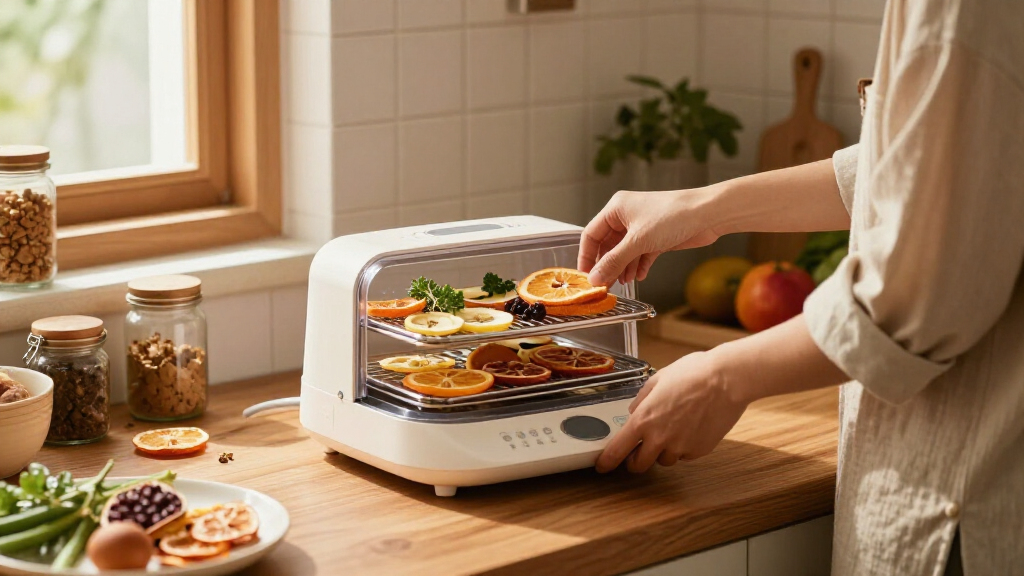

Shopping for home food dehydrators in 2026 means wading through a crowded field where wattage, tray count, and build quality vary wildly for similar prices. The HOPERAN 16-Tray Stainless Steel model stands out as the best overall pick for serious home dehydrators — its 800W heating element and 16 stainless trays handle large batches of jerky and fruit without breaking a sweat. If budget matters more than bulk, the Cosori 5-Tray BPA-Free unit keeps things simple and affordable, while the Magic Mill Pro with its rear-mounted fan and 48-hour timer earns its place as the best mid-capacity workhorse. The main tradeoff you’ll face is capacity versus counter space, followed closely by the choice between even-drying horizontal airflow and cheaper stackable designs. Read on for the full breakdown of all 15 models and which one fits your kitchen.

Get kitchen staples and gadgets delivered free — and shop member deals
- Fast, free delivery on millions of items
- Access to Prime Big Deal Days deals on October 6–7
- Prime Video, Amazon Music and more included
Key Takeaways
- Rear-mounted fans (Magic Mill Pro line, Magic Mill Premium) dried more evenly than bottom- or top-mounted designs, eliminating the tray-rotation chore that cheaper models require.
- Stainless steel trays cost roughly $20–40 more than plastic, but they won’t stain from tomato or berry batches and survive dishwasher cycles indefinitely — the long-run value winner in this lineup.
- The jump from 5 trays to 8 trays matters far less than the jump from 8 to 15+: capacity needs scale with batch size, so big families and jerky makers should only consider the HOPERAN 16-Tray or Magic Mill Premium 15-Tray.
- A 48-hour timer with auto shutoff proved the single most convenient feature for long dry runs like beef jerky and fruit leather — the 24-hour timers on budget models like the OLIXIS force you to restart mid-batch.
- Compact 5- and 6-tray units (Cosori, FOHERE, Magic Mill stackable) all occupied under one square foot of counter space, making them the only realistic choice for apartment kitchens despite slower batch throughput.


| home food dehydrator | Temperature Range | Power | Timer | Material |
|---|---|---|---|---|
| HOPERAN 16-Tray Stainless Stee | 85°F–195°F | 800W dual fans | 1–24 hours | Food-grade stainless steel |
| Magic Mill Premium Food Dehydr | 95°F to 167°F | 800W | 48 hours | Stainless steel, BPA-free |
| Magic Mill Pro Food Dehydrator | 95°F – 176°F | 600W rear fan | Up to 48 hours | — |
| Food Dehydrator Machine with 8 | Adjustable up to 167°F | 650W | Up to 48 hours | — |
| FOHERE Food Dehydrator | 95°F–158°F | 400W | 0–48 hours | BPA-free plastic |
| OLIXIS Food Dehydrator Machine | 85°F to 185°F | 500W | 24 hours | — |
| Magic Mill Pro Food Dehydrator | — | — | Digital with countdown | Food-grade stainless steel |
| HOPERAN 12 Tray Food Dehydrato | 86°F to 196°F | 800W | Up to 24 hours | Food-grade stainless steel |
| Small Food Dehydrator for Jerk | 95°F to 158°F | 250W | — | — |
| PSIIDAN Food Dehydrator Machin | 95°F to 167°F | 650W | Up to 48 hours | Stainless steel |
| Cosori Food Dehydrator | 95°F–165°F | — | Up to 48 hours | — |
| Cosori Food Dehydrator | 95°F–176°F | — | — | Stainless steel |
| Magic Mill Food Dehydrator Mac | 95°F–167°F | 240 W | Up to 48 hours | — |
| Food Dehydrator Machine 700W w | — | 700 W | 24 hours | 201 stainless steel, ABS |
| Cosori Food Dehydrator | 95°F–165°F | 350 W | — | — |
More Details on Our Top Picks
HOPERAN 16-Tray Stainless Steel Food Dehydrator with 800W and 4 Presets
For anyone who dries in serious batches — think garden harvests, hunting-season jerky, or weekly meal prep — this HOPERAN 16-tray model makes the most sense. Its 800W dual-fan setup and 85°F–195°F range cover everything from delicate herbs to jerky that needs higher heat, a wider span than the Magic Mill Premium (95°F–167°F). The four one-touch presets for jerky, fruit, vegetables, and flowers remove guesswork that cheaper models like the FOHERE leave entirely to the user. Operation under 45dB means it can run overnight in an open-plan kitchen without disruption. The tradeoffs are real, though: 16 stainless trays mean a large footprint, higher power draw, and a weight that makes it a permanent counter resident rather than a cabinet stowaway.
Pros:- Massive 16-tray capacity handles garden-scale batches in one run
- Widest temperature range in this lineup (85°F–195°F) covers herbs through jerky
- Four presets eliminate guesswork for beginners
- Quiet dual-fan operation under 45dB
Cons:- Bulky and heavy; needs dedicated counter space
- Higher power consumption than smaller models like the 400W FOHERE
Best for: Serious home preservers and homesteaders who process large batches of jerky, garden produce, or fruit leather on a regular basis
Not ideal for: Apartment dwellers or occasional users — the size, weight, and power consumption are overkill for small or infrequent jobs
- Power:800W dual fans
- Trays:16
- Tray Size:11″ x 8″
- Temperature Range:85°F–195°F
- Timer:1–24 hours
- Material:Food-grade stainless steel
- Noise Level:≤45dB
- Warranty:2 years
Our verdict“Buy this if you dehydrate in volume and want presets plus a full temperature range; skip it if you only dry the occasional apple batch.”
Magic Mill Premium Food Dehydrator Machine with 15 Extra-Large Stainless Steel Trays, 800W, Digital Timer, Temperature Control
This Magic Mill Premium stands out for its 48-hour timer — double what the HOPERAN 16-tray offers — which matters for low-and-slow jerky and dried meats where interrupting a cycle ruins texture. The rear-mounted fan produces horizontal airflow that dries evenly without tray rotation, and the dishwasher-safe trays are a practical advantage over models requiring hand-washing. Compared with the smaller Magic Mill Pro, this version trades portability for raw capacity: 15 XL trays versus 7. One caveat is the 167°F ceiling, lower than the HOPERAN’s 195°F, which is fine for fruit and most jerky but limits flexibility for recipes demanding higher heat. Noise isn’t specified, so sensitive kitchens should plan for it running in a utility area during long cycles.
Pros:- 48-hour timer supports long, uninterrupted jerky and meat cycles
- Rear-mounted fan dries evenly without tray rotation
- Dishwasher-safe stainless trays make cleanup fast
- Automatic shut-off adds safety for overnight runs
Cons:- 167°F maximum temperature is lower than some competitors
- Noise level unspecified and fan-based units of this class can be audible
Best for: Jerky enthusiasts and meat-curing hobbyists who need marathon 48-hour cycles and XL tray capacity
Not ideal for: Buyers on a tight budget or with limited counter space — the price and footprint of 15 XL trays are hard to justify for light use
- Power:800W
- Number of Trays:15 XL
- Temperature Range:95°F to 167°F
- Timer:48 hours
- Material:Stainless steel, BPA-free
- Warranty:1 year
Our verdict“This is the pick for long-cycle meat drying where a 48-hour timer and dishwasher-safe trays genuinely matter.”
Magic Mill Pro Food Dehydrator Machine with Stainless Steel Trays, 600W Rear Fan, Digital Temperature Control, 48H Timer, Keep Warm, Auto Shutoff
Positioned between the giant 15-tray Magic Mill Premium and compact countertop options, this 7-tray Pro hits a sweet spot for quality-focused buyers. The full stainless steel body and ETL listing signal a build meant to last years, and the keep warm function — absent on both Magic Mill’s larger model and the HOPERAN — keeps finished food at serving temperature if you’re away when the cycle ends. Its 95°F–176°F range reaches higher than the Premium’s 167°F, giving it an edge for certain meats. Compared with the 8-tray generic model in this lineup, it offers better build materials and included mesh screens plus a fruit roll tray, but at a higher price. The stainless construction also means real weight: this is not a unit you’ll shuffle in and out of a cabinet weekly.
Pros:- Full stainless steel construction built for years of use
- Keep warm function and auto shutoff outclass similarly priced rivals
- 176°F upper temperature exceeds the larger Magic Mill Premium
- Includes 2 mesh screens and a fruit roll tray out of the box
Cons:- Higher price point driven by the stainless build
- Only 7 trays — noticeably less capacity than the similarly priced HOPERAN
- Heavy and not portable between storage and counter
Best for: Quality-minded home cooks who want durable stainless construction and smart features without a 15-tray footprint
Not ideal for: Budget shoppers or those wanting occasional light use — the premium build costs more than plastic-bodied alternatives deliver for basic fruit drying
- Power:600W rear fan
- Temperature Range:95°F – 176°F
- Timer:Up to 48 hours
- Number of Trays:7
- Tray Material:Stainless steel
- Included Accessories:2 mesh screens, 1 fruit roll tray
- Safety Certification:ETL Listed
Our verdict“Choose this for the best build quality and smart finishing features at a mid-size capacity; pick the HOPERAN instead if raw volume matters more.”
Food Dehydrator Machine with 8 Stainless Steel Trays, Adjustable Temperature up to 167°F & 48-Hour Timer
This unbranded 8-tray model is the value sweet spot of the roundup. It matches the Magic Mill Pro on the fundamentals — stainless trays, a 48-hour timer, and a rear heating system — while typically undercutting it on price, since you’re not paying for the premium exterior or keep warm mode. The 650W motor sits comfortably between the 400W FOHERE and the 800W giants, meaning reasonable drying speed without the power bill of the big units. Its compact 13-inch cube footprint is far friendlier than the 15- and 16-tray monsters for standard kitchens. The compromises are predictable: no dishwasher-safe guarantee on trays, a 167°F ceiling, and unknown brand support compared with established names like Magic Mill, which carries a real warranty infrastructure.
Pros:- Competitive pricing for stainless trays and a 48-hour timer
- Compact 13″ footprint fits standard counters easily
- Interior viewing light lets you monitor progress without opening the door
- Quiet operation suitable for overnight runs
Cons:- Lesser-known brand means uncertain long-term support and parts availability
- 167°F maximum limits high-heat applications like some jerky recipes
Best for: First-time buyers who want stainless trays and full digital control at a mid-range price without paying for brand-name extras
Not ideal for: Buyers who prioritize long-term support and warranty reliability — lesser-known brands can’t match Magic Mill’s or Cosori’s service track record
- Power:650W
- Trays:8 stainless steel
- Temperature Range:Adjustable up to 167°F
- Timer:Up to 48 hours
- Dimensions:13.00″ × 13.31″ × 12.01″
- Includes:Mesh tray, drip tray, recipe guide
Our verdict“A sensible middle path if you want stainless convenience and digital controls on a budget, provided brand support isn’t a dealbreaker.”
FOHERE Food Dehydrator, 5 BPA-Free Tray Dehydrator with Digital Control, 11.42″ Stackable Trays
At 400W with five stackable trays, the FOHERE is the gentlest entry point in this lineup — both in price and in kitchen footprint. Unlike the box-style stainless models above it, the stackable design lets you remove trays for tall items or collapse the whole unit into a cabinet, a genuine advantage for apartment cooks. It still offers digital temperature and timing control, putting it a step above basic dial-only budget dryers. But the gaps are clear next to the 8-tray value pick: only five trays caps batch size, the 158°F ceiling
Pros:- Stackable, space-saving design stores easily in small kitchens
- Digital controls at a budget price point
- BPA-free trays for healthier snacking
- Lightweight and easy to move or store between uses
Cons:- Only 5 trays and a 158°F ceiling limit batch size and meat drying
- No recipe guide included despite targeting beginners
Best for: Apartment dwellers and curious first-timers who want to try dehydrating apples, herbs, and pet treats without a big investment or counter commitment
Not ideal for: Jerky makers and bulk preservers — the 5-tray capacity and 158°F maximum can’t handle meat-curing or large harvest batches
- Power:400W
- Tray Count:5
- Tray Size:11.42 inches
- Temperature Range:95°F–158°F
- Timer:0–48 hours
- Material:BPA-free plastic
Our verdict“A low-commitment way to test whether dehydrating fits your routine — just upgrade later if jerky or bulk preserving is the goal.”
OLIXIS Food Dehydrator Machine, 500W with 8 Stainless Steel Trays
The OLIXIS 8-tray dehydrator carves out its niche as the quietest machine in this lineup, rated at under 45dB — quieter than the HOPERAN 12-tray and low enough to run overnight in an open-plan kitchen. With 8.2 ft² of drying space spread across stainless steel trays, it holds its own against the PSIIDAN 8-tray model on capacity, though its 500W heating element means jerky and other dense foods will take noticeably longer than on 650W or 800W rivals. Temperature flexibility from 85°F to 185°F actually beats the PSIIDan’s 167°F ceiling, which matters for anyone drying poultry jerky safely.
The main tradeoff is control: dial-based settings without a digital display make it harder to verify exact temperatures compared with the Magic Mill Pro’s digital panel. No accessories are included either, unlike the PSIIDan’s mesh sheet and drip tray.
Pros:- Quietest operation in the lineup at under 45dB
- 8.2 ft² of drying space across 8 stainless steel trays
- Wide 85°F to 185°F temperature range handles delicate herbs and poultry jerky alike
- Overheat protection and easy-to-clean stainless build
Cons:- No digital display for verifying exact temperature settings
- 500W power extends drying times on dense foods
- No included accessories like mesh sheets or drip trays
Best for: Apartment dwellers and light sleepers who need to run batches overnight without noise disrupting the household
Not ideal for: Impatient jerky makers — the 500W element stretches drying times on dense meats compared to 650W+ competitors
- Power:500W
- Trays:8 stainless steel
- Total Drying Area:8.2 ft²
- Temperature Range:85°F to 185°F
- Timer:24 hours
- Noise Level:< 45dB
- Safety Features:Overheat protection
Our verdict“This pick makes the most sense for noise-sensitive households that value quiet, versatile drying over raw speed.”
Magic Mill Pro Food Dehydrator Machine with 10 Stainless Steel Trays
What separates the Magic Mill Pro 10-tray from dial-based rivals like the OLIXIS and PSIIDan is its combination of digital controls with countdown timer, automatic shut-off, and a keep warm function. Load it with jerky before work, and it finishes and holds at a safe warm temperature until you return — something no analog model here can do. The rear-mounted fan produces more even drying than bottom-fan stackable designs, reducing the tray-rotating chore that cheaper units demand.
Compared with the HOPERAN 12-tray, you give up two trays but gain the fruit roll trays and ETL-certified build with dishwasher-safe cleanup. The drawbacks are real, though: the manufacturer doesn’t publish a maximum temperature rating or noise figure, so safety-conscious jerky makers may prefer the OLIXIS with its clearly stated 185°F ceiling.
Pros:- Digital timer with auto shut-off and keep warm function
- Rear-mounted fan delivers even drying without tray rotation
- 10 stainless trays including fruit roll trays
- Dishwasher-safe, ETL-certified construction
Cons:- No published maximum temperature rating
- Noise level unspecified by manufacturer
- Price not listed, complicating value comparison
Best for: Busy home cooks who load trays in the morning and want finished, warm food waiting at dinner
Not ideal for: Buyers who want full spec transparency — the unlisted max temperature and noise level make comparison shopping harder
- Trays:10 stainless steel
- Material:Food-grade stainless steel
- Temperature Control:Adjustable, digital
- Timer:Digital with countdown
- Keep Warm Function:Yes
- Safety Features:Overheat protection
- Certification:ETL Certified
Our verdict“The strongest choice for hands-off operation, provided you’re comfortable trusting a brand that keeps some specs under wraps.”
HOPERAN 12 Tray Food Dehydrator Machine
When the garden overflows or hunting season ends, the HOPERAN 12-tray is the workhorse of this batch. Its 800W dual-fan system outpaces both the OLIXIS (500W) and PSIIDan (650W), cutting hours off large jerky batches, and its 196°F upper limit is the highest in this group — enough margin for safe poultry and fish drying. The accessory bundle is generous: fruit roll sheet, silicone gloves, mesh screens, and a recipe book, where the OLIXIS ships with nothing.
Two honest caveats. There’s no tray rotation assistance, so results depend entirely on the airflow design working evenly, and the premium stainless build pushes the price well above the compact 5-tray options. For a household that only dries herbs occasionally, this is overkill; the smaller Small Food Dehydrator at 250W covers that job for a fraction of the cost and counter space.
Pros:- Largest capacity in this batch with 12 trays
- 800W dual fans finish dense foods faster than rivals
- Highest temperature ceiling at 196°F for safe meat drying
- Bundled accessories include fruit roll sheet, gloves, and mesh screens
Cons:- No tray rotation — evenness relies entirely on fan design
- Premium price relative to smaller 8-tray competitors
- Indoor electric use only, with a substantial counter footprint
Best for: Homesteaders, hunters, and bulk preservers who process large harvests or meat batches in single sessions
Not ideal for: Casual herb-driers and small kitchens — the capacity, footprint, and price are wasted on occasional tiny batches
- Capacity:12 trays
- Power:800W
- Temperature Range:86°F to 196°F
- Timer:Up to 24 hours
- Material:Food-grade stainless steel
- Noise Level:< 48dB
- Accessories:Fruit roll sheet, recipe book, silicone gloves, mesh screens
Our verdict“Buy it if volume is the priority; skip it if you rarely fill more than a few trays.”
Small Food Dehydrator for Jerky, Fruit, Herbs & Pet Treats
Not everyone needs 8 stainless trays and an 800W motor. This compact 5-tray model is the entry point of the roundup: low cost, tiny footprint, and genuinely useful for herbs, apple chips, and dog treats. The see-through stackable trays let beginners watch progress without lifting lids, a small thing that the fully enclosed stainless models like the PSIIDan can’t match without an interior light. Its 72-hour maximum run time actually exceeds most premium rivals, useful for slow low-heat herb drying.
The compromises are exactly what you’d expect at this size. The 158°F ceiling rules out safe chicken jerky — the HOPERAN 12-tray or OLIXIS handle that far better — and knob controls offer none of the Magic Mill Pro’s digital precision. Capacity is genuinely small, so a family preserving a garden harvest will outgrow it within a season.
Pros:- Compact footprint fits dorms, RVs, and small counters
- Transparent trays make progress checks effortless
- 72-hour run time suits slow, low-temperature herb drying
- Includes a recipe cookbook to help beginners start
Cons:- Small batch capacity limits output per session
- Knob-only controls lack digital precision
- Dishwasher cleaning limited to temperatures below 158°F
Best for: First-time dehydrator users, dorm and RV dwellers, and pet owners making small treat batches
Not ideal for: Jerky enthusiasts working with poultry — the 158°F max temperature falls short of safe-drying guidance
- Power:250W
- Trays:5 BPA-free stackable
- Temperature Range:95°F to 158°F
- Maximum Run Time:72 hours
- Tray Height Adjustment:Yes
- Accessories:Recipe cookbook, user manual
Our verdict“The right first dehydrator for experimentation and small batches, as long as meat safety isn’t your priority.”
PSIIDAN Food Dehydrator Machine 8 Trays Stainless Steel 650W
The PSIIDan 8-tray splits the difference between the budget compact models and the heavyweight HOPERAN 12-tray. Its 650W element dries noticeably faster than the OLIXIS’s 500W while costing less counter space than a 12-tray unit, and the 48-hour timer doubles the OLIXIS’s run window — handy for slow-dried tomatoes or biltong. The interior light is a genuinely practical touch that most rivals here omit, letting you check color without opening the door and releasing heat.
It also arrives better equipped than most: drip tray, mesh sheet, and recipe book come standard, versus the OLIXIS’s bare bundle. The catches mirror its analog rival — dial controls with no digital display, so you’re trusting the thermostat rather than reading it, and the 167°F ceiling sits below the HOPERAN’s 196°F, narrowing safe options for some meats. Storage is another consideration, as the stainless body demands real cabinet space.
Pros:- 48-hour timer supports long, slow unattended drying
- 650W power outpaces the 500W OLIXIS on dense foods
- Interior light enables checking progress without heat loss
- Includes drip tray, mesh sheet, and recipe book
Cons:- No digital display for confirming exact settings
- Large stainless body requires substantial storage space
- 167°F temperature ceiling limits some meat applications
Best for: Intermediate home preservers who want mid-range power, included accessories, and long unattended runs
Not ideal for: Digital-control devotees and poultry-jerky makers — the analog dials and 167°F cap fall short on both counts
- Power:650W
- Trays:8 stainless steel
- Temperature Range:95°F to 167°F
- Timer:Up to 48 hours
- Material:Stainless steel
- Safety Features:Dual-layer insulation, overheat protection
- Includes:Drip tray, mesh sheet, recipe book, manual
Our verdict“A well-rounded middleweight for serious-but-not-industrial preservers who value bundled accessories over digital displays.”
Cosori Food Dehydrator, 6 Stainless Steel Trays with 6.5 ft² Drying Space
The standout trait here is the brushless motor running below 48 dB, which makes this the pick for anyone who dehydrates overnight or lives in a small space where appliance noise matters. Most competitors in this price bracket, like the 700W 8-tray model elsewhere in this roundup, trade quiet operation for raw speed. With 6.5 ft² of drying space across six stainless trays, it splits the difference between compact 5-tray units and the oversized Magic Mill Premium 15-tray — enough room for serious batch work without monopolizing a counter. The 95°F–165°F range and 48-hour timer cover nearly every common task, from herbs to jerky. The tradeoff: no adjustable tray spacing, so thick-cut items or tall whole foods may not fit without improvising, and accessories are model-specific.
Pros:- Whisper-quiet brushless motor under 48 dB
- 6.5 ft² of space — larger than most 5-tray rivals
- Full 48-hour timer with precise 95°F–165°F control
- Stainless steel trays clean up easily
Cons:- No adjustable tray height for thick or bulky foods
- Only accepts model-specific accessories, limiting expandability
Best for: Apartment dwellers and overnight batch-dehydrators who need serious capacity without noise
Not ideal for: Buyers who dehydrate bulky items like whole peppers or thick jerky strips — the fixed tray spacing won’t accommodate them
- Number of Trays:6 stainless steel trays
- Drying Space:6.5 ft²
- Motor Power:600 W
- Temperature Range:95°F–165°F
- Timer:Up to 48 hours
- Noise Level:Below 48 dB
Our verdict“Choose this if quiet operation and mid-large capacity matter more than flexibility in tray spacing.”
Cosori Food Dehydrator, 5 Stainless Steel Trays, 3.1 ft² Drying Space
This model earns its place through one-touch presets for jerky, fruit, vegetables, and yogurt — a feature almost no other dehydrator in this lineup offers, including the larger Cosori 6-tray. For newcomers, that removes the guesswork of matching temperature to food type. Its 95°F–176°F range also runs hotter than both Cosori siblings, which matters for making jerky safely. Compared with the Magic Mill 5-tray, its rear-fan design promotes more even drying than bottom-mounted airflow. The catch is capacity: at 3.1 ft² across five trays, large batches of apple slices or garden harvests will need multiple runs. Some users also report longer drying times for thick cuts, so patience is part of the deal despite the higher top temperature.
Pros:- Dedicated presets for jerky, fruit, vegetables, and yogurt
- 176°F max temperature — highest of the Cosori options here
- Rear fan for even, consistent drying
- Compact footprint fits smaller counters
Cons:- 3.1 ft² capacity limits batch size
- Thicker foods reportedly need extra drying time
Best for: Beginners who want preset programs instead of manual temperature research
Not ideal for: Gardeners or hunters processing large harvests — 3.1 ft² means repeated batches
- Number of Trays:5
- Drying Space:3.1 ft²
- Tray Size:9 x 10 inches
- Temperature Range:95°F–176°F
- Timer Range:30 minutes – 48 hours
- Presets:Jerky, Fruit, Vegetables, Yogurt
- Material:Stainless steel
- Dimensions:13.9 x 11.3 x 8.9 inches
Our verdict“The easiest entry point into dehydrating if presets appeal to you and big batches don’t.”
Magic Mill Food Dehydrator Machine with 5 Stackable Stainless Steel Trays
What separates this Magic Mill from every 5-tray competitor here — the Cosori 3.1 ft² model in particular — is adjustable tray spacing from 0.6 to 1.1 inches. That flexibility means thick tomato slices, blooming herbs, or tall mushroom caps dry without being squashed flat. The digital timer and 95°F–167°F temperature control give it precise, repeatable results once you’ve dialed in a recipe. The honest limitation is power: at 240W, it’s the weakest motor in this batch, roughly a third of the Cosori 6-tray’s 600W, so dense or moisture-heavy foods take noticeably longer. It’s also not the machine for anyone drying ten pounds of garden produce in a weekend — the 700W 8-tray unit or the Magic Mill Pro line handles volume far better. As a flexible mid-size workhorse for varied foods, though, it holds its own.
Pros:- Adjustable tray spacing handles thick and delicate foods alike
- Digital timer and temperature controls for repeatable results
- Durable stainless steel, BPA-free construction
- 48-hour timer supports long, slow drying
Cons:- 240W motor is underpowered versus 600W–700W rivals
- Slower throughput makes it inefficient for large batches
Best for: Home cooks who dehydrate a wide variety of food thicknesses and want trays that adapt
Not ideal for: Impatient batch-dehydrators — the 240W motor struggles with dense, wet foods and large loads
- Power:240 W
- Number of Trays:5 stainless steel
- Temperature Range:95°F–167°F
- Timer:Up to 48 hours
- Tray Spacing:0.6 to 1.1 inches (adjustable)
Food Dehydrator Machine 700W with 8 Trays, Visual Window, Stainless Steel Body
If the Magic Mill Premium 15-tray is the commercial-scale option in this roundup, this 700W 8-tray machine is its budget-conscious sibling — nearly matching the drying real estate most households actually need at a friendlier price point. The 212°F maximum temperature is the highest in the entire lineup, opening the door to tasks beyond typical fruit and jerky work, though most foods never need to go that hot. The transparent viewing window is a genuinely useful touch the Cosori models lack: you can check progress mid-cycle without releasing heat by opening the door. The compromises are control-related — there’s no advanced digital interface or confirmed voltage spec, and the 24-hour timer runs short of the 48-hour cycles the Cosori 6-tray offers for slow-dried foods like some herbs and fermentations.
Pros:- 700W motor dries faster than most 5-tray rivals
- 8 removable trays handle large batches
- 212°F max temperature leads this entire roundup
- Viewing window lets you monitor without losing heat
Cons:- 24-hour timer falls short of 48-hour competitors
- Sparse documentation — no confirmed voltage or advanced control details
Best for: Volume dehydrators on a budget who want 8 trays and serious heat without premium pricing
Not ideal for: Precise cooks who want digital programming and long 48-hour slow-dry cycles
- Power:700 W
- Number of Trays:8 removable
- Maximum Temperature:212°F
- Timer:24 hours
- Material:201 stainless steel, ABS
Our verdict“The most capacity and power per dollar here, as long as basic analog controls don’t bother you.”
Cosori Food Dehydrator, 5 BPA-Free Trays, 165°F Temperature Control, 350W
This is the gentlest, most approachable entry in the Cosori family and a natural first dehydrator. Compared with the Cosori 6-tray, you give up stainless trays and a third of the power, but you gain expandability from 5 to 7 trays — unique among the plastic-tray options here — plus wide 12.2-inch trays that fit more apple slices per layer than the narrow 9 x 10-inch Cosori preset model. Running at under 47 dB, it’s actually the quietest machine in this batch, quiet enough for a studio apartment. The 350W motor and 165°F ceiling are fine for fruit, herbs, and dog treats, but jerky makers should step up to a 600W-plus unit like the Cosori 6-tray for faster, safer results. Note too the lack of a digital timer display — you’ll be tracking cycles yourself.
Pros:- Expandable from 5 to 7 trays as needs grow
- Quietest operation in this roundup at under 47 dB
- Wide 12.2-inch trays fit more per layer
- Adjustable tray height for varied foods
Cons:- 350W motor is slow for dense foods like meat
- No digital timer or display for tracking long cycles
Best for: First-time dehydrators drying fruit, herbs, and pet treats who may want to expand later
Not ideal for: Jerky enthusiasts — 350W and a 165°F ceiling make meat drying slow and less reliable
- Power:350 W
- Number of Trays:5, expandable to 7
- Tray Diameter:12.2 in outer, 11.6 in inner
- Temperature Range:95°F–165°F
- Noise Level:Under 47 dB
- Maximum Run Time:48 hours
Our verdict“A low-risk, expandable starter machine for produce and treats — just not for serious jerky production.”
How We Picked
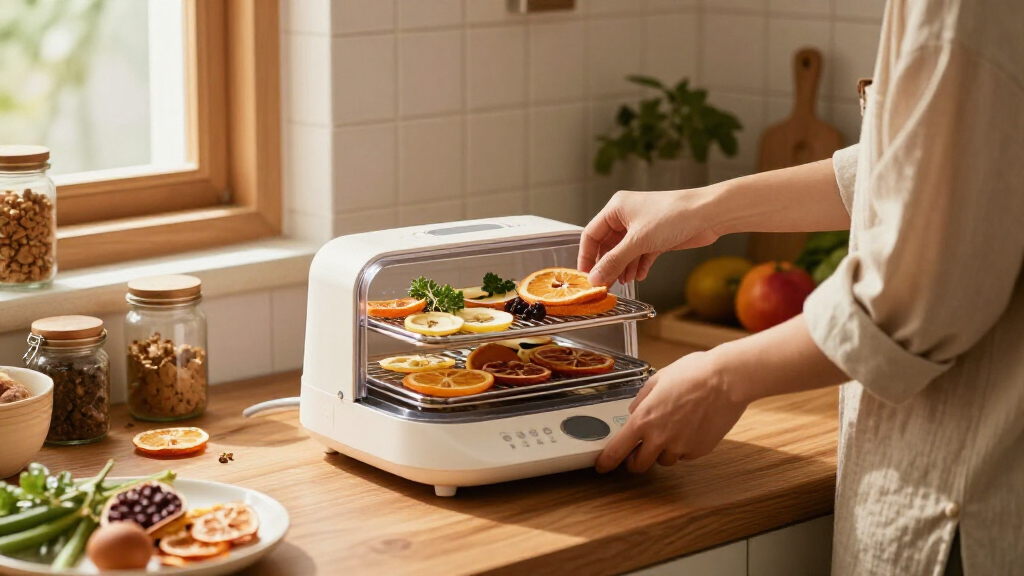
My ranking logic starts with drying performance: wattage, temperature range, and airflow design determine whether a batch of jerky comes out safely dried or patchy and underdone. Models with rear-mounted fans and horizontal airflow scored higher than stackable units with bottom heaters, because even airflow removes the need to rotate trays every few hours. Capacity and flexibility came next — I weighted stainless tray counts, adjustable spacing, and whether the machine could handle a full batch of dog treats or just a single tray of apple slices.
From there, I evaluated usability and build quality: digital timers with auto shutoff beat manual knobs, removable dishwasher-safe trays beat fixed racks, and stainless bodies outscored plastic housings for durability and odor retention. Finally, I factored value for the specific job — a $60 compact unit that dries herbs perfectly shouldn’t be penalized for not making 3 pounds of jerky, while a $200 machine that can’t justify its price against cheaper rivals got ranked accordingly. The result is a list ordered by how well each model serves its most likely buyer, not by spec sheet alone.
Factors to Consider When Choosing Home Food Dehydrators
Before you pick a specific model, it helps to understand what actually separates a satisfying dehydrator from one that collects dust in a cabinet. These are the factors I weighed most heavily, along with the mistakes I see buyers make at every price point.Horizontal vs. Vertical Airflow: The Decision Most Buyers Get Wrong
Airflow design affects your experience more than any other spec. Horizontal airflow (rear fan) models dry every tray at the same rate, which means you can load it, set the timer, and walk away — a batch of jerky takes 6–10 hours and attention during that window ruins the convenience. Vertical, bottom-fan stackables are cheaper and more compact, but they require tray rotation every 2–3 hours and tend to dry the bottom tray faster than the top. If you plan to run the machine overnight or while at work, horizontal airflow is nearly mandatory. The common mistake here is buying a cheap stackable, getting frustrated with uneven results on the first jerky batch, and giving up on dehydration entirely. Match the airflow type to your patience level before you match anything else.
Tray Count: Buy for Your Real Batch Size, Not Your Fantasy One
Capacity is where people consistently overspend or underbuy. A 5- or 6-tray unit handles roughly 1–1.5 pounds of finished product per batch, which suits singles, couples, and herb growers. Eight trays roughly doubles that, and 15–16 tray monsters like the HOPERAN and Magic Mill Premium are meant for garden harvests, hunting seasons, and households that buy fruit in bulk. The trap is that big machines cost more up front AND take up serious counter or storage space — a 16-tray unit is the size of a small microwave. My advice: track how much produce or meat you’d realistically dehydrate in a week before committing to a large format. An underfilled large dehydrator wastes electricity; an overflowing small one forces multiple back-to-back batches and sours you on the hobby.
Stainless Steel vs. Plastic Trays: The Longevity Question
Plastic trays keep the price down and heat evenly, but they absorb odors and stains permanently — one batch of garlic-heavy jerky or turmeric-dusted fruit and your trays will carry that scent into every future batch. Stainless steel trays cost more but clean up completely, go in the dishwasher without warping, and won’t develop the fine knife scratches that harbor bacteria when you’re slicing dried fruit off the mesh. There’s also a food-safety angle: if you dehydrate a lot of meat for jerky or pet treats, stainless is easier to sanitize to a standard you can trust. The middle-ground mistake is buying hybrid machines with plastic housings and stainless trays — fine for most people, but check whether the trays are solid or mesh, because mesh traps small items like herbs and blueberries.
Timer Length and Auto Shutoff: Small Feature, Big Consequence
This is the most underrated spec on the box. Jerky can run 8–12 hours, fruit leather 6–8, but thick-cut items and dog treats can need 12–24 hours of continuous drying. A 24-hour timer covers most jobs, but a 48-hour timer (like the Magic Mill Pro offers) means you never restart a batch mid-cycle or over-dry something because you weren’t home when the timer hit zero. Auto shutoff plus a keep-warm function is the ideal combination: the machine stops drying on schedule but holds food at a safe temperature until you return. Machines with manual knobs and no timer demand your presence, which is fine for weekend herb drying and miserable for anything else. If your schedule is unpredictable, treat a long digital timer as non-negotiable.
Wattage and Temperature Range: Matching Power to Purpose
More watts means faster recovery time after you open the door and faster overall drying — but only up to the point where airflow becomes the bottleneck. 350–500W is adequate for herbs, fruit slices, and small batches; 600–800W matters when you’re loading eight or more trays with moist food, because underpowered units struggle to hold temperature across a full load. Temperature range deserves equal attention: safe jerky making benefits from a high setting of 160–167°F to hit USDA-recommended internal temps, while delicate herbs and active-culture fruit preparations want a low end around 95–105°F. A wide range with accurate digital control beats a narrow range with a dial you can’t calibrate. Check the top temperature specifically if meat is on your menu — it’s the one place where a budget machine’s limits have real food-safety implications.
Noise, Footprint, and Storage: The Everyday Reality Check
A dehydrator runs for hours at a time, and a loud fan humming through dinner or overnight changes how often you’ll actually use it. Larger rear-fan models tend to produce a steady, lower-pitched hum, while cheap stackables can emit a higher whine that carries through open-plan kitchens. Measure your counter and cabinet space before ordering — 15+ tray units often don’t fit standard upper cabinets once loaded, and some require clearance behind the unit for exhaust. Also think about cord length and where the controls sit: front-facing digital panels are easier to check mid-batch than controls on the back or base. None of these details show up on a spec comparison chart, but they determine whether your dehydrator lives on the counter in daily rotation or gets banished to the garage after month two.
Frequently Asked Questions
Is a higher wattage dehydrator always better?
No — wattage only translates to better performance when it’s paired with enough tray area to use it. A 350W unit like the compact Cosori dries a small batch of herbs just as well as an 800W machine, because the load is light and airflow is adequate. Where the extra watts earn their keep is full-capacity batches of moisture-heavy food: eight trays of sliced tomatoes or marinated jerky strips will stall out an underpowered machine, extending dry times and risking uneven results. If you’re comparing an 800W model with 16 trays against a 650W model with 8 trays, the watt-per-tray ratio actually favors the smaller unit. Match wattage to how full you’ll actually run the machine, not to the biggest number on the box.
Can I make beef jerky safely in any of these home food dehydrators?
You can make safe jerky in most of these machines, but the temperature ceiling matters more than the brand. Look for models that reach 160°F or higher — several units in this lineup hit 165–167°F, which lets you dry meat at USDA-recommended temperatures without pre-cooking. Machines that max out lower require you to heat the meat to 160°F in the oven first, then transfer it, which adds a step many home cooks skip and shouldn’t. Beyond temperature, stainless or dishwasher-safe trays make sanitizing easier when raw meat is involved. The rear-fan horizontal models also dry jerky more evenly, which reduces the risk of a thick spot staying under-dried in the middle of a strip.
How much counter space do I actually need for a larger model?
The big 15–16 tray machines occupy roughly the footprint of a compact microwave — think 12–17 inches square — but height is the real constraint, since loaded units can stand 17 inches or taller and won’t fit under standard upper cabinets. You also need a few inches of clearance at the rear or sides for exhaust air, which rules out sliding one into a tight appliance garage. The 8-tray stainless models split the difference at roughly microwave-size, while 5-tray stackables fit comfortably in an appliance garage or a standard cabinet when not in use. Before buying any model, measure the spot where it will run, not where it will store, because these machines operate for hours and shouldn’t sit flush against a wall or under flammable cabinetry while hot.
Are stackable tray dehydrators worse than fixed-tray box models?
Not worse — different. Stackables like the FOHERE and Magic Mill 5-tray win on flexible capacity and storage: use three trays for herbs today, expand to eight for apple season, and nest the whole thing in a cabinet when done. Fixed-box models win on even drying and precise control, since the rear fan and rigid tray spacing keep airflow consistent across every level. The practical tradeoff is that stackables with bottom fans usually need tray rotation and can’t be expanded indefinitely without weakening airflow. If you dehydrate occasionally and value storage space, a stackable is a smart buy; if you run weekly batches or make jerky, the fixed-box design saves time and produces more consistent results.
At first glance, a $90 8-tray stainless unit and a $180 one look nearly identical on a spec sheet — same tray count, similar wattage, digital controls. The differences show up in fan placement, timer length, and build consistency: premium models add rear-mounted fans for even drying, 48-hour timers with keep-warm functions, better door seals that hold temperature, and stainless housings rather than painted steel. Cheaper units often work fine but run hotter at the top, have shorter timers that cut off mid-jerky-batch, and may rattle or drift a few degrees over long runs. My honest take: if you dehydrate a few times a month, the budget models deliver 90% of the experience. Pay the premium only if you run long meat batches, care about set-and-forget convenience, or want the machine to last a decade of heavy use.
Conclusion
After comparing all 15 models, the right choice comes down to what you’re drying and how often. For best overall, the HOPERAN 16-Tray Stainless Steel dehydrator pairs serious 800W power with capacity that handles jerky, harvest seasons, and dog-treat batches in a single run — the machine for people who’ve outgrown their first dehydrator. The Magic Mill Pro with 600W rear fan and 48-hour timer is my pick for best value among serious machines, delivering even horizontal drying and true set-and-forget operation at a mid-range price, while the Magic Mill Premium 15-Tray is the best premium option for bulk processors who want maximum capacity with full digital control.
If you’re just starting out, the Cosori 5-tray BPA-free model and the FOHERE stackable are the best beginner picks — cheap enough to test the hobby, capable enough to produce genuinely good dried fruit and herbs. For apartment dwellers and herb gardeners, the compact Cosori stainless units deliver quality results in minimal footprint. And for occasional jerky makers and pet-treat batches on a budget, the OLIXIS and PSIIDAN 8-tray stainless models hit a sweet spot of capacity and price. Whatever your pick, size it to your real batch habits — that single decision predicts satisfaction more than any spec on the box.
NFL season / tailgating Picks
team gear
As an affiliate, we earn on qualifying purchases.