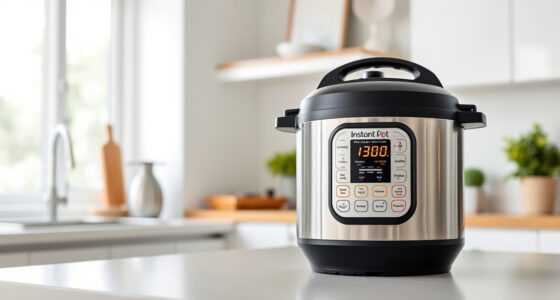

Choosing between a pressure cooker and a slow cooker can be challenging, especially with versatile options like the Instant Pot 4QT RIO Mini and traditional Crock-Pot models. Both appliances excel in different ways, making it essential to understand their features and how they fit into your cooking routine.

Get kitchen staples and gadgets delivered free with Prime
- Fast, free delivery on millions of items
- Prime Video, Amazon Music and more included
- Member-only deals all year
In this comparison, I’ll explore the key differences, practical use cases, and my personal experience with each to help you decide which one is the better match for your kitchen.
Key Takeaways
| Versatility | Instant Pot offers 7 cooking functions including pressure, slow, sauté, steam, rice, yogurt, and warming. |
| Capacity | The Instant Pot has a 4-quart size, ideal for small families or singles, while Crock-Pots generally range from 4 to 8 quarts, suitable for larger meals. |
| Cooking Speed | Instant Pot can cook up to 70% faster than traditional slow cookers, saving time on busy days. |
| Ease of Use | Both devices are user-friendly, but the Instant Pot’s digital interface provides more precise control and monitoring. |
| Maintenance | Both are easy to clean, but the Instant Pot’s removable parts are dishwasher safe, simplifying cleanup. |
At a Glance

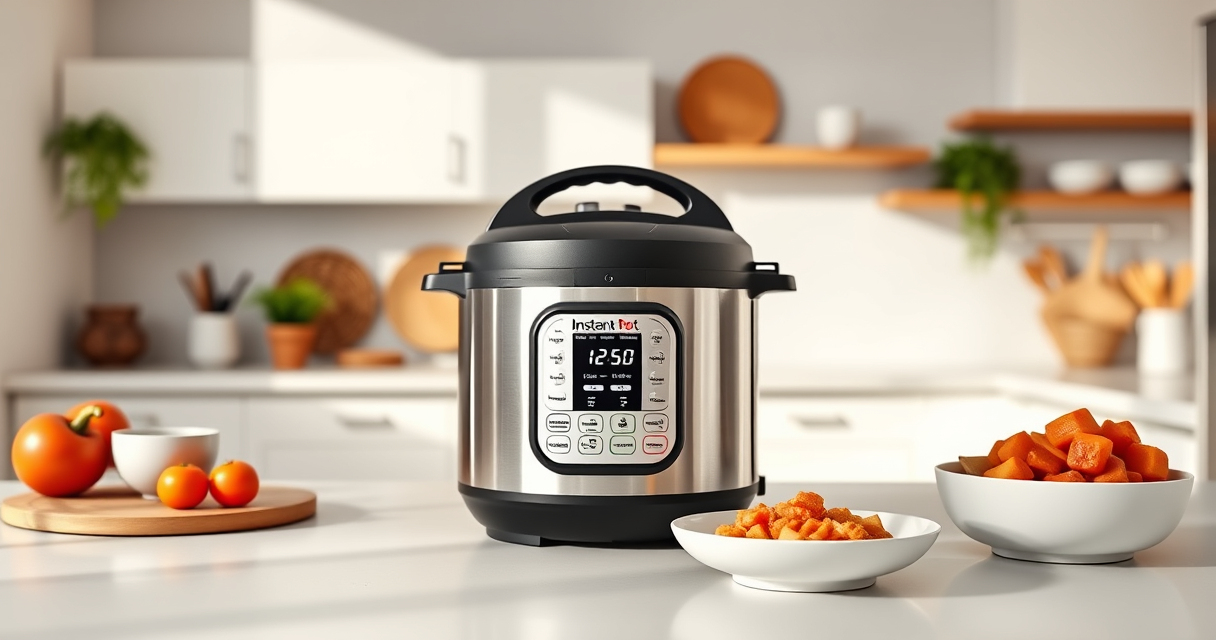
Instant Pot 4QT RIO Mini 7-in-1 Multi-Cooker
- ✔ Power: 1000W
- ✔ Warranty: 1 year
- ✔ Included Accessories: Steam rack, measuring cup, spoon
Instant Pot vs Crock: Full Breakdown
Instant Pot 4QT RIO Mini 7-in-1 Multi-Cooker
The Instant Pot 4QT RIO Mini is a fantastic space-saver that packs a punch with multiple functions. It excels in quick, convenient meal prep without sacrificing versatility. For those with limited space or cooking for 1-4 people, it’s a reliable, time-saving choice.
Pros:
- Multiple cooking functions in one device
- Fast cooking times
- Compact and easy to store
- Dishwasher-safe parts
Cons:
- Limited capacity for larger families
- Learning curve with multiple functions
- Lack of a dedicated slow cook timer
Best for: Small families, singles, or those who need quick, diverse meals in a small footprint
Not ideal for: Large families or those who prefer traditional slow cooking for large batches
Bottom line: A compact, versatile cooker perfect for small spaces and quick meals.
| Feature | Instant Pot | Crock |
|---|---|---|
| Cooking Functions | 7 functions including pressure, slow, sauté, steam, rice, yogurt, warm | Primarily slow cooking and warming, varies by model |
| Capacity | 4 quarts | Range from 4 to 8 quarts depending on model |
| Cooking Speed | Up to 70% faster than slow cooking | Slow cookers typically take 4-8 hours |
| Ease of Use | Digital control panel with progress indicator | Simple dials or digital panels, depending on model |
| Cleaning | Dishwasher safe inner pot | Removable stoneware or ceramic |
| Size and Storage | Mini size, easy to store | Varies from compact to large, space-dependent |
The Verdict
For small households or those seeking a multi-functional device that saves space and time, the Instant Pot 4QT RIO Mini is an excellent choice. Traditional Crock-Pots are better suited for larger meals and slow cooking over long hours, making them preferable for family-sized cooking.
Hands-On Impressions
In my experience, the Instant Pot’s quick pressurizing and versatile functions made weekday dinners effortless—especially when I was pressed for time. The small size is perfect for quick meals for one or two, and I appreciated how easy it was to switch between modes. The Crock-Pot, on the other hand, excels during weekend meal prep, offering long, unattended slow cooking that develops flavors over hours.
Deep Dive into Use Cases
The Instant Pot shines in fast-paced environments where time is limited, and multiple functions are needed in a single device. Its ability to cook rice, make yogurt, and even keep food warm makes it a multi-tasker. Conversely, Crock-Pots are ideal for preparing large batches of stews, roasts, or chili, which benefit from slow, low-temperature cooking over several hours.
Maintenance and Longevity
Both appliances are straightforward to clean, with dishwasher-safe parts. The Instant Pot’s inner pot is stainless steel, resisting stains and odors over time, while Crock-Pots often feature ceramic or stoneware inserts that are equally durable if cared for properly. Proper maintenance ensures both will serve well for years of reliable use.
Frequently Asked Questions
Can the Instant Pot replace a traditional slow cooker?
Yes, the Instant Pot can perform slow cooking functions, but it may not offer the same capacity or long, unattended cook times as larger Crock-Pots.
Is the 4-quart Instant Pot suitable for a family of four?
It can serve up to four servings comfortably, but larger families might prefer a bigger model for more flexibility.
How difficult is it to learn to use the Instant Pot?
While it has many functions, the digital interface is intuitive. Most users find it easy to learn with a few simple recipes and the included manual.
Are Crock-Pots better for flavor development?
Yes, slow cooking over several hours allows flavors to meld deeply, which is a key advantage over pressure cooking for certain dishes.
Making the Right Choice for Your Kitchen
Ultimately, your decision depends on your cooking style and household size. The Instant Pot 4QT RIO Mini is perfect for those who want versatility and speed in a compact form, ideal for small families or singles. If you prefer traditional slow cooking for larger batches and flavor development, a Crock-Pot remains a reliable, straightforward choice that excels in unattended long-cooking scenarios.
Both appliances can be valuable additions to your kitchen arsenal, each serving different needs—consider how you cook most often to pick the best one for you.
Affiliate disclosure: As an Amazon Associate we earn from qualifying purchases. Prices and availability are accurate as of the time of publishing.
Halloween Picks
halloween
As an affiliate, we earn on qualifying purchases.