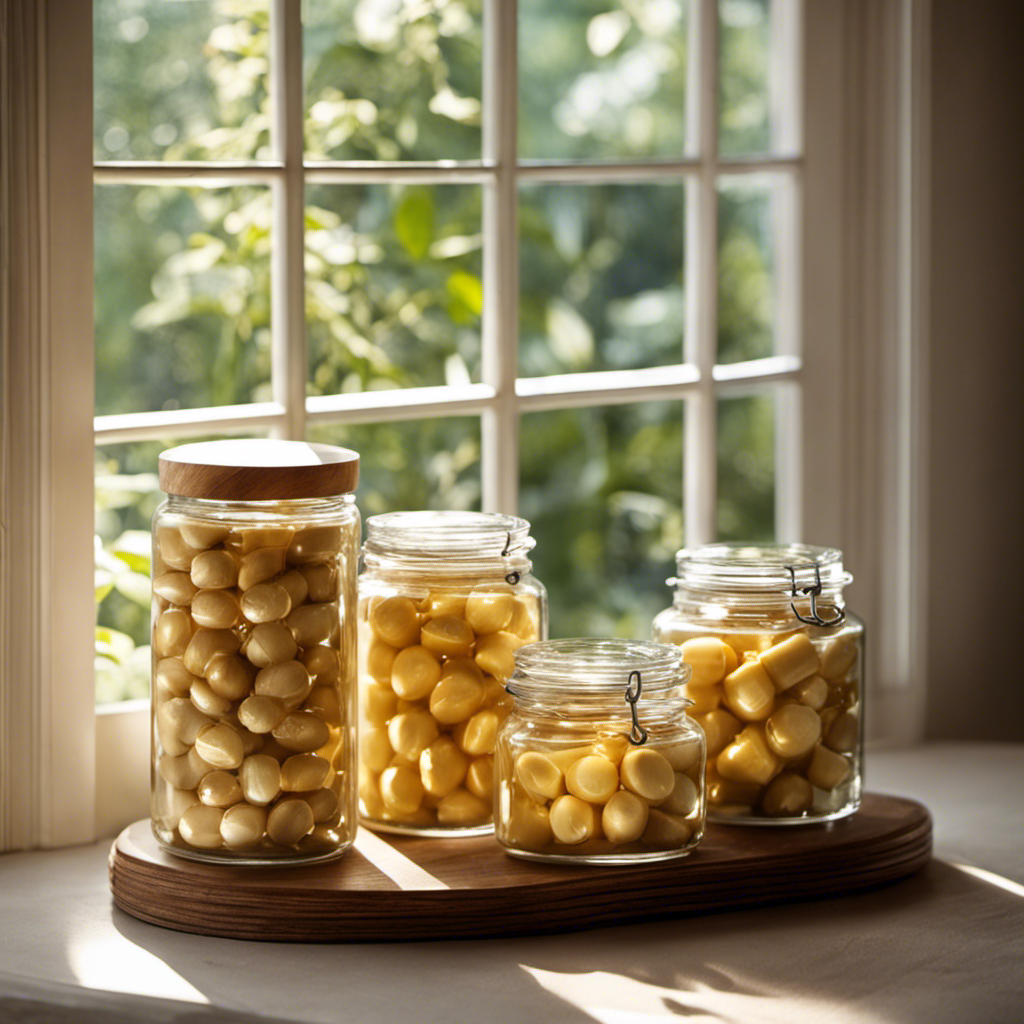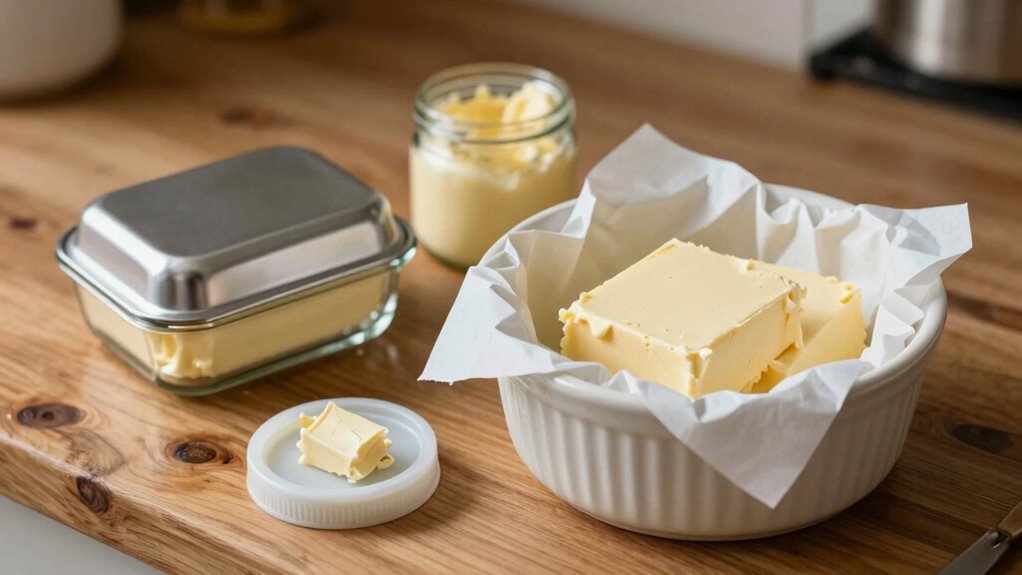

To store butter for holiday baking, keep it in airtight containers or tightly sealed original wrappers to lock in freshness and prevent odors. For short-term use, place it in the coldest part of your fridge, ideally between 35°F–40°F, and avoid leaving it out at room temperature for too long. For longer storage, freeze sliced portions in freezer-safe containers, labeling with dates. Proper handling and storage guarantee your butter stays fresh and flavorful — explore more tips to maximize quality.

Get kitchen staples and gadgets delivered free — and shop member deals
- Fast, free delivery on millions of items
- Access to Prime Big Deal Days deals on October 6–7
- Prime Video, Amazon Music and more included
Key Takeaways
- Store butter in airtight containers or tightly sealed wrappers to maintain freshness and prevent odor absorption.
- Keep butter refrigerated at 35°F–40°F in the coldest part of the fridge for consistent storage.
- Freeze butter in portion-sized pieces, wrapped tightly, and label with the date to preserve flavor for up to six months.
- Avoid leaving butter at room temperature for extended periods; only take out what’s needed for baking.
- Check for spoilage before use and thaw frozen butter properly to ensure optimal texture and flavor.
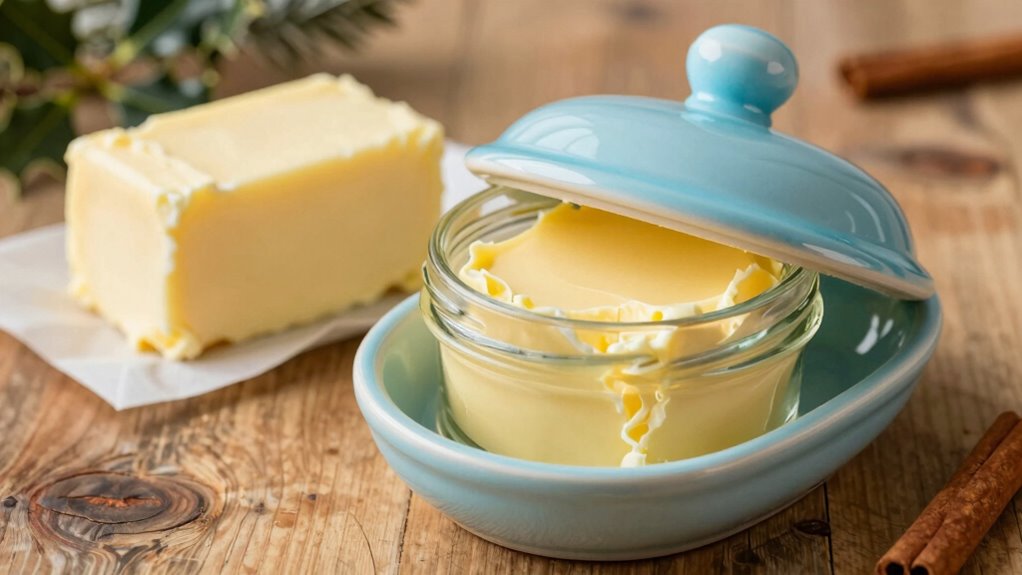
As the holiday baking season approaches, it’s important to know how to store butter properly to keep it fresh and flavorful. Butter is a key ingredient in many festive treats, and its butter flavor can make or break your baked goods. Proper storage ensures that the butter maintains its quality, so your cookies, pies, and cakes turn out just as delicious as you envision. The first step is choosing the right storage containers. Airtight containers are ideal because they prevent exposure to air, which can cause butter to absorb other odors and become rancid over time. If you prefer to keep butter in its original wrapper, guarantee it’s tightly sealed; you can even double-wrap it with aluminum foil or plastic wrap for added protection.
Keep butter fresh and flavorful with airtight containers or double-wrapped in its original packaging.
When storing butter in the fridge, place it in a consistent temperature zone, ideally between 35°F and 40°F. This keeps it fresh without risking spoilage. If you know you won’t be using the butter within a week or two, consider freezing it. Freezing preserves its butter flavor for an extended period, typically up to six months. To prevent freezer burn and maintain quality, slice the butter into portions before freezing, then wrap each piece tightly in plastic wrap and place them in a freezer-safe storage container or resealable bag. Label the container with the date so you can keep track of how long it’s been stored. Using proper storage techniques can significantly extend its freshness, and understanding how to correctly thaw frozen butter is essential to preserve its texture and flavor. Additionally, being aware of butter storage safety tips can help prevent spoilage and ensure optimal quality. Incorporating proper handling practices can further reduce waste and keep your ingredients in top condition.
For short-term storage, your best bet is to keep butter in a butter dish with a lid, especially if you plan to use it frequently. Just remember to keep it in the coldest part of your fridge and avoid leaving it out at room temperature for more than a few hours, as warmth accelerates spoilage. When you’re ready to bake, take out only what you need to prevent exposing the entire stick to air and temperature fluctuations. Always check your butter for any signs of spoilage, such as discoloration or an off smell, before incorporating it into your recipes. Proper handling and storage can also reduce waste and ensure your ingredients remain high quality.
Storing butter correctly isn’t just about extending its shelf life; it’s about preserving its butter flavor so every baked good hits the mark. Using the right storage containers, maintaining proper fridge or freezer temperatures, and handling it with care will ensure your butter remains fresh, flavorful, and ready for all your holiday baking adventures.
airtight butter storage container
As an affiliate, we earn on qualifying purchases.
As an affiliate, we earn on qualifying purchases.
Frequently Asked Questions
Can I Freeze Flavored Butter for Future Use?
Yes, you can freeze flavored butter for future use. To preserve its flavor infusion, wrap it tightly in plastic wrap or store it in airtight storage containers. This helps prevent freezer burn and maintains the taste. When you’re ready to use it, thaw it in the fridge. Freezing flavored butter is a great way to keep your custom blends fresh and ready for baking or spreading later.
How Long Does Butter Stay Fresh at Room Temperature?
Butter stays fresh at room temperature for about one to two days, depending on the room’s temperature and humidity. To guarantee ideal butter storage and freshness preservation, keep it in an airtight container or covered dish. Avoid leaving it out longer than this, as it can spoil or become rancid. If you want longer storage, refrigeration or freezing is best, especially during holiday baking season.
Is It Safe to Store Butter in the Fridge Door?
Storing butter in the fridge door is safe, but it can affect shelf stability and freshness. The door’s temperature fluctuates more than the main compartment, causing butter to soften and potentially spoil faster. For ideal shelf stability, keep butter in a consistent, cool spot inside the fridge, ideally in an airtight container. If you plan to use it soon, door storage works fine, but for longer storage, keep it in the main fridge section.
What’s the Best Way to Thaw Frozen Butter?
To thaw frozen butter, you should transfer it to the refrigerator and let it sit for several hours or overnight. This slow thawing helps maintain the butter’s consistency, preventing it from becoming too soft or greasy. Use proper freezing techniques by wrapping it tightly to avoid freezer burn. Once thawed, check if the butter is soft enough for baking; if not, let it sit at room temperature briefly.
Does Packaging Affect Butter’s Shelf Life?
Yes, packaging materials markedly affect butter’s shelf life. Proper packaging, like airtight wrappers or foil, prevents exposure to air and moisture, which can cause spoilage. Using quality packaging extends the shelf life by protecting butter from light, bacteria, and odors. For longer storage, consider wrapping butter tightly and storing it in a sealed container or freezer bag. This helps maintain freshness and flavor, ensuring your butter stays good longer during holiday baking season.
Conclusion
Storing butter is like tending a delicate garden—you need to protect it from unwanted elements to keep it fresh and ready to bloom during your holiday baking. Keep it cool, wrapped tightly, and consider freezing portions for later use. With these simple steps, your butter will remain a reliable partner in your festive creations, ensuring your baked goods turn out perfect every time. Now, you’re all set to make your holiday treats truly shine!
Fall Picks
fall essentials
As an affiliate, we earn on qualifying purchases.