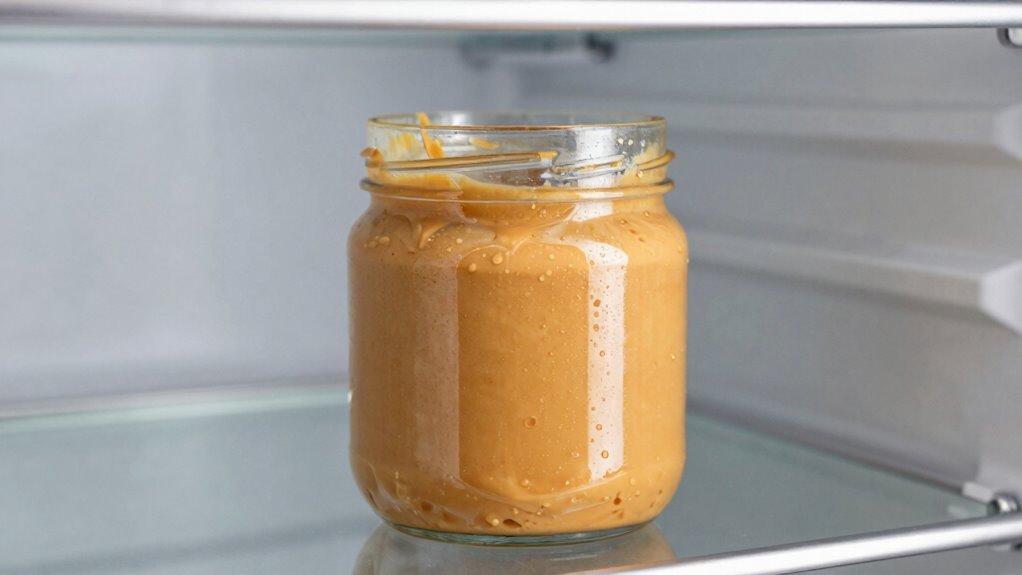

Refrigerating peanut butter helps keep it fresh longer by slowing oxidation and preventing oil separation, especially in natural or organic types without preservatives. It also prevents the oils from rising to the top, maintaining a consistent look. However, cold temperatures can make it firmer and slightly dull its flavor. If you want to learn more about when and how to refrigerate your peanut butter for best results, keep exploring these tips.
Key Takeaways
- Refrigerating peanut butter slows oil separation and spoilage but can make it firmer and less creamy.
- Cold temperatures dull the flavor and make spreading more difficult.
- Natural or organic varieties benefit from refrigeration to extend shelf life without preservatives.
- Storing in the pantry preserves flavor and softness but may lead to quicker oil separation.
- Stirring before use can improve texture after refrigeration, but some firmness may remain.
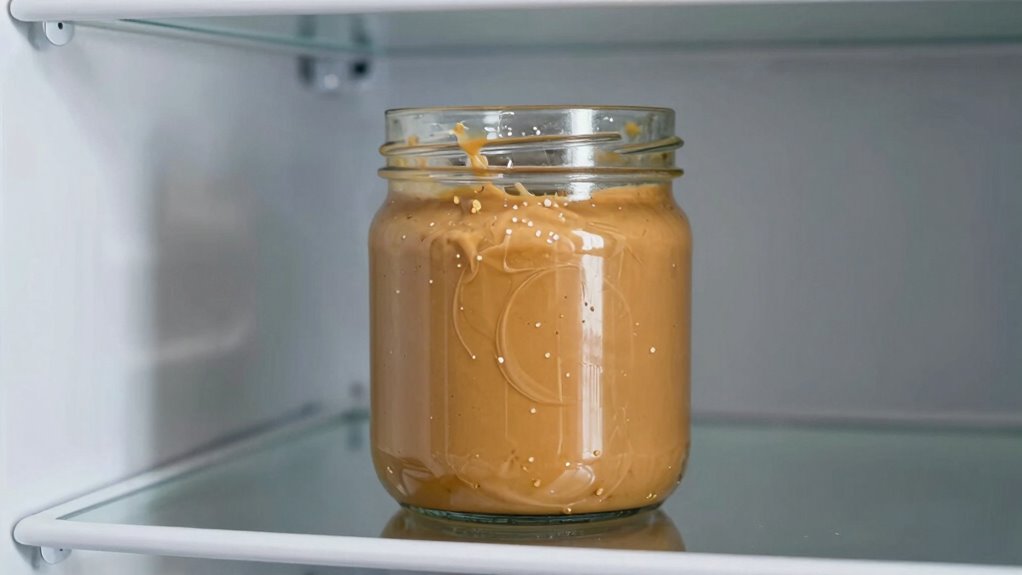
Have you ever wondered whether refrigerating peanut butter is a good idea? It’s a common question, especially for those who want to keep their spread fresh longer. When you store peanut butter in the fridge, you’re mainly trying to slow down the natural oil separation that can happen over time. Natural oils tend to rise to the top, creating a layer of liquid that separates from the solid part of the spread. Refrigeration can help prevent this, keeping your peanut butter looking more uniform and making it easier to spread straight from the fridge. However, while this may seem beneficial, it’s worth considering how it impacts flavor and texture. Cold temperatures can dull the rich, roasted flavor that makes peanut butter so appealing, and it can make the spread a bit harder to work with.
If you prefer your peanut butter softer and more flavorful, you might want to avoid refrigerating it. But if you’re concerned about shelf life and natural oil separation, especially for natural or organic varieties that lack preservatives, refrigeration can be advantageous. Just keep in mind that the colder environment may slightly change the overall experience, making it less creamy and more difficult to spread smoothly. Some people find that a quick stir before use can help reincorporate the oil, but this isn’t always enough to restore the original texture if the spread has been in the fridge for a long time. Additionally, proper storage techniques can help maintain peanut butter quality for longer periods. Proper storage techniques also include keeping the jar tightly sealed to prevent moisture and contaminants from affecting the spread.
Flavor preservation is another point in favor of refrigeration. Cooler temperatures slow down the oxidation process that can cause your peanut butter to go rancid or develop off-flavors over time. If you buy large jars or homemade varieties with no preservatives, storing them in the fridge can extend their freshness and keep the flavor intact longer. Additionally, automated grammar correction tools can assist in refining your writing about this topic. Still, this benefit comes with the trade-off of a firmer texture and potentially less vibrant taste when cold.
Ultimately, whether you refrigerate your peanut butter depends on your priorities. If you want maximum flavor and a soft, spreadable consistency, storing it in a cool, dark pantry might be better. But if you’re concerned about natural oil separation, spoilage, or extending shelf life, especially for natural varieties, the fridge can be a practical choice. Just remember to give it a good stir if it has been refrigerated, and consider how the temperature affects your enjoyment of this beloved spread.
natural peanut butter storage container
As an affiliate, we earn on qualifying purchases.
As an affiliate, we earn on qualifying purchases.
Frequently Asked Questions
Does Refrigeration Extend Peanut Butter’s Shelf Life Significantly?
Refrigeration doesn’t substantially extend peanut butter’s shelf life, but it can help preserve flavor and maintain texture consistency. If you prefer a firmer spread, chilling can prevent oil separation and keep it fresh longer. However, refrigeration may dull the flavor slightly and make the texture less creamy. For ideal flavor preservation and texture, it’s best to store peanut butter in a cool, dark place and only refrigerate if you notice oil separation or want it firmer.
Can Refrigerating Alter the Taste or Texture of Peanut Butter?
Refrigerating peanut butter can change its flavor and alter its texture. You might notice a duller, less rich flavor, and the texture can become harder or more crumbly. The cold dulls the natural oils’ aroma and flavor, and the firmness makes spreading more difficult. If you prefer a smoother, more flavorful experience, it’s best to keep peanut butter at room temperature. Refrigeration is better for preservation than taste.
Is It Necessary to Refrigerate Natural Versus Processed Peanut Butter?
You don’t need to refrigerate natural or processed peanut butter for flavor preservation or texture stability, but doing so can help extend shelf life. Natural peanut butter, with no preservatives, benefits from refrigeration to prevent oil separation and spoilage, maintaining its freshness. Processed types often contain stabilizers, making refrigeration optional. If you prefer a firmer texture or want to prolong freshness, refrigerate; otherwise, keep it in a cool, dark pantry.
How Does Refrigeration Affect the Oil Separation in Peanut Butter?
Refrigeration slows down oil separation in peanut butter, helping maintain its texture consistency. When you refrigerate, the cold temperature keeps the oils from rising to the top, preventing that runny layer from forming. However, it can also make the peanut butter thicker and harder to spread. If you prefer a smoother, more consistent texture and want to minimize oil separation, refrigeration is a good option, especially for natural peanut butters.
Are There Health Risks Associated With Not Refrigerating Peanut Butter?
Not refrigerating peanut butter generally doesn’t pose significant health risks, as long as you keep it sealed and stored properly. Your main concern is bacterial growth, which is unlikely due to its low moisture content. However, refrigeration helps maintain nutritional stability by preventing oils from rancidifying, especially in natural varieties. If you prefer room temperature storage for better texture, just consume it within a reasonable timeframe to avoid spoilage.
Conclusion
In the end, whether you refrigerate your peanut butter or not depends on your preference and how you plan to use it. If you want it to stay fresh longer, a quick chill in the fridge might be your best bet. But if you prefer a softer spread, keeping it at room temperature is just fine. Remember, it’s all about finding what works best for you—after all, don’t put all your eggs in one basket.