When you switch to whipped butter, you’ll notice it takes up more space for the same amount of fat compared to regular butter because of its airy, fluffy texture. A tablespoon of whipped butter weighs less and contains fewer grams of fat and calories than regular butter, so you’ll need to use a bit more to match the same richness. Understanding these differences helps you measure accurately and avoid overusing. Keep exploring to learn how this impacts your cooking and nutrition.
Key Takeaways
- Whipped butter occupies more volume than regular butter due to air incorporation, requiring larger measured amounts for the same fat content.
- A tablespoon of whipped butter weighs less than regular butter, affecting precise nutritional and recipe measurements.
- Increased volume makes whipped butter easier to spread, potentially leading to overuse if portioning isn’t adjusted.
- Using volume measurements without considering density differences can result in adding more whipped butter than intended.
- To match regular butter’s fat content, slightly more whipped butter by volume may be necessary.
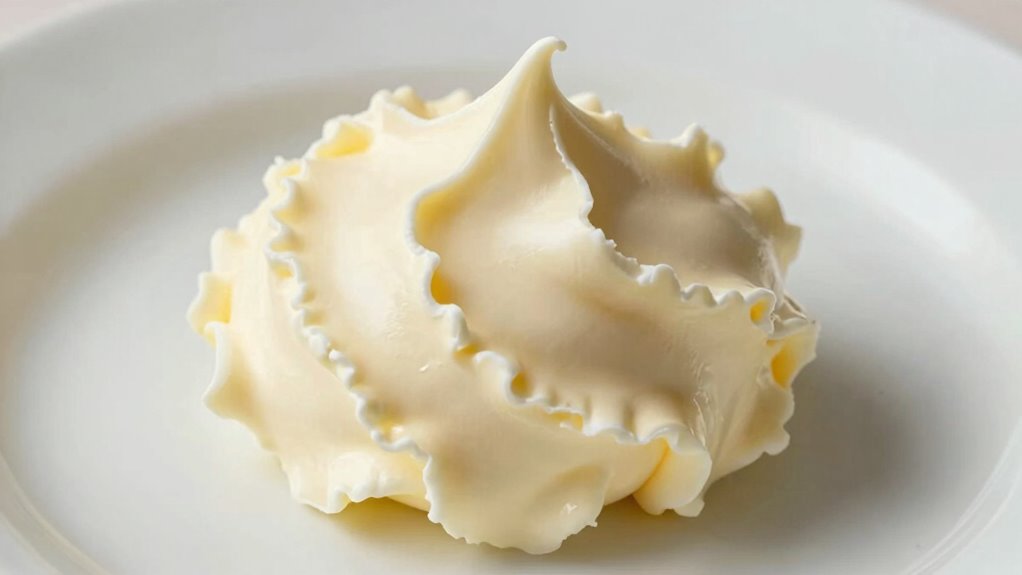
When you switch from regular butter to whipped butter, you might notice a significant difference in portion sizes. This change happens because whipped butter has a much lighter, airier consistency, which directly impacts how much you get per serving. Regular butter is dense and compact, so a tablespoon of it weighs more than the same volume of whipped butter. As a result, when measuring by volume, you’ll find yourself using more whipped butter to achieve the same richness or amount as you would with regular butter. This isn’t just about weight; it’s about how the butter feels and spreads on your bread or baked goods.
Whipped butter’s airy texture means you may need more volume to match regular butter’s richness.
One key factor is the nut texture of whipped butter. The incorporation of air creates tiny pockets throughout the butter, giving it a fluffy, cloud-like appearance. This nut texture—though not actually containing nuts—refers to the way the butter’s structure feels in your mouth. It’s soft, smooth, and less dense than regular butter, which influences how much you spread or scoop out. Because of this, you may find it easier to spread whipped butter evenly over bread or toast, which enhances spreadability factors. The increased spreadability means you can cover more surface area with less effort, but it also means you might be using more volume than you realize, especially if you’re used to the denser texture of regular butter. Additionally, understanding the physical properties of whipped butter can help you better gauge portion sizes and usage. Recognizing the air content in whipped butter can also help you anticipate how much to use in recipes or as a topping.
Furthermore, the different texture of whipped butter impacts how it melts and interacts with other ingredients in cooking or baking, which can alter the final outcome of your dish. This change in portion size by volume is important to consider when following recipes or tracking your intake. Since whipped butter is less dense, a tablespoon of it contains fewer grams than regular butter, so if you’re counting calories or nutrients, measuring by weight might be more accurate. However, most people measure butter by volume, which can lead to overestimating how much they’re actually using when switching to whipped butter. The spreadability factors work in your favor here, making it easier to cover surfaces with less physical effort, but they can also cause you to unintentionally use more than intended. Being aware of the structure and composition of whipped butter can help you adapt your cooking and portioning habits more effectively.
In practical terms, understanding these differences helps you adjust your measurements to get consistent results. If a recipe calls for a specific amount of butter, you may need to use slightly more whipped butter by volume to match the intended fat content. Recognizing how the nut texture and spreadability factors influence portion size ensures you control your servings and nutritional intake, even as the butter’s airy nature makes it seem like you’re using less. Additionally, being mindful of measurement techniques can help you avoid overusing whipped butter and maintain your desired results. Ultimately, switching to whipped butter changes the way you perceive and measure portions, encouraging more mindful usage without sacrificing flavor or ease of spreading.
whipped butter measuring cups
As an affiliate, we earn on qualifying purchases.
As an affiliate, we earn on qualifying purchases.
Frequently Asked Questions
Does Whipped Butter Taste Different From Regular Butter?
Yes, whipped butter tastes slightly different from regular butter. Its flavor consistency is often lighter and less intense, which can make it feel milder on your palate. The texture variation is noticeable—you’ll find whipped butter much fluffier and airier, giving it a smoother, creamier mouthfeel. This change in texture can influence how you perceive its flavor, making it seem less rich but still delicious for spreading and cooking.
How Long Does Whipped Butter Stay Fresh?
Whipped butter stays fresh for about 1 to 2 weeks when stored properly in the refrigerator. Its creamy texture and spreadability ease make it a favorite for quick use, but you should always check for signs of spoilage like sour smell or discoloration. Keep the container tightly sealed to maintain freshness, and avoid leaving it out at room temperature for extended periods.
Can Whipped Butter Be Used as a Substitute in Baking?
Yes, you can use whipped butter as a substitute in baking, especially if you’re after a different texture or flavor. Imagine spreading airy, light whipped butter into your dough, creating delightful texture variations. It works well as an alternative spread and adds richness. Keep in mind, its fluffiness might alter the batter’s consistency slightly, so adjust your measurements if needed to guarantee your baked goods turn out perfect.
Is Whipped Butter More Calorie-Dense Than Regular Butter?
Whipped butter isn’t more calorie-dense than regular butter; in fact, the calorie comparison shows they contain similar calories per serving. The main nutritional difference is that whipped butter has air incorporated, which makes it lighter and increases its volume, but this doesn’t substantially change the calorie count. So, if you’re watching your calories, using whipped butter won’t impact your intake differently than regular butter, but portion size may appear larger.
How Does Storage Affect Whipped Versus Regular Butter?
Storage conditions markedly impact whipped and regular butter. Whipped butter is more sensitive to temperature changes, so if you store it in a warm environment or an improper container, it may become soft, spoil faster, or lose its texture. Regular butter’s solid form withstands temperature fluctuations better. To maintain quality, keep both in airtight containers in the refrigerator, but note that whipped butter’s container impact is more pronounced because it’s more exposed to air and moisture.
airy whipped butter spreader
As an affiliate, we earn on qualifying purchases.
As an affiliate, we earn on qualifying purchases.
Conclusion
By understanding how whipped butter changes portion size by volume, you can better control your servings, avoid waste, and enjoy your meals more mindfully. Recognize that whipped butter is lighter, fluffier, and takes up more space than its solid counterpart. Embrace the shift in texture, appreciate the increased airiness, and adapt your expectations accordingly. Ultimately, knowing the differences helps you make smarter choices, enjoy your food more fully, and savor each meal with confidence and clarity.

Cheese Butter Slicer, Stainless Steel Cheese Cutter Ergonomic Wires Butter Cutter Single Stick Even Slicer for Portion Control Kitchen Food Tool with Butter Spatula for Butter Block (Silver)
Product Content: You can get 1 piece of cheese butter slicer with 1 piece of butter spatula. The…
As an affiliate, we earn on qualifying purchases.
As an affiliate, we earn on qualifying purchases.
whipped butter nutrition label
As an affiliate, we earn on qualifying purchases.
As an affiliate, we earn on qualifying purchases.