
You might find that immersion circulators require more water management than you expected because maintaining proper water levels, cleaning regularly, and monitoring flow are vital for peak performance. If you don’t keep the water clean and at the right level, it can cause temperature fluctuations, damage the device, or reduce its lifespan. Paying close attention to water quality, circulation, and ongoing maintenance helps guarantee consistent results—stick with it, and you’ll discover more ways to keep your equipment running smoothly.

Get kitchen staples and gadgets delivered free with Prime
- Fast, free delivery on millions of items
- Prime Video, Amazon Music and more included
- Member-only deals all year
Key Takeaways
- Maintaining proper water levels prevents damage and ensures even heat distribution during operation.
- Regular cleaning and descaling are essential to avoid mineral buildup and maintain performance.
- Monitoring water quality and testing helps prevent circulation issues caused by deposits or impurities.
- Ensuring proper circulation and checking for blockages promote consistent temperature control.
- Overall water management, including level, quality, and flow, is crucial for optimal immersion circulator function.
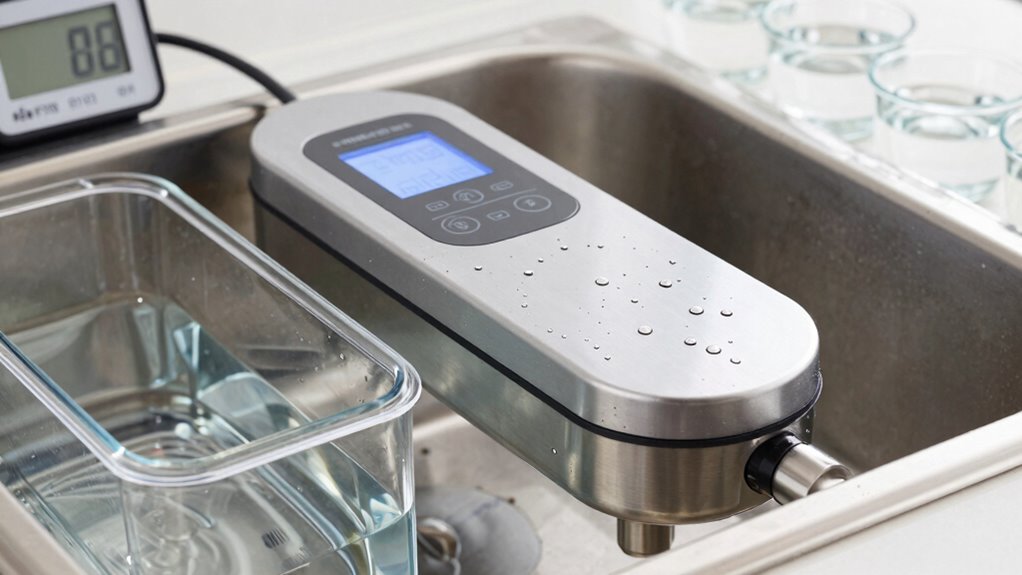
Have you ever wondered how to keep water at a precise temperature for cooking or industrial processes? If you’re using an immersion circulator, you probably know they’re excellent tools for maintaining consistent heat. However, achieving that perfect temperature stability isn’t just about turning the device on and setting a number. It requires ongoing attention to water levels, circulation quality, and proper circulator maintenance. Many beginners underestimate how much water management is involved, but neglecting these details can compromise your results and even damage your equipment.
Maintaining water levels, circulation, and cleanliness ensures precise, consistent temperature control with your immersion circulator.
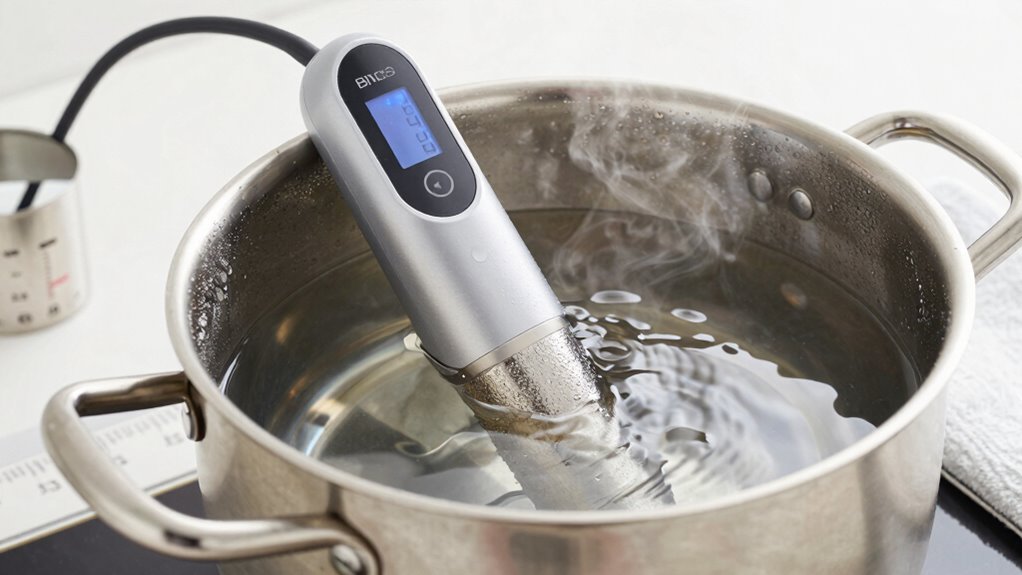
One of the most critical aspects of water management is ensuring the water level stays within the recommended range. Too little water, and the circulator can run dry, risking overheating and damaging the pump. Too much, and you might impair circulation or cause water to spill, creating safety hazards or messes. Regularly checking and adjusting the water level keeps the circulator functioning at peak efficiency. This simple step helps maintain temperature stability because a consistent water level ensures uniform heat distribution, preventing hot or cold spots that can throw off your process.
Circulator maintenance is equally vital. Over time, mineral deposits, debris, and algae can build up inside the unit, especially if you’re using hard water or neglecting cleaning routines. These deposits hinder heat transfer and impede water flow, leading to fluctuations in temperature. Regularly descale and clean your immersion circulator according to the manufacturer’s instructions. Doing so not only prolongs the device’s lifespan but also guarantees that it operates smoothly, maintaining precise control over temperature. When your circulator runs efficiently, it can respond quickly to adjustments, keeping your water temperature stable even during extended use. Additionally, understanding water quality and using filtered or softened water can help prevent mineral buildup and extend your equipment’s lifespan. Incorporating routine water testing can further help identify potential issues before they impact performance. Being aware of hard water conditions in your area can guide you toward better water treatment choices, ultimately reducing maintenance needs.
Proper water management also involves monitoring circulation quality. If you notice inconsistencies—such as uneven water movement or temperature fluctuations—check the circulation pump and impeller for blockages or damage. Sometimes, small obstructions cause uneven flow, which disrupts temperature stability. Ensuring the pump operates properly and replacing worn parts when necessary can make a significant difference. Remember, a well-maintained circulator with good circulation ensures the water heats evenly, maintaining the accuracy you need for delicate cooking or precise industrial applications. Additionally, understanding the importance of water management and how it impacts overall device performance can help you troubleshoot issues more effectively. Maintaining optimal circulation and flow rate is also crucial for consistent results.
In essence, managing water levels, performing routine circulator maintenance, and monitoring circulation are essential steps for anyone serious about precise temperature control. Beginners often overlook these details, but mastering water management elevates the performance of your immersion circulator. It’s not just about setting the right temperature; it’s about keeping that temperature steady and consistent over time. With proper care, your immersion circulator becomes a reliable partner, delivering the consistent results that professional and home chefs alike seek.
immersion circulator water level monitor
As an affiliate, we earn on qualifying purchases.
As an affiliate, we earn on qualifying purchases.
Frequently Asked Questions
How Often Should I Change the Water in My Immersion Circulator?
You should change the water in your immersion circulator every 12 to 24 hours, especially if you’re cooking multiple meals or using the device frequently. Regular water filtration helps keep the water clean and reduces buildup, making circulator maintenance easier. If you notice cloudiness or floating debris, change the water sooner. Consistent water management guarantees ideal performance and prevents bacterial growth, keeping your sous vide cooking safe and effective.
Can Hard Water Damage My Immersion Circulator Over Time?
Yes, hard water can damage your immersion circulator over time. The minerals in hard water, like calcium and magnesium, can build up as deposits inside the device. Poor water quality accelerates this process, causing mineral deposits that clog or impair the heater and pump. To prevent damage, use filtered or distilled water, and regularly clean your circulator to minimize mineral buildup and extend its lifespan.
What Are the Signs of Water-Related Issues in My Circulator?
Keep an eye out for signs of water-related issues, as they can sneak up on you. If you notice unexplained fluctuations in temperature, strange odors, or cloudy water, your circulator might be in trouble. Water contamination and pH imbalance can cause corrosion or buildup, leading to malfunction. Regularly check and maintain your water, because ignoring these signs is like closing your eyes to trouble brewing beneath the surface.
Is Distilled Water Necessary for Optimal Performance?
You don’t need distilled water for your immersion circulator, but it helps prevent mineral deposits that can build up and impair performance. Using tap water with high mineral content may cause scaling, making it harder for your device to operate smoothly. If you notice mineral buildup, switching to distilled water reduces deposits, keeping your circulator running efficiently and extending its lifespan. Regular maintenance also helps prevent issues related to water quality.
How Do I Prevent Mineral Buildup in the Water Chamber?
You absolutely must tackle mineral deposits head-on, or they’ll take over faster than you can blink! To prevent buildup, regularly clean your water chamber and change the water often. Use filtered or distilled water to cut down on minerals, and keep an eye on water levels for proper water maintenance. This way, mineral deposits won’t sabotage your immersion circulator’s performance, keeping everything running smoothly and efficiently.
Conclusion
As you immerse yourself in sous vide cooking with your immersion circulator, remember that water isn’t just a medium—it’s the silent partner in your culinary journey. Picture the gentle ebb and flow of water, quietly ensuring your food cooks evenly. With a little extra care and water management, you’ll turn simple ingredients into a masterpiece. Keep an eye on your water level, and let your immersion circulator work its magic, like a calm, steady tide guiding your flavors home.
Fall Picks
fall essentials
As an affiliate, we earn on qualifying purchases.