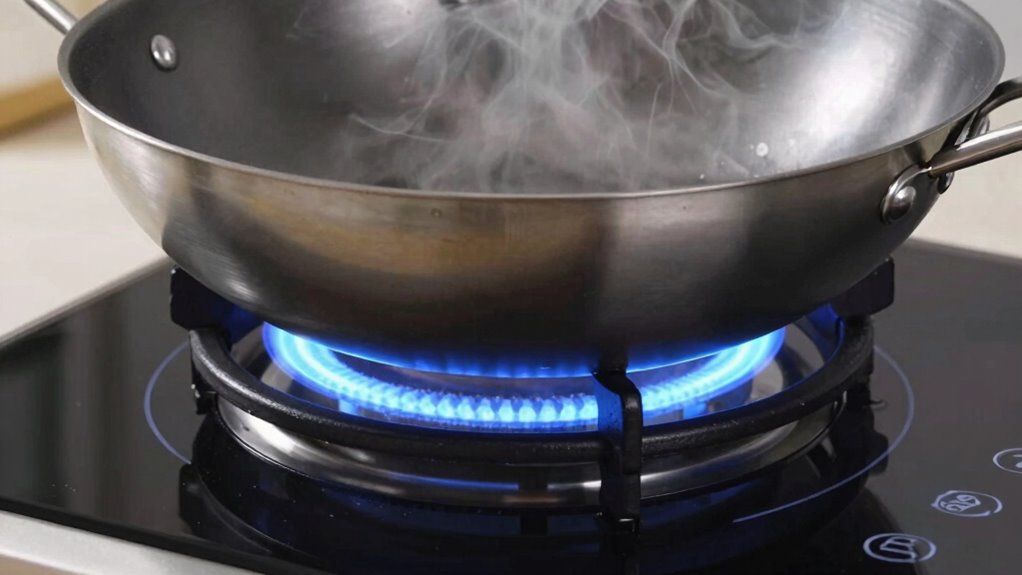

Induction wok burners work best if your cooking style relies on quick, precise temperature changes and control. They excel at tasks like simmering sauces or delicate dishes that need careful heat management. However, if you frequently do high-heat stir-frying or outdoor cooking, gas burners might suit you better due to their tactile feedback and immediate flame adjustments. Want to discover how to match your cooking style with the right stove? Keep exploring to find out more.

Get kitchen staples and gadgets delivered free — and shop member deals
- Fast, free delivery on millions of items
- Access to Prime Big Deal Days deals on October 6–7
- Prime Video, Amazon Music and more included
Key Takeaways
- Induction wok burners excel at precise temperature control for simmering and delicate cooking techniques.
- Rapid heat adjustments suit stir-frying, but may lack the immediate response needed for high-heat outdoor cooking.
- Compatibility depends on specific wok materials; magnetic cookware is essential for effective induction heating.
- Traditional high-heat cooking methods may favor gas burners for tactile feedback and quick flame adjustments.
- Overall suitability varies based on cooking style, cookware, and kitchen electrical infrastructure.
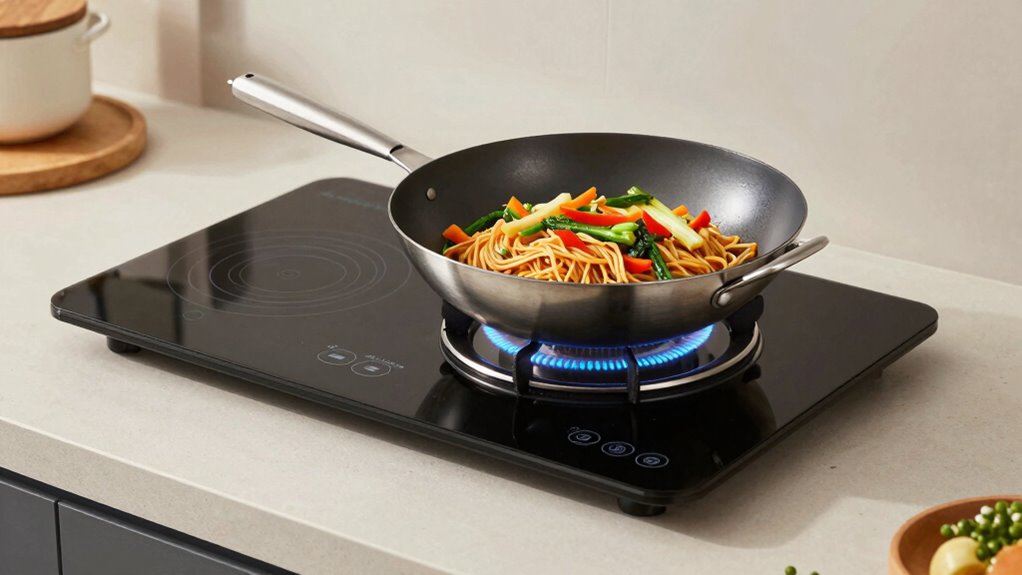
Induction cooktops heat cookware directly through electromagnetic fields, which means they require specific types of pots and pans. If your current wok is made of magnetic materials like cast iron or certain stainless steels, it can work seamlessly with induction burners. However, if your wok is aluminum, glass, or non-magnetic stainless steel, it won’t heat properly on an induction stove. That’s why checking cookware compatibility is crucial before making a switch. An incompatible wok won’t just be inefficient; it could also pose a safety risk if it overheats or doesn’t heat evenly. Additionally, understanding induction technology can help you better grasp how these appliances operate and whether they fit your culinary needs.
Gas safety is another important factor. Gas stoves have long been favored for Asian cooking because they provide instant heat and visual control over flame size, making it easier to manage quick stir-fries and high temperatures. Induction burners, while precise, require electricity and don’t offer that immediate visual feedback. If you’re accustomed to the quick adjustments of a gas flame, you might find induction less intuitive for certain dishes. Also, if your home’s electrical system isn’t equipped to handle high-powered induction units, you could face safety concerns or the need for costly upgrades. Additionally, electric cooking technology may not replicate the immediate and intuitive control that gas provides for high-heat cooking styles. Moreover, some users find that the energy efficiency of induction stoves can lead to lower operating costs over time, making them a more sustainable choice in the long run.
Furthermore, the cooking style you prefer can significantly influence whether induction wok burners are suitable for your kitchen. Induction wok burners make sense only if your cooking style emphasizes rapid heat adjustments and consistent temperatures. They excel at tasks that benefit from precise temperature control, like simmering sauces or cooking delicate ingredients. But if your culinary routine involves high-heat stir-frying or outdoor cooking traditions, a gas stove might still be the better choice. Gas safety plays a role here too; gas stoves are generally more forgiving if something goes wrong, with easy shut-off valves and a long-standing safety record. Moreover, some chefs prefer the tactile feedback and visual cues that gas stoves offer, which can be critical for certain traditional cooking techniques.
Ultimately, whether an induction wok burner makes sense depends on your specific cooking needs and your kitchen setup. If you already have induction-compatible cookware and prefer a sleek, modern appliance that offers precise control, it can be a worthwhile investment. But if your cooking style relies heavily on the visual and immediate heat control of gas, or if your cookware isn’t compatible, sticking with gas might be the smarter, safer choice.
As an affiliate, we earn on qualifying purchases.
Frequently Asked Questions
Can Induction Wok Burners Replace Traditional Gas Woks Entirely?
Induction wok burners can’t fully replace traditional gas woks because they serve as an alternative cooking method with limitations. While they offer safety considerations like no open flames and easier temperature control, they may struggle with high-heat stir-frying or quick flame adjustments. If your cooking style relies on intense heat and quick flames, a gas wok remains more effective. Consider your specific needs before replacing your gas setup entirely.
Are Induction Wok Burners Suitable for Professional Restaurant Use?
Induction wok burners are suitable for professional restaurant use, especially if you prioritize safety and energy efficiency. About 70% of chefs say induction provides precise temperature control, essential for wok tossing and stir fry techniques. While they excel in consistent heat, some chefs find they lack the high heat output needed for traditional wok tossing. So, if your restaurant focuses on delicate stir fries, induction is a great choice; for high-heat wok tossing, traditional gas might still be preferable.
How Do Induction Wok Burners Perform at High Temperatures?
You’ll find that induction wok burners perform well at high temperatures, thanks to excellent temperature stability and precise heat control. They deliver consistent heat distribution, ensuring your stir-fries or quick-cooking dishes stay perfectly cooked without hot spots. However, their maximum temperature may not match traditional gas burners, so if you need intense, rapid heat, induction might have limitations. Overall, they handle high temps well for most professional or home cooking needs.
Do Induction Wok Burners Require Special Cookware?
You don’t need special cookware for induction wok burners, but wok compatibility is essential. Most induction-compatible cookware, including some woks, works well, provided it has a magnetic base. If you’re worried about cookware requirements, check if your wok is made of ferrous materials. This guarantees efficient heat transfer and safe operation. Upgrading to compatible cookware can improve your cooking experience without needing entirely new tools.
Are Induction Wok Burners Energy-Efficient Compared to Gas?
Yes, induction wok burners are generally more energy-efficient than gas, leading to significant energy savings. They heat up quickly and transfer energy directly to the cookware, reducing wasted heat. This efficiency not only lowers your utility bills but also lessens environmental impact by conserving energy. If you’re looking to cook efficiently and reduce your carbon footprint, induction wok burners are a smart choice, especially for frequent or intensive cooking.
Conclusion
So, if your cooking style screams for rapid, high-heat wok tossing, induction wok burners might just be your culinary soulmate. But if you prefer simmering or delicate techniques, they could feel like trying to fit a square peg in a round hole. Remember, these burners are powerful but aren’t magic; they excel only when used for the right tasks. Choose wisely, and your kitchen could turn into a fiery, wok-wielding paradise—just don’t expect them to do all the work!
NFL season / tailgating Picks
team gear
As an affiliate, we earn on qualifying purchases.