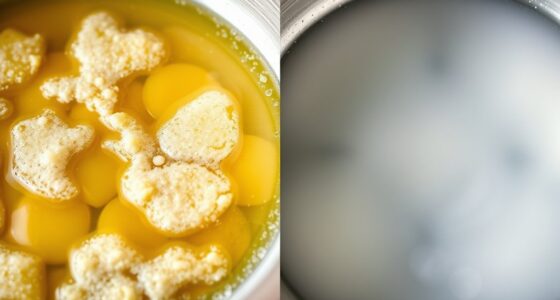
You’ll find braisers are better than skillets for some butter-based dishes because their heavy, tight-fitting lids and deep sides provide gentle, moist heat that prevents butter from burning. This design helps you slow-cook and develop rich flavors while locking in moisture, resulting in tender, flavorful dishes. Skillets, on the other hand, are better suited for quick, high-heat tasks. Keep exploring to discover how choosing the right cookware can elevate your cooking results.
Key Takeaways
- Braisers support slow, gentle cooking that allows butter to melt evenly and infuse flavors without burning.
- Their tight-fitting lids retain moisture, preventing butter from evaporating or drying out during long cooking processes.
- The even heat distribution of braisers helps develop richer, more complex flavors in butter-based dishes.
- Braisers’ design prevents hotspots, reducing the risk of burnt butter and ensuring tenderness.
- They are ideal for simmering and melding ingredients, enhancing the texture and flavor of butter-rich recipes.
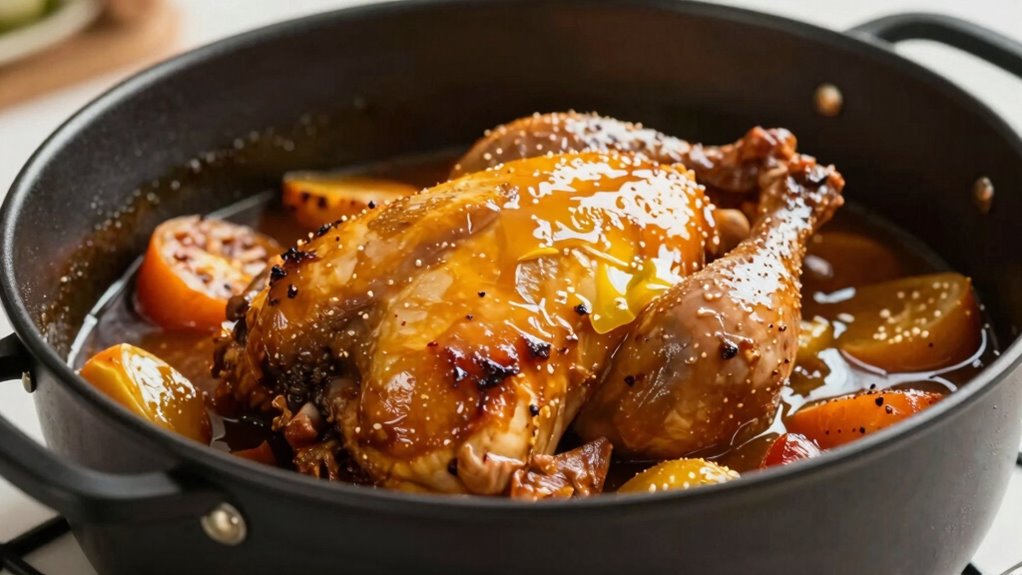
When choosing the right cookware for butter-based dishes, understanding the differences between braisers and skillets can make a significant impact on your cooking results. Each kitchen tool is designed with specific cooking techniques in mind, and selecting the appropriate one can elevate the flavor and texture of your dishes. Braisers, with their heavy, tight-fitting lids and deep sides, are particularly suited for slow, gentle cooking methods that require moisture retention. This makes them ideal for dishes where butter plays an essential role, such as braised vegetables or slow-cooked stews that benefit from the richness of melted butter infused into the ingredients.
Skillets, on the other hand, are typically shallower with sloped sides, making them perfect for quick searing, sautéing, and browning. While skillets excel at high-heat cooking, they aren’t always the best choice for dishes that need gentle simmering or long cooking times with butter. When you’re working with butter-based recipes that require slow cooking to develop flavors or keep the dish moist, a skillet might cause the butter to burn or evaporate too quickly, disrupting the delicate balance of flavors.
Using the right kitchen tools directly influences your cooking techniques. With a braiser, you can sear ingredients at the start, then add liquids and let everything simmer slowly, allowing the butter to meld seamlessly into the dish. This gradual process helps preserve moisture, prevents sticking, and ensures even heat distribution. Braisers also make it easier to cook dishes that need to be kept warm for extended periods without losing their tenderness or buttery richness. Additionally, heat retention properties of braisers make them especially beneficial for dishes that require consistent gentle heat over a longer period. Choosing the appropriate cookware can also help prevent burning or uneven cooking that sometimes occurs with unsuitable pans. Moreover, the moisture-locking capabilities of braisers play a crucial role in maintaining the integrity and flavor of butter-rich dishes. Furthermore, selecting cookware with heat distribution qualities ensures your butter-based recipes cook evenly and avoid hotspots that can cause burning.
In contrast, skillets are better suited for quick, high-heat tasks where you want to develop a crust or quickly cook ingredients before finishing with a sauce or finishing in the oven. They’re less ideal for dishes that require a gentle, prolonged simmer, where butter’s melting properties can be fully utilized without risk of burning. When you understand these distinctions, you’ll appreciate how choosing a braiser can improve your results in butter-based recipes that need slow, moist heat, while skillets shine in rapid, high-temperature techniques.
Ultimately, the decision comes down to the cooking techniques you prefer and the dishes you want to prepare. For butter dishes that benefit from moisture retention, gentle heat, and slow cooking, a braiser is the superior option. It’s a versatile kitchen tool that helps you master the subtleties of butter-based cuisine, ensuring your dishes come out flavorful, tender, and perfectly cooked every time.
As an affiliate, we earn on qualifying purchases.
Frequently Asked Questions
Can Braisers Be Used on Induction Cooktops?
Yes, braisers can be used on induction cooktops. They’re typically made from magnetic materials like cast iron or stainless steel, which are ideal for induction cooking. This allows you to apply even heat distribution, essential for gentle cooking techniques like braising. Just make certain your braiser has a magnetic base, and you’ll enjoy precise temperature control and consistent results for your butter-based dishes.
Are Braisers More Versatile Than Skillets?
Yes, braisers are more versatile than skillets. They excel in a variety of cooking techniques, from braising to simmering, thanks to their design. The even heat distribution guarantees your food cooks uniformly, making them ideal for slow-cooked, tender dishes. You’ll find yourself reaching for a braiser more often, especially when preparing recipes that require gentle, consistent heat—it’s a game-changer in your culinary arsenal.
How Do Braisers Affect the Flavor of Butter Dishes?
Braisers enhance the flavor of butter dishes by promoting better flavor infusion, allowing the butter to absorb more of the dish’s essence. The deep, covered design traps heat and moisture, ensuring the butter melds smoothly into ingredients, intensifying taste. This controlled environment prevents butter from burning or drying out, resulting in a richer, more cohesive flavor profile that enhances the overall dish and delivers a more satisfying, well-rounded taste experience.
What Materials Are Best for Braisers?
You should choose braisers made from materials like enameled cast iron or stainless steel for ideal results. These materials excel in cooking techniques that require even heat distribution and retain heat well, essential for slow-cooking butter-based dishes. Their durability ensures long-lasting use, allowing you to develop rich flavors without worrying about warping or damage. Investing in a high-quality material enhances your cooking experience and guarantees your dishes turn out perfectly every time.
Do Braisers Require Special Cleaning Compared to Skillets?
Like a trusty knight’s armor, braisers need proper care. They don’t require special cleaning, but the cleaning process should be gentle to preserve their finish. Use warm water and mild soap, avoiding abrasive scrubbers. Maintenance tips include drying promptly to prevent rust and seasoning regularly if they’re cast iron. Skillets may need less fuss, but braisers reward proper care with lasting performance.
Conclusion
So, next time you’re craving that perfect butter dish, don’t underestimate the humble braiser. Sure, a skillet looks sleek and quick, but it’s like bringing a knife to a butter fight — just not quite enough. Ironically, that extra space and gentle heat of a braiser might be your best friend for a tender, flavorful outcome. Who knew that sometimes, bigger really is better — especially with butter? Happy cooking!