When your stainless steel pan isn’t hot enough, food tends to stick because the proper temperature isn’t reached for caramelization and a natural non-stick surface. Insufficient heat causes the food to bond with the metal before a proper sear forms, making cleanup harder. Ensuring your pan is properly heated and the oil shimmers before adding food creates a barrier, reducing sticking. Keep going, and you’ll discover more tips to master your stainless steel cooking techniques.
Listen free for 30 days with Audible
Thousands of audiobooks and originals — cancel anytime.
As an affiliate, we earn on qualifying purchases.
Key Takeaways
- Insufficient heat causes food to bond with the pan before caramelization, leading to sticking.
- Cold or unevenly heated pans prevent proper oil formation, reducing non-stick properties.
- Without proper preheating, the pan’s surface isn’t hot enough to create a barrier for food release.
- Low temperatures cause food to stick because the surface isn’t hot enough to develop a natural release.
- Inadequate heating results in food bonding with the metal, making it harder to cook evenly and clean later.
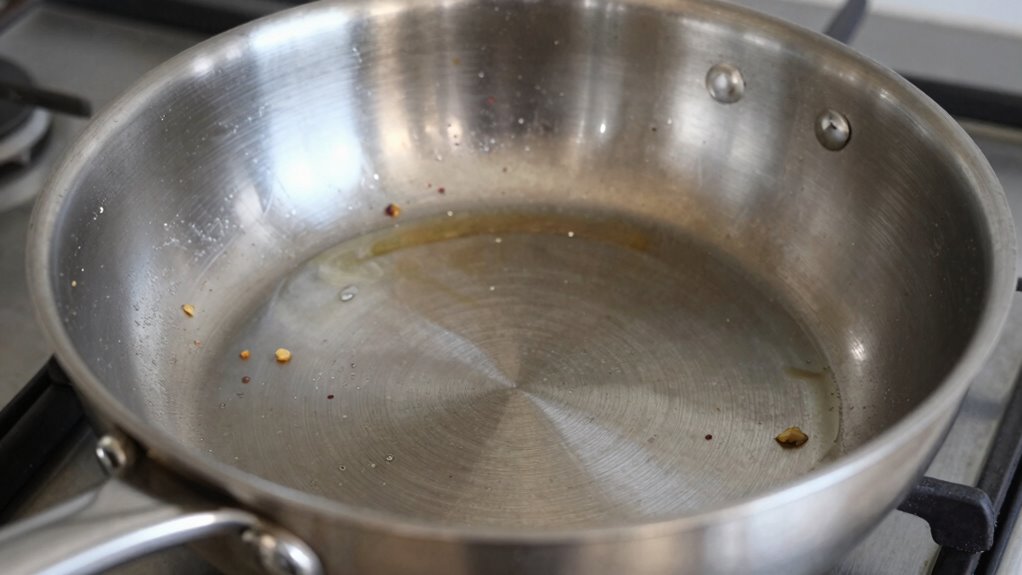
Stainless steel pans are popular for their durability and versatility, but they can be tricky to use without sticking. One common reason for sticking is that the pan isn’t hot enough when you start cooking. When the pan’s temperature isn’t up to par, food tends to cling and stick, making cleanup a hassle. To prevent this, you need to pay close attention to how you heat your pan and how you use cooking oil.
First, it’s essential to understand how heat distribution works with stainless steel. Unlike non-stick pans, stainless steel relies heavily on proper heat control. When you heat the pan evenly, it creates a hot, stable surface that helps food release more easily. If the pan isn’t hot enough, the surface remains cooler, and food will stick because proteins and sugars haven’t caramelized yet. This sticking occurs because the food bonds with the metal surface before it has a chance to develop that natural release. proper heat control is crucial for consistent cooking results.
Proper heat control ensures even cooking and easy food release on stainless steel pans.
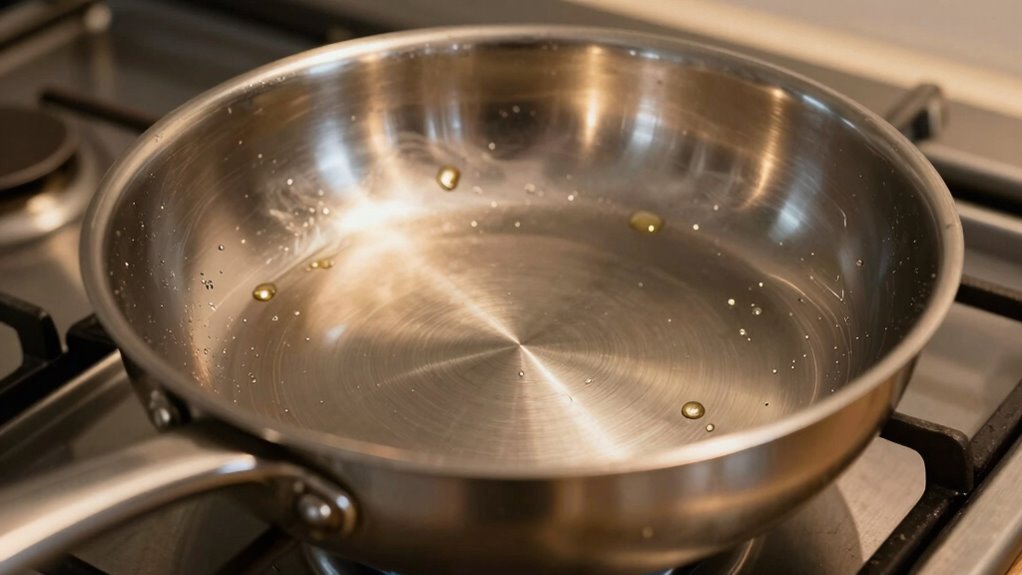
Using the right amount of cooking oil is also vital. When you add oil to a properly heated pan, it creates a barrier between the food and the metal. This prevents sticking and promotes browning. But if the pan isn’t hot enough, the oil won’t spread evenly or form a proper non-stick layer. Instead, it may pool or smoke, which indicates the pan isn’t at the ideal temperature. You want to add your cooking oil once the pan reaches a medium-high heat, so it heats up quickly and forms a thin, shimmering layer that helps food release smoothly.
It’s also important to preheat your pan correctly before adding oil or ingredients. Place the pan on the stove over medium-high heat and let it warm for a minute or two. To test if it’s hot enough, sprinkle a few drops of water onto the surface. If they dance and evaporate instantly, your pan is ready. Once it’s hot enough, add your cooking oil, swirl it around, and wait a few seconds. When the oil starts to shimmer, that’s your cue to add your food.
The key here is patience. If you start cooking before your pan is properly heated, you’ll notice more sticking and uneven cooking. Proper heat and heat distribution are essential for achieving a non-stick experience with stainless steel pans. Over time, you’ll get a feel for how long it takes to reach the right temperature, which improves with experience. Proper heat, combined with the right amount of cooking oil, ensures your stainless steel pans perform at their best, allowing your food to cook evenly and release easily.
As an affiliate, we earn on qualifying purchases.
Frequently Asked Questions
Can Seasoning Help Prevent Sticking on Stainless Steel Pans?
Seasoning techniques can help reduce sticking on stainless steel pans, especially if you use the right oil selection. By applying a thin layer of oil and heating the pan properly, you create a natural non-stick surface. When you season your pan regularly, it develops a polymer layer that prevents food from sticking, even when the pan isn’t perfectly hot. Just make certain you heat the pan gradually and choose oils with high smoke points for best results.
Does the Type of Food Affect Sticking in Stainless Steel Cookware?
You’ll notice that food moisture and cooking temperature greatly influence sticking. For instance, foods with high moisture, like eggs or fish, tend to stick more if the pan isn’t hot enough. When the cooking temperature is just right, the food releases easily, preventing sticking. Keeping your pan sufficiently heated guarantees moisture escapes quickly, reducing sticking. So, the type of food definitely affects sticking, especially if moisture levels aren’t managed properly.
How Often Should I Re-Season My Stainless Steel Pan?
You should re-season your stainless steel pan every few months or whenever you notice food sticking more than usual. Regular seasoning techniques help maintain a natural, non-stick surface and improve pan maintenance. To re-season, clean the pan thoroughly, heat it, then apply a thin layer of oil and heat until it smokes. This process reinforces the seasoning layer, making future cooking easier and preventing sticking.
Is It Better to Cover the Pan While Cooking?
Ever wonder if covering your pan improves cooking? Usually, it’s better not to cover stainless steel pans because pan ventilation helps with even heat distribution, preventing hot spots and sticking. Covering traps heat and moisture, which can lead to uneven cooking and soggy results. Keep the lid off to allow steam to escape and maintain control over the heat, ensuring your food cooks evenly without sticking.
Do Different Brands of Stainless Steel Pans Have Different Sticking Issues?
Yes, different brands of stainless steel pans can have varying sticking issues. Brand variations often involve material differences, which influence how food releases and heats. Some brands use higher-quality stainless steel or better construction, reducing sticking, while others may not. You’ll find that investing in reputable brands with consistent material quality can make a real difference, especially if you prefer less sticking and easier cleanup during cooking.
Conclusion
Remember, the secret to preventing sticking isn’t just about heat—it’s about mastering the dance between temperature and patience. When you wait for your stainless steel pan to reach the right sizzling point, you’re inviting a non-stick symphony to unfold. Don’t rush the process; instead, let your pan warm gradually. After all, isn’t good cooking just like a well-aged wine—improved with time and a touch of grace? Embrace the wait, and your culinary creations will thank you.
Flea & tick season Picks
flea and tick prevention
As an affiliate, we earn on qualifying purchases.