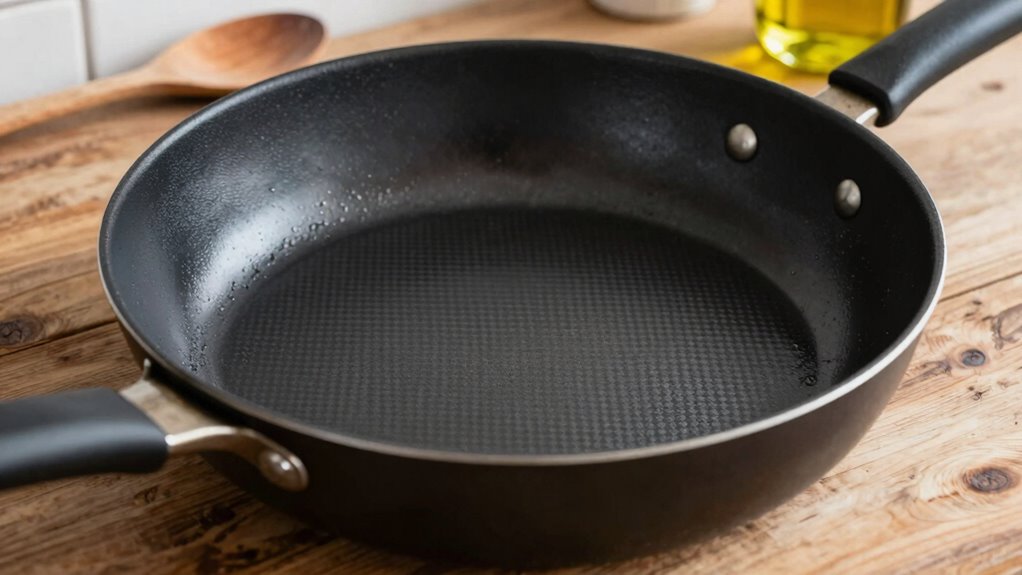

To get the best seasoning on your carbon steel pan, you should stop overdoing the oil. Too much oil creates uneven layers, sticky spots, and prevents proper bonding during heating. A thin, even coat helps the oil polymerize properly, forming a durable and non-stick surface. Over-oiling can also cause smoking and burning, making the pan less effective. Keep the oil amount just right for a smooth, long-lasting finish—you’ll find it’s worth the effort if you keep going.

Get kitchen staples and gadgets delivered free with Prime
- Fast, free delivery on millions of items
- Prime Video, Amazon Music and more included
- Member-only deals all year
Key Takeaways
- Using a thin, even oil layer ensures proper polymerization and a durable, non-stick surface.
- Over-oiling creates sticky spots and prevents the formation of a strong seasoning layer.
- Excess oil can cause smoking, uneven heating, and potential damage to the seasoning process.
- Controlled, moderate oil application promotes better heat distribution and more effective seasoning.
- Stopping over-oiling results in a smoother, more effective, and longer-lasting seasoning coating.
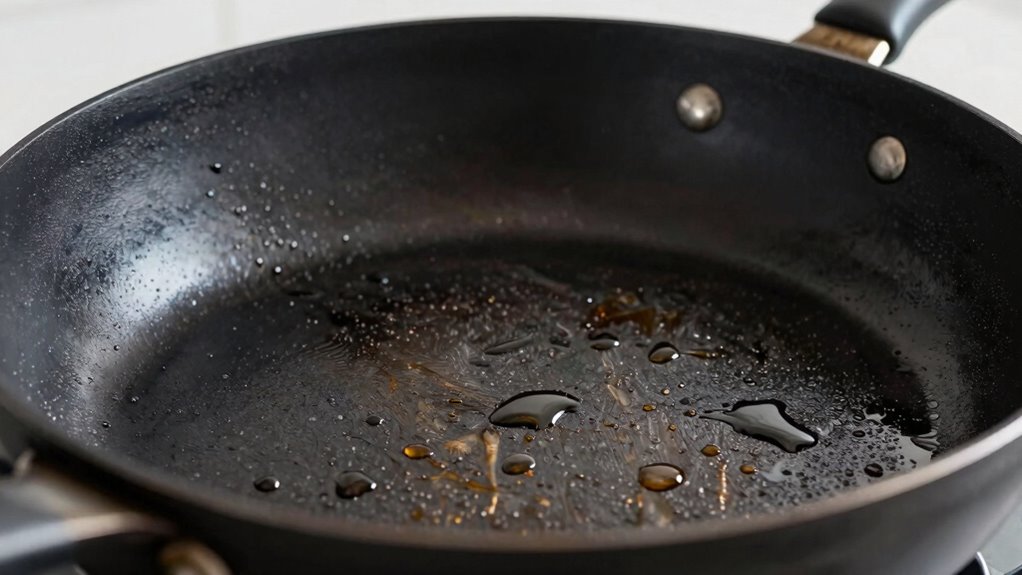
Seasoning your carbon steel pan is fundamental to create a natural, non-stick surface that improves with use. When you start, you might think slathering on plenty of oil will speed up the process, but too much oil can actually hinder the seasoning. Excess oil tends to pool or create uneven layers, which can lead to sticky spots and uneven oil absorption. Instead, you want just enough oil to coat the surface lightly. This allows the seasoning layers to build up evenly, developing a durable, slick surface that enhances with each use.
Oil absorption plays a key role in the seasoning process. When you apply a thin layer of oil and heat the pan, the oil undergoes polymerization, bonding with the steel’s surface to form a protective, non-stick layer. Overdoing it with oil can result in a sticky, uneven finish because excess oil doesn’t fully polymerize; it can leave behind a residue that hampers the seasoning’s effectiveness. The goal is to strike a balance: use enough oil to coat the surface smoothly, but avoid excess that can create puddles or uneven layers. This practice guarantees that the oil bonds properly to the steel, creating a more consistent and durable seasoning.
Applying a thin, even layer of oil ensures proper bonding and a durable, non-stick seasoning.
Another indispensable factor is heat distribution. When you apply a light coat of oil and heat the pan gradually, you promote even heat distribution, which is essential for proper seasoning. If you use too much oil, the excess can burn or create hotspots, disrupting the seasoning process. Properly seasoned carbon steel pans develop a smooth, resilient surface that heats evenly, making cooking more predictable and efficient. Over-oiling can cause oil to smoke excessively or burn unevenly, preventing the seasoning from forming correctly. By controlling the amount of oil and heating evenly, you allow the seasoning layers to build uniformly, which improves heat distribution across the cooking surface. Ensuring proper heat distribution also supports oil polymerization, resulting in a stronger, more durable seasoning layer. Additionally, understanding how oil absorption works helps you fine-tune your seasoning technique for better results. Being mindful of temperature control is crucial, as uneven heating can compromise the quality of the seasoning layer.
Ultimately, the secret to better seasoning isn’t just in the amount of oil you use but in how you use it. Applying a thin, even layer and heating gradually ensures the oil absorbs properly and bonds securely to the steel. This approach creates a more effective, long-lasting non-stick surface. When you stop overdoing the oil, you give your pan the best chance to develop a strong, resilient seasoning that improves with every use. Less oil during seasoning means better oil absorption, more even heat distribution, and a smoother surface that enhances your cooking experience. Paying attention to proper heating techniques can significantly improve your seasoning results and extend the life of your pan.
Products Worth Considering

Le Creuset Signature Enameled Cast Iron Round Dutch Oven, 5.5 qt, Deep Teal

Le Creuset Signature 6.5-Quart Deep Round Dutch Oven with Light Gold Crucible Knob, Enameled Cast Iron, Bleu Riviera

Le Creuset Enameled Cast Iron Round Dutch Oven, 5.5 Qt, Flame
As an affiliate, we earn on qualifying purchases.
Frequently Asked Questions
How Often Should I Re-Season My Carbon Steel Pan?
You should re-season your carbon steel pan when you notice the surface dulls or food starts sticking. For pan maintenance, apply a thin layer of oil after each use, avoiding overdoing it. Regular oil application helps build a durable seasoning layer, so you won’t need to re-season frequently. Typically, re-season every few months or when needed keeps your pan in top condition and guarantees a naturally non-stick surface.
Can I Use Soap to Clean My Seasoned Pan?
You can use dish soap to clean your seasoned pan, but be careful—it’s like using a sledgehammer for delicate art. A small amount of dish soap won’t ruin your seasoning if you rinse thoroughly afterward. Just avoid soaking it too long. Proper pan cleaning with gentle scrubbing helps preserve your seasoning layer, ensuring your carbon steel pan stays non-stick and ready for the next culinary adventure.
What Type of Oil Is Best for Seasoning?
You should use oils with high smoke points, like flaxseed, canola, or grapeseed oil, for seasoning your pan. These oils create durable seasoning layers because they withstand high heat without burning. Low smoke point oils, like olive oil, can create sticky or uneven seasoning. Applying thin layers of high smoke point oil and heating properly helps build a strong, non-stick surface over time, enhancing your pan’s performance.
How Long Does a Typical Seasoning Process Take?
A typical seasoning process takes about 1 to 2 hours. You start by heating your pan evenly, then apply a thin layer of oil. Make sure to wipe off excess oil to prevent sticky spots. As the pan heats, the oil bonds with the metal, creating a durable non-stick surface. Repeating this process a few times enhances the seasoning, but avoid overdoing the oil to prevent buildup.
Is It Normal for My Pan to Have a Sticky Surface Initially?
Yes, it’s normal for your pan to have a sticky surface initially. During pan preparation, you might apply too much oil, causing stickiness. To fix this, wipe off excess oil and re-season with a light, even coat. Remember, seasoning works better when you stop overdoing the oil. Consistent, thin oil applications and proper heat help develop a durable, non-stick surface over time, making your pan perform better.
Conclusion
Remember, when seasoning your carbon steel, less is often more—like a gentle touch that brings out the best in a masterpiece. Overdoing the oil can create a sticky buildup, hindering your pan’s non-stick prowess. Keep your seasoning light and consistent, and you’ll find it becomes as smooth and reliable as a well-practiced dance. In the end, treating your pan with care guarantees it performs beautifully, just like a trusted partner in your kitchen adventures.