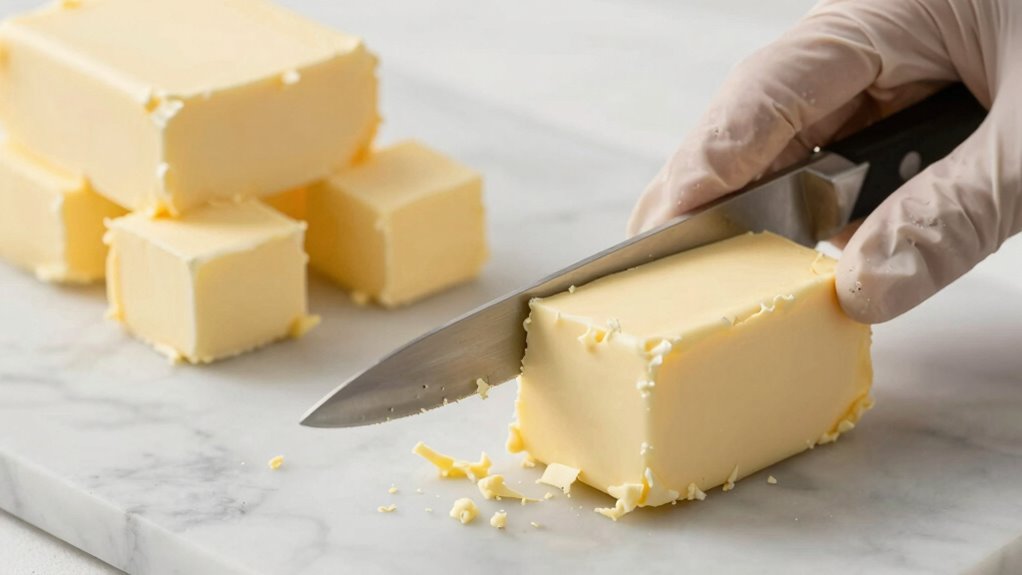

To cube butter quickly and without a mess, start with very cold, firm butter straight from the fridge. Place it on a damp cloth or silicone mat to keep it steady. Use a sharp knife, preferably serrated or a butter cutter, to make clean, even slices—slice into slabs first, then into cubes. Handling cold butter minimizes sticking and crumbling. For more tips on perfect pastry prep, keep exploring!

Get kitchen staples and gadgets delivered free with Prime
- Fast, free delivery on millions of items
- Prime Video, Amazon Music and more included
- Member-only deals all year
Key Takeaways
- Chill butter until firm but not frozen to ensure clean, quick cuts with minimal smudging.
- Use a sharp, serrated or chilled knife and cut in slabs for faster, precise cubing.
- Work on a damp cloth or silicone mat to prevent slipping and reduce mess during cutting.
- Stack and cut butter into uniform rectangles before slicing into cubes to speed up the process.
- Handle with cold, dry hands or parchment paper to maintain firmness and prevent sticking or tearing.
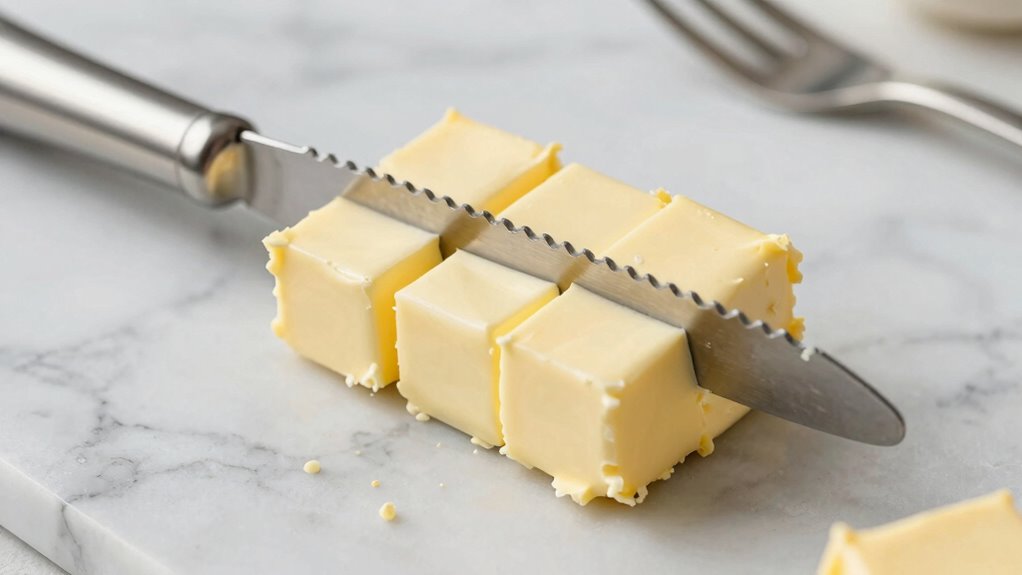
Cubing butter quickly and cleanly is vital for making perfect pastry, but it can often become a messy task. The key to efficiency lies in proper butter storage and knowing the right pastry techniques. When butter is well-stored, it remains firm but not frozen, making it easier to cut into even cubes. Keep your butter refrigerated until just before you’re ready to use it, and consider chilling your knife or using a serrated bread knife for cleaner cuts. This prevents the butter from melting or sticking, so you can cube it smoothly without smudging or tearing.
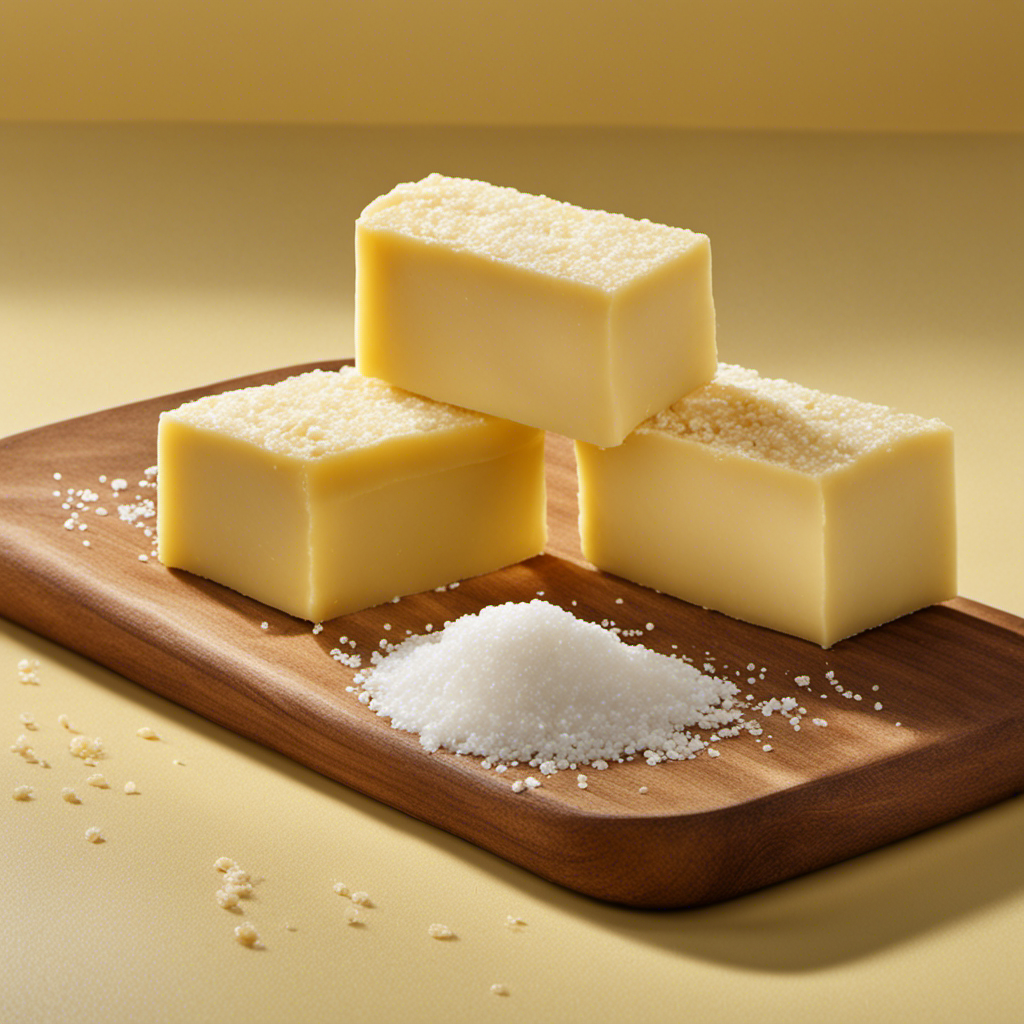
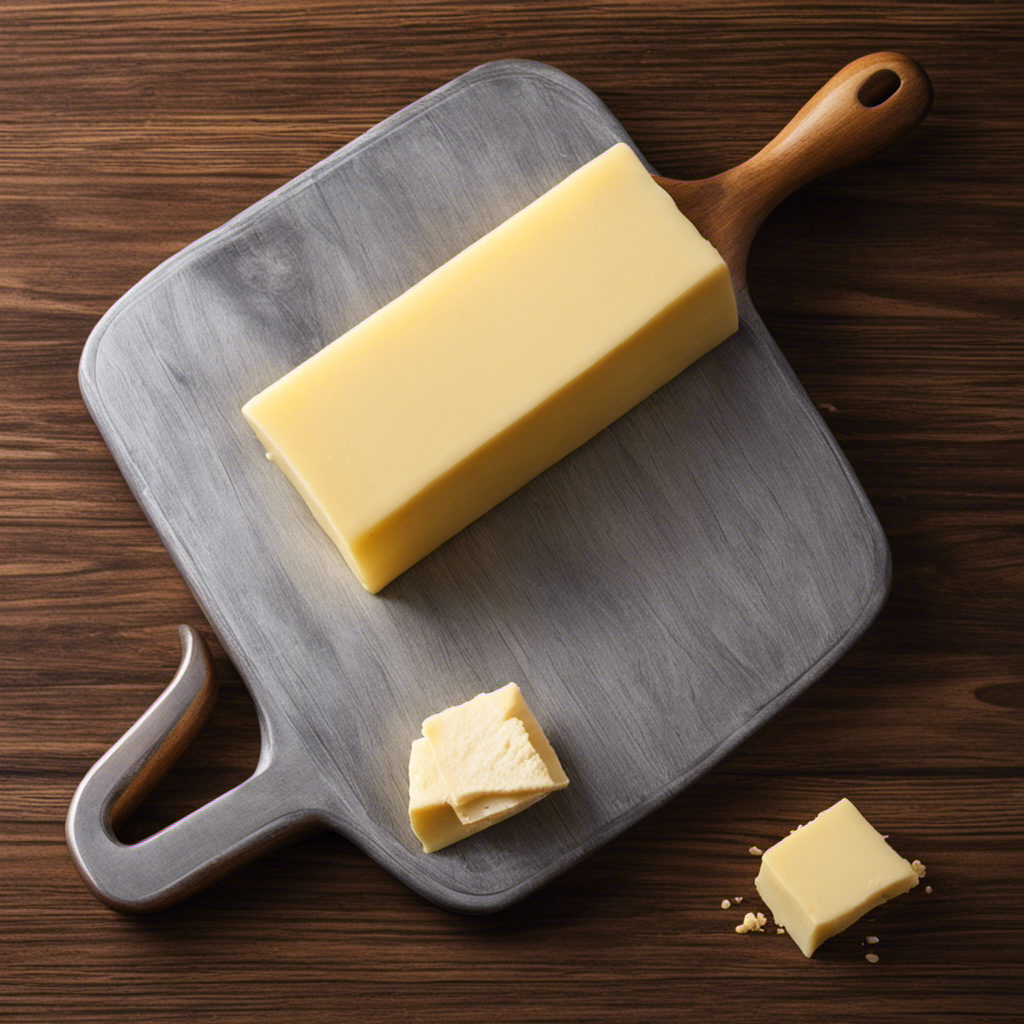
To start, handle the butter with cold, dry hands or use a piece of parchment paper to grip it. This prevents warmth from your hands from softening the butter prematurely. Place the butter on a stable, flat surface like a cutting board. For quick, uniform cubes, cut the butter into slabs first. Slice it lengthwise into three or four even strips, then stack these strips on top of each other. Use your knife to cut across the strips, creating rectangular blocks. From there, cut these blocks into cubes by slicing horizontally and vertically. This technique guarantees you get consistent-sized pieces, which is vital for even pastry dough.
Handle cold, dry butter and cut into slabs for quick, even cubes essential for perfect pastry.
A helpful pastry technique involves chilling the butter just enough that it remains firm but is easy to cut. If the butter begins to soften, pop it back in the fridge for a few minutes. This prevents sticking and guarantees clean cuts. For added precision and less mess, you can also use a butter cutter or a grater to create small, uniform pieces quickly, especially when preparing dough where the butter needs to be incorporated quickly. However, if you prefer cubed butter, the slicing method remains the fastest. Additionally, working on a damp cloth or silicone baking mat can help prevent slipping and give you better control while cutting, which minimizes mess and increases precision. Using a sharp knife also makes a significant difference in achieving clean cuts with minimal effort. Moreover, choosing the right cutting technique can significantly enhance your efficiency and reduce waste during the process.
Furthermore, ensuring your butter is stored at the right temperature can significantly improve your cubing speed, since firmness and temperature directly impact how neatly and easily the butter can be cut. Using a properly chilled butter enhances control and minimizes the risk of smudging or tearing. Another trick is to work on a damp cloth or a silicone baking mat. This prevents the butter from slipping around as you cut, giving you better control and reducing mess. After cubing, transfer the butter into a container with a tight-fitting lid for storage. Proper storage, such as keeping the butter cold and covered, maintains its quality and prevents it from absorbing odors. Using these pastry techniques will streamline your process, minimize cleanup, and help you achieve pastry perfection with ease.
As an affiliate, we earn on qualifying purchases.
Frequently Asked Questions
Can I Use Frozen Butter Directly for Cubing?
You can use frozen butter directly for cubing, but it’s not ideal if you want a creamy texture and even flavor enhancement. Frozen butter is harder to cut cleanly and may crumble easily, making it messier. For better results, slightly chill the butter until it’s firm but still workable. This way, you’ll get uniform cubes that melt smoothly into your pastry, enhancing flavor and creating that perfect flaky texture.
What’s the Best Type of Knife for Cubing Butter?
You should use a serrated or a sturdy chef’s knife for cubing butter, especially when it’s firm or cold. The butter’s consistency impacts the cut—firmer butter needs a sharper knife to glide through smoothly. Make sure your knife is well-sharpened, as a dull blade makes cutting difficult and messier. A sharp, serrated or chef’s knife helps you create clean, even cubes quickly and effortlessly.
How Do I Prevent Butter From Sticking to the Knife?
You’ll find that slightly chilled, firm butter with a consistent texture prevents sticking to your knife. To improve knife safety and reduce mess, dip your blade in cold water or lightly coat it with flour before cutting. This coincidence of cold butter and a damp or floured knife creates a barrier, ensuring smooth cuts. Keep your knife sharp to minimize pressure and avoid slips, making the process safer and cleaner.
Is It Better to Refrigerate or Freeze Butter Before Cubing?
Refrigerating butter before cubing is better because it maintains a firm butter consistency, making it easier to handle and cube neatly. Cold butter is less sticky and less likely to smear on your kitchen tools. Freezing can make it too hard, which might cause your knives to slip or break. So, chill your butter just enough so it’s firm but still manageable, ensuring clean cuts and less mess.
How Long Should Cubed Butter Be Stored Before Use?
Think of butter storage like a well-kept secret—keep cubed butter in the fridge for up to a week before using. For ideal chilling, wrap it tightly or store in an airtight container to prevent it from absorbing other flavors. If you’re not using it immediately, you can freeze it for up to three months. Just remember, the fresher, the better for perfect pastry results!
Conclusion
Now that you’ve got this trick up your sleeve, cubing butter becomes as easy as slicing through butter itself—smooth and mess-free. With a little practice, you’ll be turning cold butter into perfect cubes faster than you can say “pastry perfection.” Think of it as your secret weapon in the kitchen, helping you create flaky, buttery delights without the fuss. Happy baking—you’re now a butter-cubing pro, ready to conquer any pastry recipe that comes your way!
Fall Picks
fall essentials
As an affiliate, we earn on qualifying purchases.