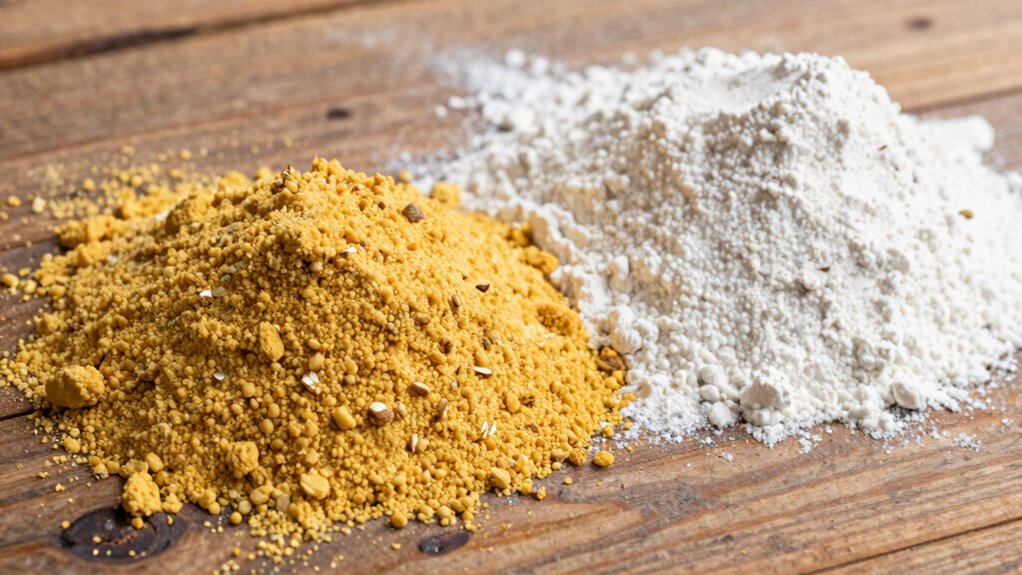

Fresh-milled flour acts nothing like store-bought flour because it retains more nutrients, natural oils, and flavor through gentle processing methods that preserve the grain’s original qualities. Unlike commercial flours, which are often stripped of nutrients and lose freshness over time, home-milled flour offers better taste, texture, and health benefits. If you want to discover how these differences can transform your baked goods, keep exploring the details below.

Get kitchen staples and gadgets delivered free with Prime
- Fast, free delivery on millions of items
- Prime Video, Amazon Music and more included
- Member-only deals all year
Key Takeaways
- Fresh-milled flour retains more nutrients, vitamins, and healthy fats compared to store-bought, refined flour.
- Milling techniques generate less heat in home or small-scale methods, preserving oils and enzymes.
- Fresh flour has a richer flavor and aroma, enhancing the taste and texture of baked goods.
- Store-bought flour often loses nutritional value and flavor over extended storage periods.
- The control over grind size and freshness in home milling results in higher-quality, nutrient-dense baked products.

When choosing flour for your baking, you might notice a difference between fresh-milled flour and the store-bought variety. That’s because fresh-milled flour retains more of the grain’s natural qualities, which significantly impacts flavor, texture, and nutrition. The key lies in grain nutrition—fresh milling preserves vital nutrients like vitamins, minerals, and healthy fats that often degrade during commercial processing. Store-bought flours are typically stripped of these nutrients through refining, leaving a product that’s less nutritious and less flavorful. When you mill your own flour, you get a product with a richer nutritional profile, giving your baked goods more depth and health benefits.
Milling techniques play a crucial role in how fresh flour differs from store-bought options. Commercial mills usually employ high-speed, industrial milling processes designed for mass production. These techniques generate heat, which can diminish the nutritional content and alter the grain’s natural oils. As a result, store-bought flours often have a longer shelf life but at the expense of flavor and nutritional integrity. In contrast, small-scale or home milling employs gentler techniques, such as stone grinding or low-speed roller milling. These methods generate less heat and preserve more of the grain’s natural oils, enzymes, and nutrients. This means your freshly milled flour not only tastes better but provides more health benefits.
The freshness factor is also vital. Store-bought flours can sit on shelves for months, sometimes even years, losing much of their original flavor and nutritional value. When you mill your own flour, you’re working with whole grains that haven’t been exposed to prolonged storage or processing. This freshness translates into baked goods with a more vibrant flavor profile and improved texture. Plus, because you control the milling process, you can choose coarser or finer grinds, tailoring your flour to specific recipes. The difference in grain nutrition and milling techniques ensures your baked items are more wholesome, flavorful, and nutrient-dense. Additionally, grain preservation during milling helps maintain the integrity of the nutrients and oils that give fresh flour its distinct qualities.
Ultimately, the choice between fresh-milled and store flour comes down to your priorities. If you’re after maximum flavor, nutrition, and freshness, milling your own grains offers undeniable advantages. The process preserves vital nutrients, employs gentler techniques, and results in a product that elevates your baking. Store-bought flours, while convenient, often fall short in these areas because of extensive refining and longer storage times. When you understand the importance of grain nutrition and milling techniques, it becomes clear why fresh-milled flour acts nothing like its commercial counterpart, making your baking truly stand out. Incorporating nutrient retention practices into your milling process can further enhance the health benefits of your homemade flour.
As an affiliate, we earn on qualifying purchases.
Frequently Asked Questions
How Long Does Fresh-Milled Flour Stay Fresh?
Fresh-milled flour stays fresh for about one to two weeks if stored properly in an airtight container and kept in a cool, dark place. To maximize grain preservation, avoid exposing it to light, heat, or moisture. Your milling techniques can influence freshness, so grind only what you need. For longer storage, consider freezing the flour, but always bring it back to room temperature before use to maintain quality.
Can I Substitute Store Flour With Fresh-Milled Flour?
Sure, you can substitute store flour with fresh-milled flour, but be aware that the flavor profile and baking performance will shift. Fresh-milled flour offers a vibrant, nuanced taste, while store flour tends to be milder. Baking with it might require adjusting recipes, as fresh flour often has a different moisture content and gluten strength. Embrace the earthy experience and experiment to perfect your bread or baked goods.
Does Fresh-Milled Flour Require Different Storage?
Yes, fresh-milled flour requires different storage. You should use airtight storage containers to keep it fresh and prevent moisture from entering. Moisture control is essential because fresh flour is more prone to spoilage and clumping. Store it in a cool, dark place away from sunlight, and consider freezing small portions if you won’t use it quickly. Proper storage helps maintain its flavor and quality longer.
Is Fresh-Milled Flour More Nutritious Than Store Flour?
Think of fresh-milled flour as a treasure chest bursting with nutrients—more than store-bought options. Nutritional differences are significant, with fresh flour retaining essential vitamins and minerals lost during processing. Plus, you’ll notice flavor enhancements that make baked goods richer and more vibrant. While store flour often loses some nutrients over time, your freshly ground flour offers a more nutritious, flavorful experience, elevating every bite.
How Does Milling Process Affect Flour’s Flavor?
The milling process considerably impacts flour’s flavor by enhancing its aroma and adding complexity. When you mill fresh, whole grains, you release oils and natural compounds that boost aroma and deepen flavor profiles. This process preserves essential oils and nutrients, giving your baked goods a richer, more nuanced taste. As a result, fresh-milled flour creates a more vibrant sensory experience compared to store-bought options, making your baking truly exceptional.
Conclusion
Think of fresh-milled flour as a sunrise—vibrant, full of life, and bursting with potential. Store flour, on the other hand, is like dusk, faded and subdued, holding memories of what once was. When you bake with fresh flour, you’re capturing that dawn’s promise, awakening flavors and textures that store-bought simply can’t match. Embrace the sunrise in your kitchen, and let your baked creations shine with the energy of new beginnings.
Fall Picks
fall essentials
As an affiliate, we earn on qualifying purchases.