
You’ll notice some butter tastes grassier than others because it depends on what the cows eat and how they graze. Cows grazing on fresh, lush pastures during peak seasons transfer plant compounds into their milk, giving butter that vibrant grassy flavor. If cows are grain-fed or fed silage, the butter has a milder taste. Seasonal changes and grazing practices also influence flavor intensity, so the next details will clarify how these factors shape that fresh, farm-like taste.
Get ready for Prime Big Deal Days — try Prime free
Exclusive member deals on October 6–7, plus fast free delivery. Cancel anytime.
As an affiliate, we earn on qualifying purchases.
Key Takeaways
- Cows grazing on lush, diverse pastures transfer plant compounds into milk, enhancing grassy flavors.
- Seasonal pasture availability influences the intensity of the butter’s grassy taste.
- Grazing practices that prioritize outdoor pasture access produce richer, more vibrant grassy flavors.
- Milk from pasture-fed cows contains higher levels of omega-3s and antioxidants, affecting flavor complexity.
- The timing of grazing during peak growth seasons results in butter with a fresher, more pronounced grassy note.
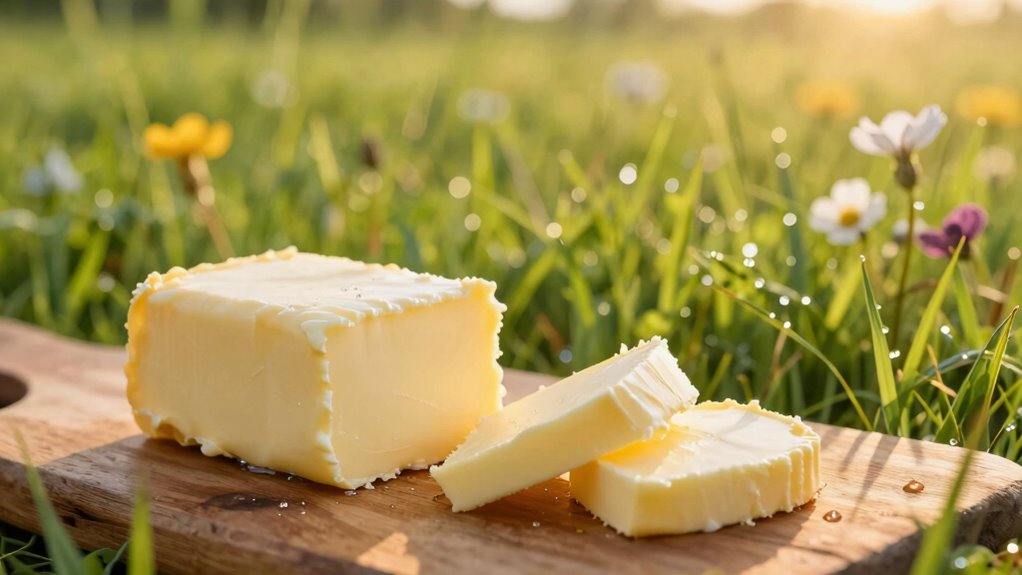
Have you ever noticed that some butters taste noticeably more grassy than others? That distinct, fresh flavor isn’t just a coincidence. It’s closely tied to the dairy cow’s diet and the way the farm manages its grazing practices. When cows consume more fresh grass, especially during peak growing seasons, their milk develops a richer, more vibrant flavor profile. This is because the plants they eat contain compounds that are transferred into their milk, which, in turn, influences the butter’s taste. If you’re seeking that bright, grassy note in your butter, it’s likely made from milk sourced from cows grazing on lush pastures rather than those fed primarily on grains or processed feeds.
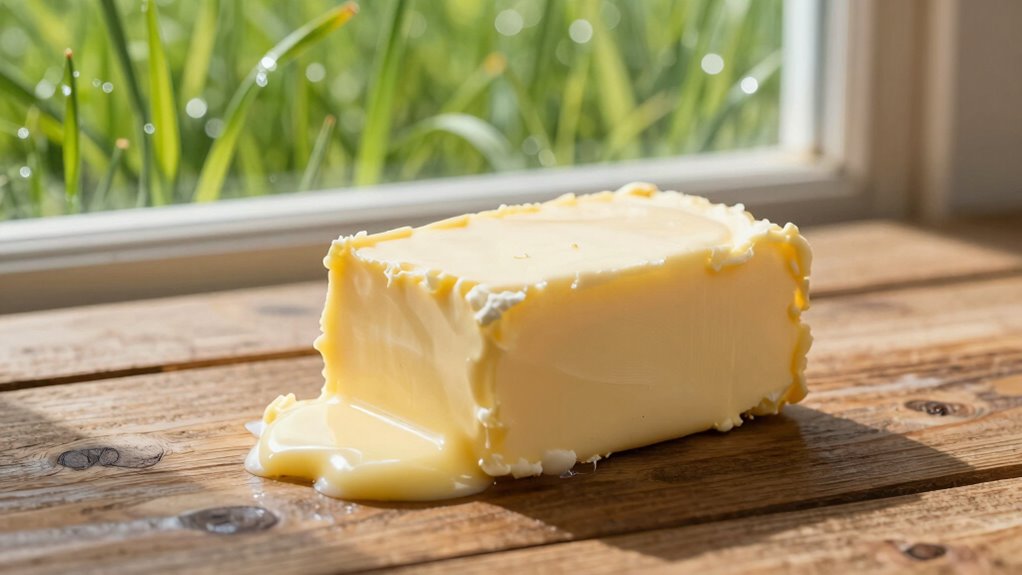
Cows grazing on lush pastures produce butter with a fresh, vibrant, grassy flavor.
Grass fed farming plays a vital role here. Farms that prioritize grazing are more likely to produce butter with that distinctive grassy taste. In grass fed farming, cows spend a significant amount of their time outdoors, munching on fresh, diverse pasture grasses. This not only enhances the flavor of their milk but also boosts the nutritional profile, adding omega-3 fatty acids and antioxidants. The freshness and variety of pasture plants contribute to a more complex flavor in the butter, which you’ll notice when you taste it. Conversely, dairy products from cows fed a diet heavy on grains or silage tend to have a more muted, less grassy flavor. These feeding practices can mask the natural grassy notes that come from pasture grazing.
Your experience with butter’s flavor can also depend on the season. During spring and early summer, when pastures are at their peak, the milk—and thus the butter—tends to taste more grassy and lively. As the seasons shift toward late summer and fall, the flavor might mellow or shift slightly, reflecting the changing plants available to the cows. This seasonal variation is a hallmark of grass fed dairy farming and explains why some butters taste more vibrant at certain times of the year. The seasonal variation in pasture growth significantly impacts the flavor profiles of dairy products, highlighting the importance of grazing practices in flavor development. In addition, the choice of feeding methods can influence the intensity of the grassy flavor in dairy products.
In short, the grassy flavor you detect in butter results from a combination of the cow’s diet, the farming practices, and seasonal factors. When cows graze extensively on fresh, diverse pasture grasses, their milk picks up those nuanced flavors, making your butter taste more like a field after a rainstorm—fresh, lively, and undeniably grassy. If you want that authentic, farm-fresh flavor, look for butter made from milk sourced from grass fed farming systems.
As an affiliate, we earn on qualifying purchases.
Frequently Asked Questions
Does Cow Breed Affect Butter Flavor?
Yes, cow breed affects butter flavor because of differences in dairy cow genetics and milk composition variability. Some breeds, like Jersey or Guernsey, produce milk with higher butterfat content, which can give butter a richer, creamier taste. Other breeds may produce milk with different flavor profiles due to genetics. So, your choice of cow breed influences the butter’s overall flavor, making some butters taste grassier or more buttery than others.
How Does Cow Age Influence Butter Taste?
As a cow ages, its butter flavor can change, often becoming less consistent. Older cows may produce milk with more varied fat and protein levels, influenced by cow diet variations over time. This impacts flavor consistency, making some butter taste grassier or more muted. You’ll notice these subtle differences, especially if you compare butter from younger versus older cows, highlighting how age and diet influence the final taste.
Can Storage Methods Change Butter’s Grassiness?
Yes, storage methods can change butter’s grassiness by affecting flavor consistency. If you store butter improperly—like exposing it to light, air, or heat—it may develop off-flavors or intensify grassy notes. To keep its flavor true, always store butter in an airtight container in the refrigerator. Proper storage minimizes oxidation and maintains the butter’s intended taste, preventing unwanted flavor changes caused by storage effects.
Is Grass-Fed Butter Always More Grassier?
Grass-fed butter isn’t always more grassier, but it often carries a more vibrant flavor, like a garden in spring. You’ll notice differences in flavor consistency, as some batches can taste more grassy depending on the cows’ diet. Nutritional differences also exist—grass-fed butter tends to have higher omega-3s and antioxidants. So, while not always, grass-fed butter often offers a richer, more complex taste experience.
Do Different Grass Types Impact Butter Flavor?
Yes, different grass types impact butter flavor, creating unique flavor nuances you can taste. Grazing practices influence which grasses cows eat, affecting the butter’s taste. For example, cows grazing on clover-rich pastures may produce butter with a sweeter, more delicate flavor, while those on more fibrous grasses might yield a richer, earthier taste. Your butter’s flavor is a direct reflection of the specific grasses cows consume, shaped by grazing practices.
Conclusion
So, next time you notice some butter tasting more grassier than usual, remember it’s all about the cows’ diet and processing methods. While it might seem strange at first, embracing these differences can lead you to new favorite flavors. Don’t let the unfamiliarity put you off—try different butters to find what suits your palate best. After all, exploring these subtle variations can make your culinary experience even more enjoyable and unique.
NFL season / tailgating Picks
team gear
As an affiliate, we earn on qualifying purchases.