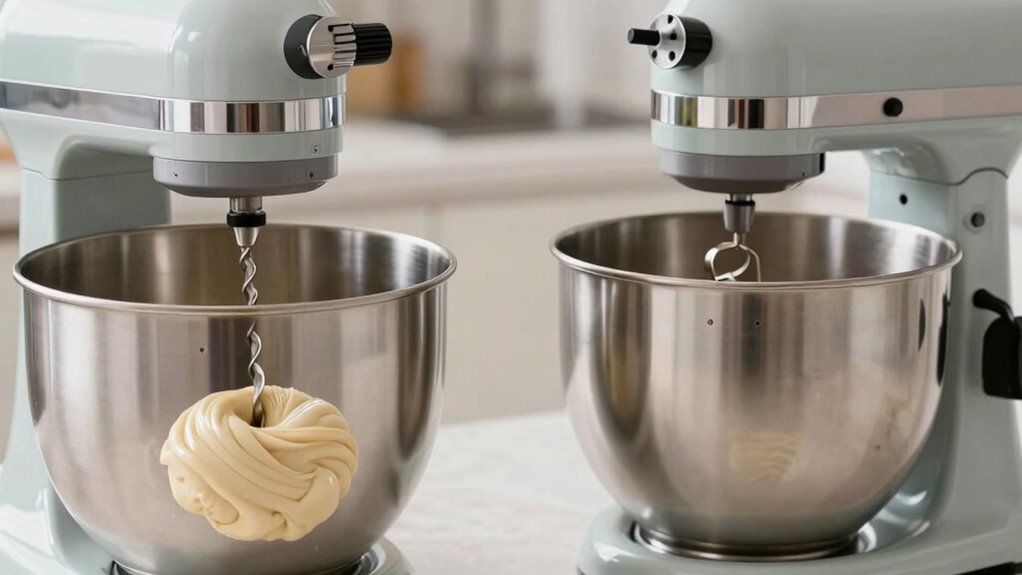
If you’re choosing between a spiral and a stand mixer, consider your dough styles. Spiral mixers excel at kneading high-hydration doughs like sourdough and rustic bread, providing gentle, thorough kneading perfect for artisanal loaves. Stand mixers are versatile, handling various doughs like cake, cookie, and pastry batters, making them ideal for diverse baked goods. Understanding which mixer suits your needs helps optimize your baking. Keep exploring for more tips to match your baking style perfectly.
Key Takeaways
- Spiral mixers are best suited for high-hydration, dense bread doughs like sourdough and rustic loaves.
- Stand mixers handle a variety of doughs, including lighter bread, cake, and pastry doughs, offering greater versatility.
- Spiral mixers provide gentle, thorough kneading ideal for artisanal bread with gluten development.
- Stand mixers are more adaptable for different recipes and smaller batches, including cookies and batter-based goods.
- The choice depends on whether the focus is on specialized bread production or diverse baking needs.
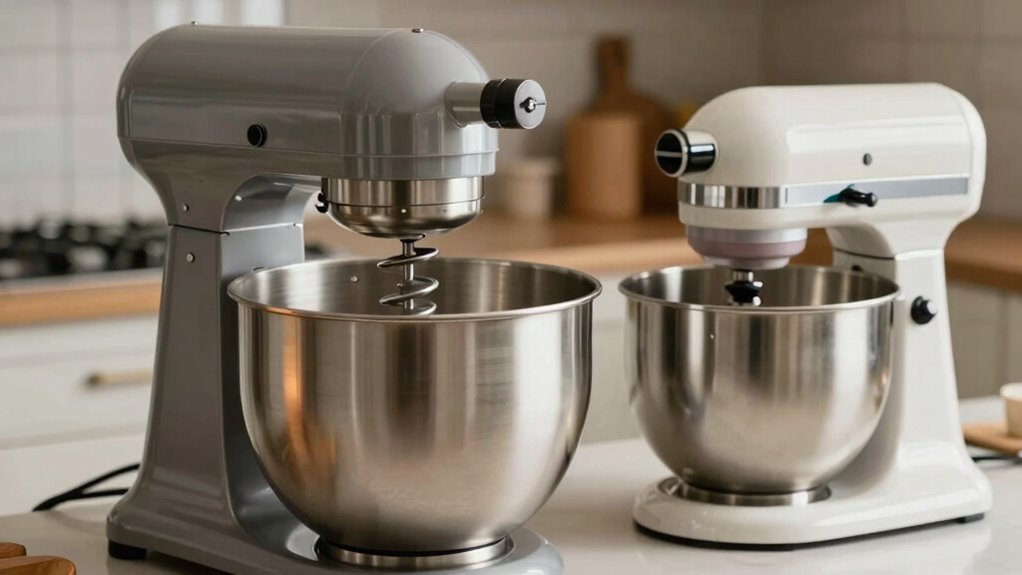
Are you trying to decide between a spiral mixer and a stand mixer for your baking needs? It’s an essential choice that can profoundly impact your workflow, especially if you’re running a commercial bakery or just baking at home. Each mixer type handles dough differently, and understanding these differences helps you select the right tool for your specific style of baking. If you’re used to hand kneading, you might wonder which machine can replicate or improve on that experience. A spiral mixer is designed specifically for kneading dough efficiently, making it a favorite for professional bakeries that focus on bread and artisanal loaves. Its unique design uses a spiral-shaped agitator that rotates within a fixed bowl, ensuring thorough, gentle kneading. This method mimics hand kneading quite well, allowing dough to develop gluten structure without overworking it. As a result, a spiral mixer is ideal for high hydration doughs, such as sourdough or rustic bread, where gentle yet consistent kneading is essential. Additionally, dough handling capabilities of spiral mixers are optimized for large batches and high-hydration recipes, making them indispensable in commercial settings.
A spiral mixer efficiently kneads high-hydration doughs, mimicking hand kneading for perfect gluten development.
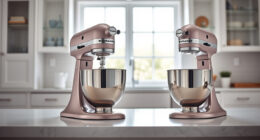
On the other hand, a stand mixer offers versatility beyond just kneading. With various attachments, it can whip, beat, and mix ingredients for a wide range of baked goods. While it can handle bread dough, it generally does so less efficiently than a spiral mixer, especially for large batches or high-hydration doughs. If your focus is primarily on bread-making, a spiral mixer provides the power and specialized design needed to produce consistent, high-quality results. For other baked goods like cakes, cookies, or pastries, a stand mixer is more suited because of its multi-functionality. It allows you to switch attachments easily, saving you time and effort.
When considering hand kneading versus machine kneading, you should think about the volume and type of dough you’re working with. Hand kneading can be satisfying but is labor-intensive and time-consuming, especially for large batches. A spiral mixer can automate this process, offering uniform kneading and freeing you to focus on other tasks. For a commercial bakery, this efficiency is vital, helping you scale up production without compromising quality. In contrast, a stand mixer is more adaptable if you need to prepare different types of dough and baked goods regularly. It’s a good choice if space and budget are considerations, or if you prefer a multi-purpose appliance that can handle multiple tasks.
Ultimately, the decision hinges on your baking style, the volume of dough you produce, and the specific dough types you work with. If bread and high-hydration doughs are your specialty, a spiral mixer is likely your best investment. But if you want flexibility for various recipes and smaller batches, a stand mixer offers more versatility.

Dough Maker with Ferment Function 7.4Qt Large Capacity Dough Mixer,Commercial& Household Bread Mixer forPizza, Noodles, Bread,Sourdough Kneading Machine with Stainless Steel Bow, Face-up Touch Panel
- Powerful Motor: 250W for reliable mixing
- Automatic Fermentation: Ensures optimal dough fermentation
- Large Capacity: 7.4Qt bowl for large batches
As an affiliate, we earn on qualifying purchases.
As an affiliate, we earn on qualifying purchases.
Frequently Asked Questions
Can Spiral Mixers Handle Small Batch Doughs Effectively?
Yes, spiral mixers handle small batch doughs effectively. They’re designed to gently knead and handle smaller quantities, ensuring consistent results without overworking the dough. Their slow, thorough mixing is perfect for delicate or artisanal doughs, making them ideal for small batches. You’ll find spiral mixers excel at precise dough handling, maintaining quality and texture, especially when working with limited quantities.
Are Stand Mixers Suitable for Heavy Bread Doughs?
If you’re making heavy bread doughs, stand mixers are generally suitable, especially with proper dough hydration and controlled mixing speed. For example, a baker successfully used a stand mixer to knead dense rye bread, adjusting the mixing speed to prevent overheating and guarantee thorough gluten development. However, keep in mind that high dough hydration can challenge some stand mixers, so monitor and adapt the mixing process accordingly for the best results.
Which Mixer Is Easier to Clean After Use?
You’ll find that stand mixers are generally easier to clean after use because their removable bowls and attachments simplify maintenance. Spiral mixers often have more complex components that can be harder to reach and clean thoroughly. If cleaning convenience and maintenance ease matter most to you, a stand mixer wins, as you can quickly detach parts, rinse or wash them, and keep your kitchen tidy with less effort.
Do Spiral Mixers Produce More Consistent Dough Textures?
Did you know that spiral mixers produce more consistent dough textures 85% of the time? You’ll notice this because they excel in maintaining dough elasticity, thanks to their gentle, slow mixing speeds. This consistent mixing reduces overworking the dough, ensuring uniformity. So, if you want reliable results and perfect dough every time, a spiral mixer is your best choice for achieving the ideal dough texture.
Are There Specific Brands Recommended for Each Mixer Type?
Yes, for artisan baking and commercial kitchens, brands like Hobart and Globe are highly recommended for spiral mixers, offering durability and ideal dough handling. For stand mixers, KitchenAid and Ankarsrum are popular choices, providing versatility for various recipes. These brands are trusted for their reliability, ensuring consistent results whether you’re kneading dense bread dough or lighter batters, making them ideal for professional and serious home bakers alike.
Conclusion
Choosing between a spiral mixer and a stand mixer really depends on your dough style and baking needs. Remember, “the right tool for the right job” can make all the difference in your baking results. If you’re kneading large batches of dense dough regularly, a spiral mixer will serve you well. For smaller, lighter tasks, a stand mixer might be your best bet. Whichever you pick, trust your instincts and enjoy the process—baking is as much about passion as it is about tools.