To make certain your kitchen thermometer stays accurate, perform the quick 30-second calibration test using ice water. Simply fully submerge the probe, wait about 30 seconds, and check if the display reads near 32°F (0°C). If the temperature is off by more than 2°F, adjust or replace the device. Regular calibration keeps your meals safe and delicious, and if you keep going, you’ll learn the step-by-step process to master this quick test.
Key Takeaways
- Fully submerge the thermometer in ice water for about 30 seconds to test accuracy.
- Compare the reading to the standard 32°F (0°C); adjust if it differs by 2°F or more.
- Regularly performing this quick test ensures your thermometer maintains precise measurements.
- Proper calibration prevents undercooked or overcooked food, reducing health risks and enhancing meal quality.
- Consistent calibration with the 30-second method helps save meals by avoiding costly cooking errors.
Why Accurate Kitchen Thermometers Matter for Perfect Cooking
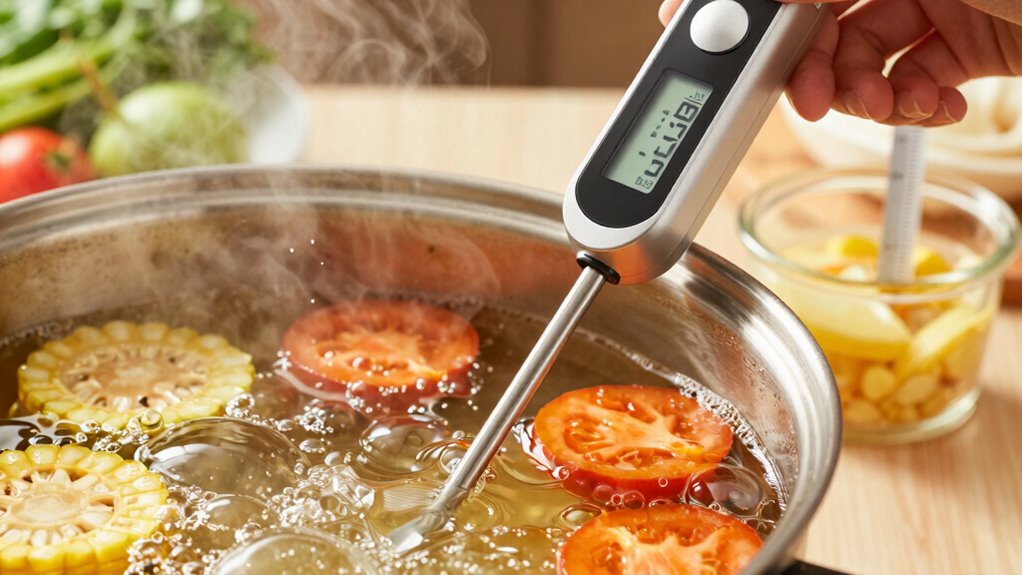
Accurate kitchen thermometers are essential because they guarantee your food reaches the right temperature, preventing undercooking or overcooking. When you prioritize cooking precision, you ensure each dish is perfectly done, maintaining the desired texture and flavor. Proper temperatures also play a vital role in food safety, reducing the risk of foodborne illnesses caused by undercooked meats or poultry. A reliable thermometer helps you monitor internal temperatures accurately, giving you confidence that your meal is both safe and delicious. Without precise readings, you might serve food that’s unsafe or ruin a dish by overcooking. Investing in a good kitchen thermometer ensures consistent results, making cooking safer, more efficient, and ultimately more satisfying. Additionally, utilizing innovative cloud solutions can help you track and analyze your cooking data for continuous improvement. Understanding temperature calibration techniques further enhances your ability to maintain accuracy over time, especially when combined with proper filter maintenance practices to keep your appliances functioning optimally.
The Common Problems With Kitchen Thermometers and Why They Matter

Over time, your thermometer’s calibration can drift, leading to inaccurate readings. This can cause you to cook at the wrong temperature, risking undercooked or overcooked food. Proper maintenance and calibration of kitchen thermometers help ensure consistent, safe results. Regularly checking your thermometer’s accuracy with a simple calibration test can help ensure accurate readings and safe, delicious meals. Additionally, understanding outdoor tech principles can inspire innovative ways to verify and maintain your thermometers more effectively. Staying aware of trusted local services can also assist you in maintaining your kitchen tools and ensuring their proper functioning.
Calibration Drifts Over Time
As kitchen thermometers age, their calibration can drift, causing readings to become unreliable. This sensor drift occurs gradually, impacting your cooking accuracy. To keep your thermometer dependable, consider these points:
- Regularly check calibration, especially if you notice inconsistent readings.
- Understand that calibration frequency depends on usage, but testing monthly is advisable.
- Be aware that exposure to extreme temperatures can accelerate sensor drift.
- Recognize the importance of recalibrating after drops or rough handling.
Ignoring calibration drift means you risk undercooking or overcooking food. Staying proactive ensures your thermometer remains accurate, saving time and meals. A quick 30-second calibration test helps detect drift early, maintaining confidence in your cooking.
Inaccurate Cooking Temperatures
Inaccurate cooking temperatures can lead to undercooked or overcooked food, compromising safety and quality. When your thermometer isn’t precise, you risk improperly preserving food, allowing bacteria to survive or spoilage to occur. This makes proper equipment maintenance essential—regular calibration helps guarantee your thermometer provides reliable readings. A misreading can cause you to cook at incorrect temperatures, affecting the texture, flavor, and safety of your meals. Over time, thermometers can drift out of calibration, so it’s crucial to verify their accuracy periodically. Ignoring these issues not only jeopardizes food preservation but also wastes ingredients and undermines your confidence in your cooking. Keeping your thermometer accurate is a simple step that ensures your food is cooked perfectly every time.
Impact on Food Safety
A faulty kitchen thermometer can substantially compromise food safety by providing false temperature readings. This increases the risk of food poisoning and cross contamination. When temperatures are inaccurate, you might undercook meat, allowing bacteria to survive, or overcook, wasting food and nutrients. Here’s why it matters:
- Undercooking: Bacteria like Salmonella thrive, leading to foodborne illnesses.
- Overcooking: Nutrients degrade, and food quality drops.
- Cross contamination: Improperly cleaned or inaccurate thermometers can spread bacteria between foods.
- Food waste: Misjudged temperatures cause unnecessary discarding of safely cooked food.
Regular calibration guarantees your thermometer provides reliable readings, protecting you and your family from health hazards and ensuring safe meals every time.
Gathering the Right Tools to Calibrate Your Kitchen Thermometer
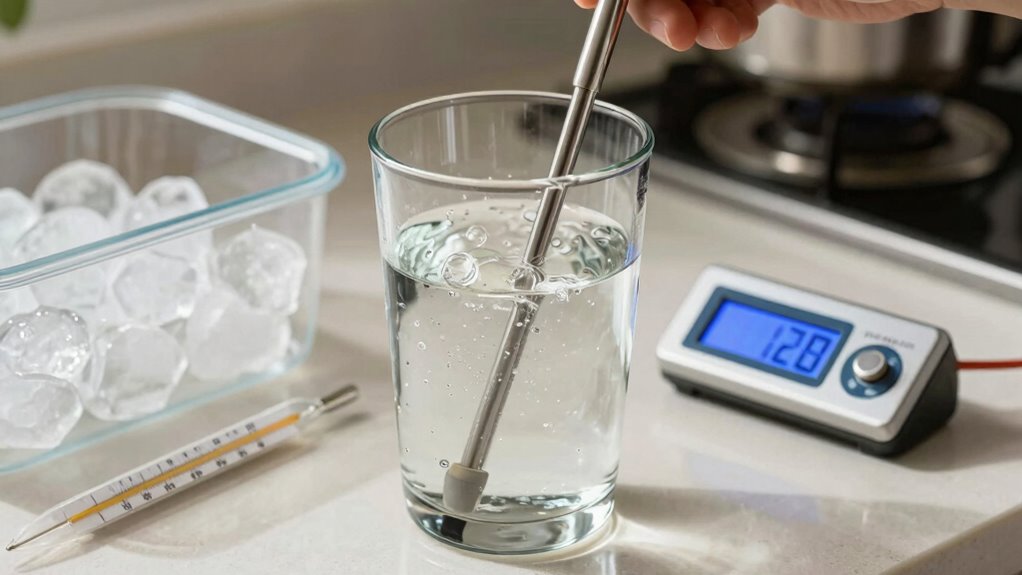
Before you can calibrate your kitchen thermometer, you need to gather the right tools. Having the proper items on hand makes the process quick and effective, ensuring accurate readings. Typically, you’ll need a container of ice water, a reliable thermometer for testing, and a clean cloth or paper towels for wiping. These are essential for the 30-second calibration test. Incorporating good kitchen maintenance habits, like regularly checking your thermometer, helps prevent errors during cooking. Additionally, understanding free floating concepts related to temperature stability can improve calibration accuracy. Plus, using the right tools aligns with cooking tips that promote food safety and quality. Keep these items nearby in your kitchen so you can perform calibration whenever needed, maintaining precision and ensuring your meals are cooked perfectly every time. Proper tools make all the difference in kitchen accuracy. Kitchen calibration is a vital practice that supports consistent cooking results and food safety standards.
How the 30-Second Calibration Test Works and Why It’s Effective
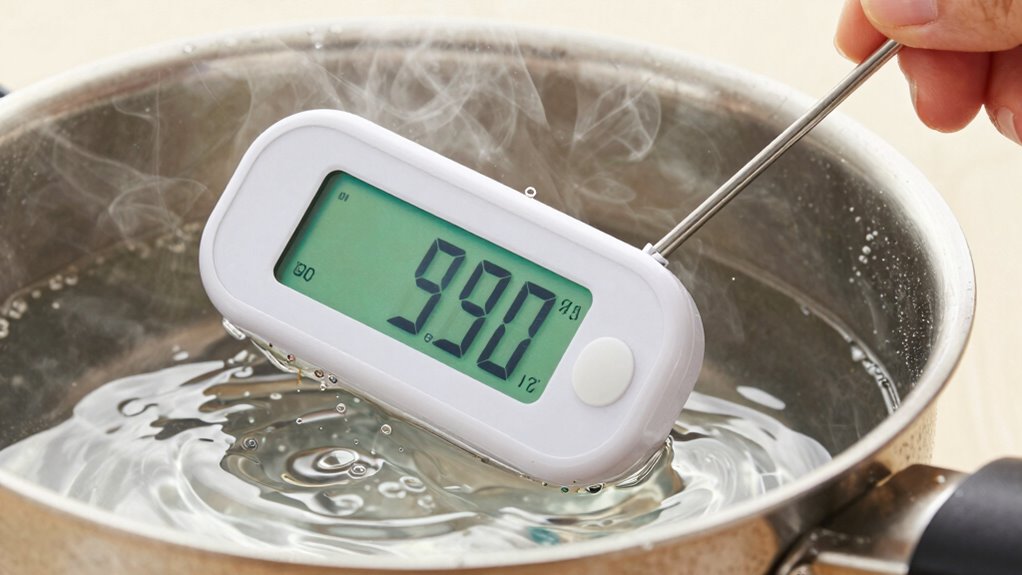
The 30-second calibration test quickly verifies whether your kitchen thermometer is reading accurately by immersing it in a prepared ice water mixture. This simple method checks your device’s temperature accuracy using basic calibration techniques. When you perform this test, you ensure your thermometer displays close to 32°F (0°C), the freezing point of water. Here’s how it works:
- Submerge the probe fully in ice water.
- Wait approximately 30 seconds.
- Check if the reading is near 32°F (0°C).
- Adjust or note discrepancies for future calibration if needed. Calibration accuracy Regularly performing this quick check helps you maintain precise temperature readings over time. Proper calibration is essential for food safety and reliable cooking results. Using a consistent calibration method ensures your thermometer remains accurate despite potential wear and tear.
This quick test confirms whether your thermometer needs recalibration and helps maintain precise temperature readings. It’s effective because it relies on a stable, well-known temperature point, making it a reliable calibration technique. Regularly verifying your thermometer’s accuracy supports healthy home environments by ensuring food safety and proper cooking temperatures.
How to Calibrate Your Kitchen Thermometer in 30 Seconds
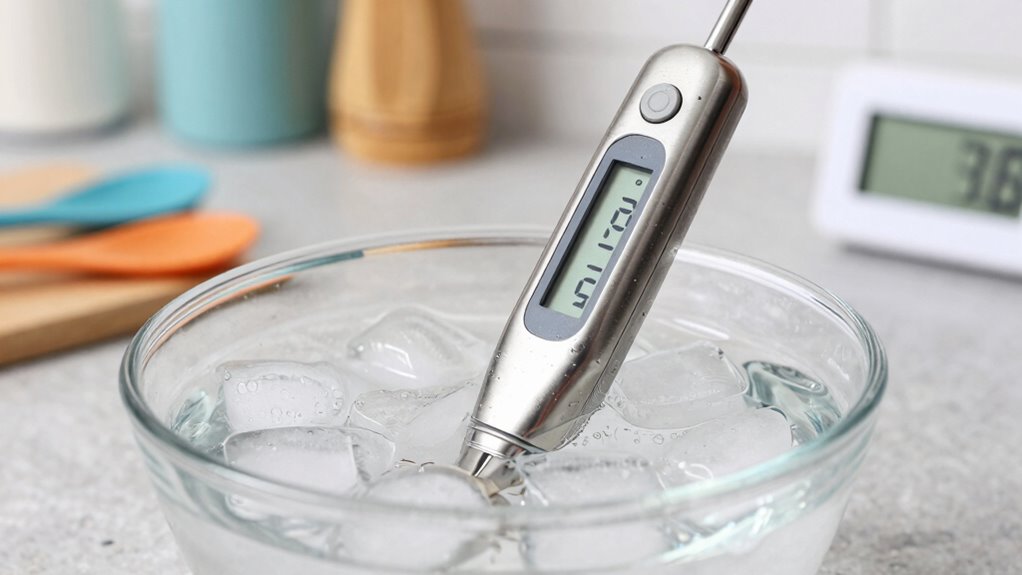
To calibrate your kitchen thermometer in just 30 seconds, start by immersing the probe fully into a prepared ice water mixture. Verify the digital sensors or analog dials are submerged without touching the sides or bottom of the container. Wait a few seconds until the reading stabilizes. Then, compare your thermometer’s display to this chart:
| Temperature | Expected Reading | Calibration Adjustment Needed? |
|---|---|---|
| 32°F / 0°C | Perfect | No |
| 32°F / 0°C | Slightly off | Adjust if possible |
| 32°F / 0°C | Substantially off | Recalibrate or replace |
| 32°F / 0°C | Not reading correctly | Check thermometer type |
This quick check works equally well for digital sensors and analog dials, helping you maintain accurate readings every time.
What Do Your Calibration Results Mean: And When Should You Adjust?

Understanding your calibration results is essential for ensuring accurate cooking temperatures. If your thermometer reads 2°F or more off from the standard during calibration, it indicates a need for adjustment to maintain sensor accuracy. Regular calibration checks help identify when your thermometer drifts, especially if you notice inconsistent readings. Consider these points:
- Minor deviations (less than 2°F) may not require immediate adjustment but warrant monitoring.
- Persistent differences over multiple tests suggest calibration is needed.
- Frequent inaccuracies could indicate sensor wear, needing more frequent calibration.
- Adjustments should be made if results fall outside the manufacturer’s recommended calibration frequency.
Why Regular Calibration Keeps Your Kitchen Thermometers Accurate

Regular calibration guarantees your kitchen thermometers stay accurate over time. When you perform regular calibration, you ensure precision testing remains reliable, preventing errors that could spoil your dishes or pose food safety risks. Sticking to calibration schedules helps catch drift or inaccuracies early, saving you time and frustration. Use a simple calibration routine to verify your thermometer’s accuracy every few weeks. Here’s a quick guide:
| Calibration Frequency | Purpose |
|---|---|
| Weekly | Maintain consistent accuracy |
| Monthly | Catch calibration drift |
| Before important cooks | Ensure precision for recipes |
| After drops or impacts | Correct potential damage |
This routine keeps your thermometer reliable, ensuring perfect results every time. Regular calibration also supports food safety by confirming your readings are trustworthy.
Troubleshooting Calibration Issues and When to Replace Your Thermometer

If your thermometer isn’t reading accurately after calibration, you might face common issues like inconsistent readings or slow response times. Recognizing signs such as frequent errors or physical damage can help you determine if it’s time for a replacement. Knowing when to troubleshoot or replace ensures your cooking stays precise and safe. Additionally, understanding art care principles can help extend the lifespan of your tools and equipment.
Common Calibration Problems
Have you ever noticed your kitchen thermometer giving inconsistent readings? Common calibration problems often stem from sensor accuracy issues or declining battery life. To troubleshoot, consider these steps:
- Check if the sensor is clean and free of debris that could interfere with accuracy.
- Replace the batteries if the display becomes sluggish or inaccurate, as low battery life impacts sensor performance.
- Verify that the thermometer is calibrated correctly using the 30-second test.
- Avoid exposure to extreme temperatures, which can damage the sensor and skew readings.
If issues persist after these steps, it’s likely time to replace your thermometer. Maintaining proper sensor accuracy and fresh batteries ensures reliable measurements, keeping your meals perfectly cooked every time.
Signs for Replacement
Even after troubleshooting calibration issues, persistent inaccuracies or unusual readings clearly indicate it’s time to replace your thermometer. If the battery life is dwindling and the device struggles to turn on or hold a charge, replacement is necessary. Poor display readability, such as faded or cracked screens, makes it hard to read temperatures accurately, risking your food safety. Additionally, if your thermometer consistently shows inconsistent results despite recalibration, it’s a red flag. Over time, sensors can degrade, leading to unreliable measurements. When these signs appear, swapping out your thermometer ensures precise readings and reliable performance. Don’t ignore these cues—they’re your best bet for maintaining accurate cooking temperatures and avoiding food safety issues. Regular vetted thermometers are recommended to ensure safety and accuracy in cooking.
Tips for Maintaining Accurate Kitchen Thermometers for Long-Term Use
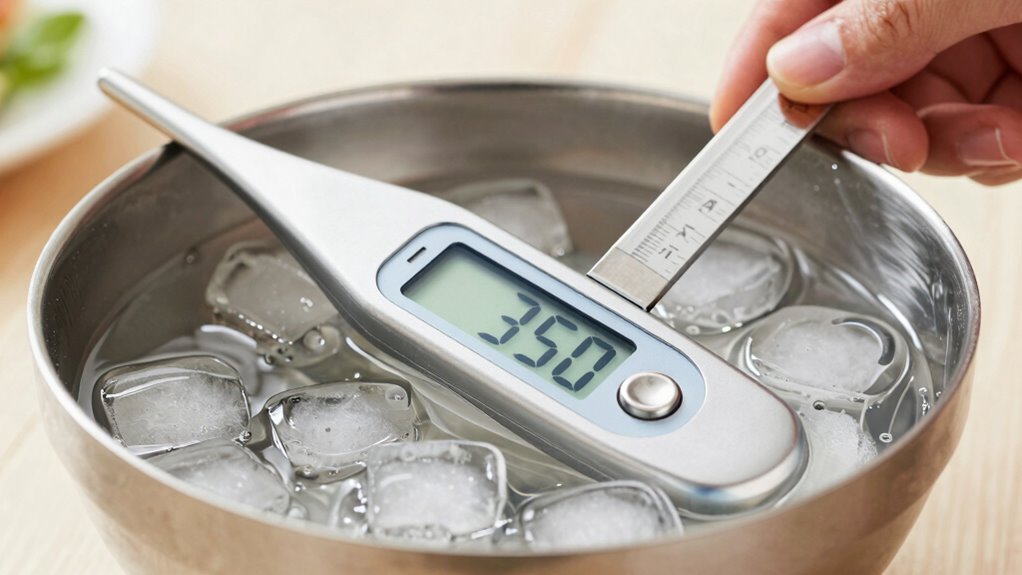
To keep your kitchen thermometers accurate over time, regular maintenance and proper handling are essential. This guarantees your cooking precision remains high and extends the thermometer lifespan. Here are four tips:
- Clean your thermometer after each use with warm, soapy water to prevent buildup.
- Store it in a protective case or designated spot to avoid damage.
- Calibrate regularly using the 30-second test to catch inaccuracies early.
- Avoid exposing the thermometer to extreme temperatures or direct sunlight, which can affect its accuracy.
- Understanding home décor inspiration can help you create a kitchen environment that minimizes damage and maintains your tools’ longevity.
Frequently Asked Questions
Can I Calibrate Digital and Analog Thermometers the Same Way?
Yes, you can calibrate digital and analog thermometers similarly for digital calibration and analog accuracy. For both, you should use the boiling or ice water method, guaranteeing they’re submerged properly. Digital thermometers often have a calibration button, while analog ones might need a screw adjustment. Always check their readings after calibration to confirm accuracy, and repeat if necessary to ensure precise measurements in your cooking.
How Often Should I Perform the 30-Second Calibration Test?
You should perform the 30-second calibration test regularly, ideally before each use or at least once a week, as part of your maintenance schedule. This guarantees your thermometer stays accurate and reliable. Calibration frequency depends on how often you use it and the conditions it’s exposed to. Regular testing helps catch any inaccuracies early, maintaining food safety and quality during meal preparation.
What Are Signs My Thermometer Needs Calibration?
You’ll notice your thermometer needs calibration if its accuracy seems off—like reading too high or low compared to other devices or when measuring known temperatures. Sometimes, after dropping or mishandling, accuracy diminishes. Regular calibration frequency guarantees precise readings, especially for critical cooking tasks. Trust your senses—if temperatures seem inconsistent, it’s time to calibrate your thermometer, maintaining reliable measurements and safe, delicious meals every time.
Is the Calibration Process Safe for All Types of Thermometers?
Yes, the calibration process is safe for all types of thermometers if you follow the manufacturer’s instructions carefully. Proper calibration maintains accuracy, ensuring your thermometer provides reliable readings and extends its lifespan. Be gentle during the process and avoid using harsh chemicals or excessive force. Regular calibration checks help you catch accuracy issues early, protecting your cooking quality and ensuring your thermometer remains reliable over time.
Can Temperature Calibration Improve Food Safety Standards?
Imagine you’re cooking chicken, and your thermometer shows 165°F, guaranteeing safety. Accurate calibration boosts food safety by providing precise temperature readings, preventing undercooked or overcooked meals. When calibration accuracy is maintained, you reduce foodborne illness risks and ensure consistent results. Regular calibration acts as a safeguard, giving you confidence in your cooking, and ultimately, protecting your loved ones’ health through better food safety standards.
Conclusion
By performing the quick 30-second calibration test, you guarantee your kitchen thermometer stays precise—saving your meals from culinary disasters, even in this digital age. Regularly calibrating keeps your tools trustworthy, turning you into a true kitchen wizard. Don’t wait for a Victorian accident to realize your thermometer’s off; stay ahead of the game. With a little routine upkeep, you’ll be cooking perfect dishes that even Napoleon would envy, time and time again.