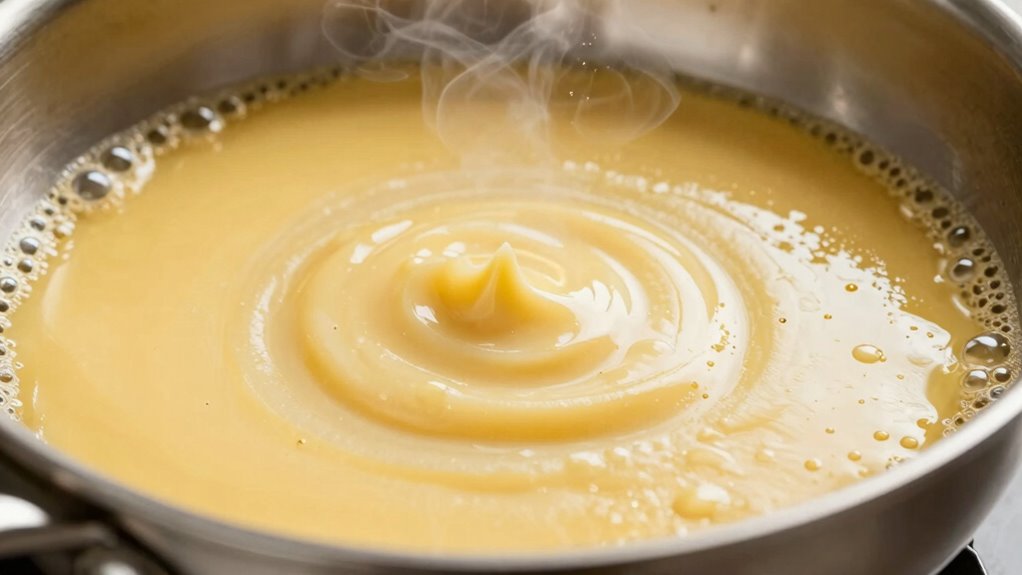

Butter-based sauces tend to break when heated above 140°F to 150°F (60°C to 65°C), causing the fats and water to separate and the emulsion to collapse. To keep your sauce smooth, it’s essential to regulate the temperature carefully—use gentle, low heat and avoid sudden rises. If you want to master preventing this common issue and ensure perfect sauces every time, discover the key strategies that follow.

Get kitchen staples and gadgets delivered free with Prime
- Fast, free delivery on millions of items
- Prime Video, Amazon Music and more included
- Member-only deals all year
Key Takeaways
- Butter-based sauces typically break between 140°F and 150°F (60°C to 65°C).
- Overheating beyond 150°F increases the risk of emulsion breakdown.
- Use gentle, low to medium heat and stir constantly to prevent temperature spikes.
- Remove the sauce from heat immediately once it reaches the desired consistency.
- Monitoring temperature with a thermometer helps maintain stability and avoid breaking.
digital kitchen thermometer for sauces
As an affiliate, we earn on qualifying purchases.
As an affiliate, we earn on qualifying purchases.
Why Do Butter-Based Sauces Break? Understanding the Role of Temperature
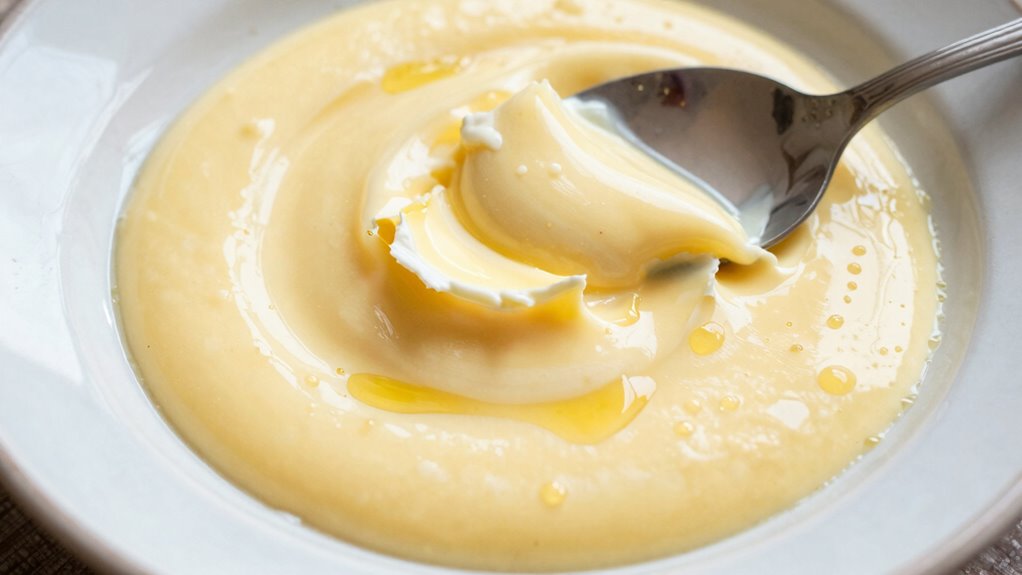
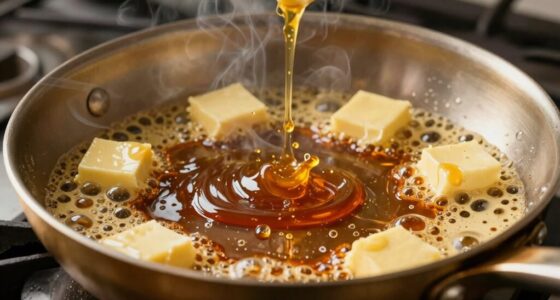
Butter-based sauces break primarily because temperature fluctuations cause the fat and water in the sauce to separate. When the temperature rises too quickly or becomes uneven, the emulsion can’t stay stable, leading to separation. This affects clarity concerns because the sauce turns cloudy or greasy, making it look unappealing. Additionally, the flavor variations become noticeable, as the separation can cause a loss of smoothness and richness that you expect from a well-emulsified sauce. To prevent this, you need to control your heat carefully and avoid sudden temperature changes. Maintaining a consistent, gentle heat helps keep the emulsion intact, ensuring your sauce remains glossy, flavorful, and visually appealing. Proper temperature management is key to avoiding these common pitfalls. Advances in nanotechnology are also exploring innovative ways to improve emulsion stability in food products, which could lead to more resilient sauces in the future. Incorporating modern food science techniques can further enhance the stability of butter-based emulsions under various cooking conditions. Understanding the thermal limits of butter can help you better gauge the ideal temperature range for cooking your sauces without risking separation. Recognizing the critical temperature at which emulsions tend to break allows for more precise control during preparation, ensuring a stable and appealing sauce. Being aware of the thermal thresholds ensures that you stay within safe limits, maintaining sauce quality throughout preparation.
What’s the Exact Temperature That Causes Butter Emulsions to Break?

The precise temperature at which butter emulsions break is typically around 140°F to 150°F (60°C to 65°C). When you reach this temperature, the fat and water components in butter start to separate, causing the emulsion to destabilize. Proper temperature control is essential to maintain butter stability; going beyond this range increases the risk of breaking. As you cook, keep a close eye on the heat to prevent overheating. Using a thermometer helps you stay within the safe zone, ensuring your sauce remains smooth and cohesive. Remember, even a slight temperature rise above 150°F can cause the emulsion to collapse, so gentle heat is key. Managing temperature precisely is your best strategy for preventing broken butter sauces. Additionally, understanding free floating in emulsions can help you better anticipate and prevent separation during cooking. Being aware of emulsion stability principles allows for better control over the cooking process and results. Maintaining a consistent temperature also helps preserve emulsion integrity, keeping your sauces smooth and well-blended. Recognizing the signs of emulsion breakdown can help you intervene early before the sauce fully separates. Practicing temperature management techniques can make a significant difference in achieving perfect butter-based sauces.
How Can You Keep Your Butter Sauce Smooth by Managing Heat?

Maintaining a gentle, consistent heat is essential for keeping your sauce smooth and preventing it from breaking. If the heat gets too high, oil separation can occur, leading to a greasy texture and flavor alteration. To keep control:
- Use low to medium heat and avoid direct high heat, which risks overheating the butter.
- Stir constantly to distribute heat evenly and maintain emulsion stability.
- Remove the sauce from heat as soon as it reaches the desired consistency, preventing residual heat from causing separation.
- Be mindful of temperature thresholds to ensure your butter sauce remains smooth and delicious.
How Do You Know When Your Butter Sauce Is Breaking: and How to Fix It?

You can tell your sauce is breaking when it starts to look curdled, greasy, or separated, losing its smooth, glossy appearance. This often happens if the heat gets too high or if the sauce cools unevenly. If you’re lactose intolerant or prefer vegan alternatives, you might notice similar issues when using plant-based butters or margarine, which can be more sensitive to temperature changes. To fix a broken sauce, remove it from heat immediately and whisk vigorously. Adding a small splash of warm water, lemon juice, or a bit of nondairy milk can help re-emulsify the mixture. Prevent future breakage by maintaining gentle heat and stirring constantly, especially when working with vegan alternatives or lactose-free options.
Top Tips to Prevent Your Butter Sauce From Breaking Every Time
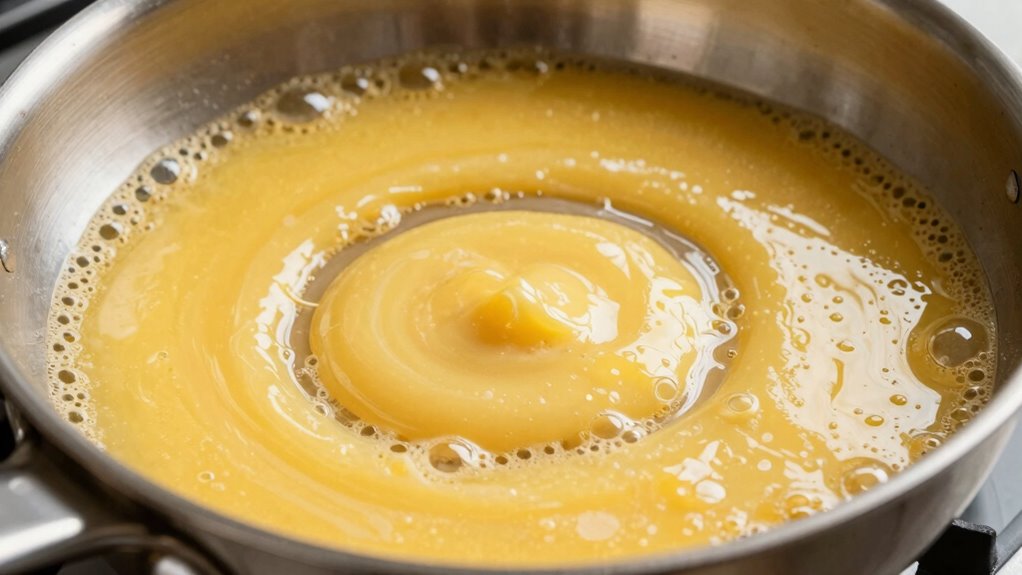
To prevent your butter sauce from breaking, it is essential to control the heat and stir continuously. Maintaining gentle heat ensures the butter stays emulsified, preserving its smooth butter consistency and allowing flavor development without separation. Here are three top tips:
- Use low to medium heat to prevent overheating and curdling.
- Add butter gradually, stirring constantly to encourage a stable emulsion.
- Remove the sauce from heat as soon as it reaches the desired consistency to avoid breaking.
Frequently Asked Questions
Can Different Types of Butter Affect the Breaking Point?
Yes, different types of butter affect the breaking point due to their butter flavor and melting point. For instance, clarified butter has a higher melting point, making it less likely to break at high temperatures. Meanwhile, regular butter with a lower melting point and distinct butter flavor can break more easily if overheated. Choosing the right butter type helps you control the sauce’s stability and prevents it from breaking.
Does Adding Acid Influence Butter Sauce Stability?
Adding acid can influence butter sauce stability, but it requires careful balance. When you introduce acid, like lemon juice or vinegar, it can cause the emulsion to break if added too quickly or in excess. To maintain sauce stability, add acid gradually while constantly whisking. This helps prevent curdling and keeps your sauce smooth. Remember, a little acid enhances flavor without compromising the sauce’s consistency.
How Does Altitude Impact Butter Sauce Temperature Thresholds?
At high altitudes, the boiling point drops like a leaf falling from a tree, and this affects your butter sauce’s stability. You need to watch the temperature more closely because altitude effects lower the heat threshold where butter begins to break, making sauces prone to curdling or breaking at lower temperatures. So, keep your eye on the thermometer and adjust your heat to prevent your butter from crossing that delicate line.
Are There Alternative Thickeners That Prevent Breaking?
Yes, you can use alternative thickeners like cornstarch, arrowroot, or flour to prevent sauce breaking and enhance sauce stabilization. These ingredients help thicken your butter-based sauce smoothly, reducing the risk of separation when you reach higher temperatures. By incorporating alternative thickeners, you gain better control over sauce consistency, ensuring it remains velvety and well-emulsified. Just remember to add them gradually and cook thoroughly for best results.
Can Refrigeration Cause Butter Sauces to Break Upon Reheating?
Refrigeration effects can cause butter sauces to break when reheated, as the fats and liquids separate over time. To prevent this, use reheating tips like gently warming the sauce over low heat and stirring constantly. You might also add a splash of warm water or cream to help reincorporate the ingredients. Proper reheating guarantees your butter sauce stays smooth and creamy, avoiding the common issue of separation.
Conclusion
By paying attention to temperature and technique, you can keep your butter sauces smooth every time. Don’t worry if they break at first—practice makes perfect, and a quick fix can save your dish. Remember, even experienced cooks encounter this issue; it’s part of mastering the art. With patience and a little know-how, you’ll confidently create luscious, stable sauces that elevate your cooking without frustration.
NFL season / tailgating Picks
team gear
As an affiliate, we earn on qualifying purchases.