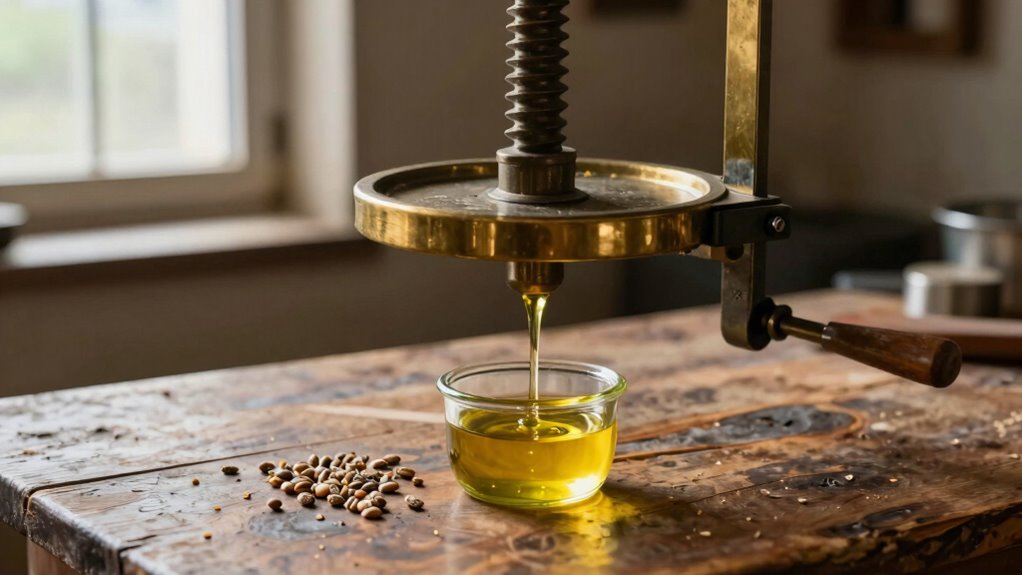

Your actual oil yields from pressing seeds often fall short of expectations due to factors like seed quality, storage conditions, and equipment efficiency. For example, sunflower seeds can yield around 40-50%, while nuts like almonds reach 50-60%. Poor storage, moisture, or equipment issues can reduce results even further. Understanding these variables helps set realistic goals, and exploring proven techniques can boost your efficiency—more details will help you get the most from your presses.

Get kitchen staples and gadgets delivered free with Prime
- Fast, free delivery on millions of items
- Prime Video, Amazon Music and more included
- Member-only deals all year
Key Takeaways
- Actual oil yields depend on seed type, quality, and moisture content, often falling below ideal percentages.
- Proper seed storage, cleaning, and handling are crucial for maximizing extraction efficiency and consistent yields.
- Processing methods, equipment maintenance, and temperature control significantly influence the amount of oil recovered.
- Typical yields vary: sunflower seeds (40-50%), sesame (50-55%), almonds (50-60%), but actual results may be lower.
- Variability factors like seed batch, storage conditions, and processing parameters cause fluctuations in expected oil output.
As an affiliate, we earn on qualifying purchases.
What Oil Yield Should You Expect From Different Seeds?

When it comes to extracting oil from seeds, the yield you can expect varies considerably depending on the type. Different seeds contain varying amounts of seed oil, affecting your overall output. For example, sunflower seeds typically offer higher pressing efficiency, resulting in a greater oil yield. Conversely, seeds like pumpkin or flax tend to produce less oil due to their lower seed oil content. The quality and moisture content of the seeds also influence pressing efficiency, impacting how much oil you can extract. Some seeds are easier to process, leading to higher yields, while others require more effort for similar results. Understanding the seed oil content helps set realistic expectations for your oil press, ensuring you’re prepared for the potential yield based on seed type. Additionally, seed oil content varies based on cultivation and harvesting conditions, which can further influence your overall extraction results. Proper seed storage and handling can also significantly affect the oil extraction efficiency, making it an important factor to consider. Moreover, seed processing techniques can also play a crucial role in maximizing your oil yield. It is also beneficial to consider the seed quality to optimize the extraction process and improve overall output.
What Factors Really Influence Your Oil Press Yield?
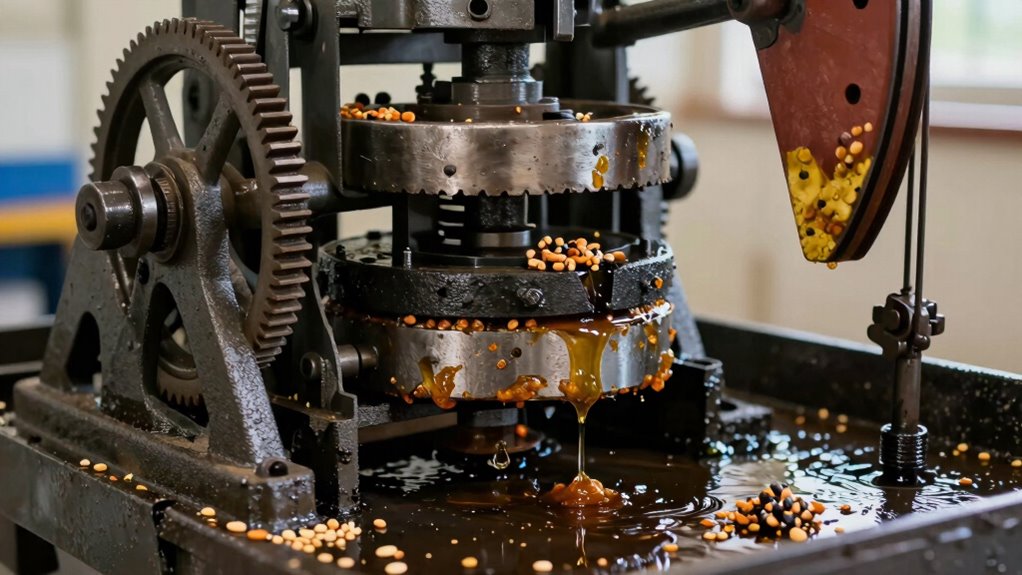
Your oil press yield depends on several key factors, starting with the oil content variability in your seeds. Seed quality also plays a vital role, as fresher, cleaner seeds extract more oil. Additionally, the efficiency of your extraction method can make a significant difference in how much oil you actually recover. Incorporating smart automation techniques can optimize extraction processes and improve yields. Moreover, understanding topical authority in your niche can help you identify the most effective strategies for improving your overall oil extraction process. Recognizing industry standards can further inform adjustments to enhance extraction efficiency and ensure consistent results. Staying aligned with classic arcade games can also inspire innovative methods for process improvement and efficiency. To maximize yield, it’s also helpful to consider seed preparation techniques that can enhance oil recovery and reduce waste.
Oil Content Variability
Oil content variability is a vital factor that directly impacts your oil press yield, and understanding what influences it can help you optimize your results. One significant aspect is seed storage; improper storage can degrade seed quality, reducing oil content and making extraction less efficient. When seeds are exposed to moisture, heat, or pests, their oil quality diminishes, leading to lower yields. Additionally, seed age and handling before pressing affect oil content—fresh, well-preserved seeds typically yield more oil. Variability in seed oil content means your results won’t be consistent unless you control these factors. Monitoring storage conditions and choosing high-quality seeds are essential steps to guarantee maximum oil extraction and stable yields from each batch.
Seed Quality Impact
The quality of seeds you use plays a vital role in determining your oil press yield. High seed purity ensures fewer contaminants and less debris, which can clog your equipment and reduce extraction efficiency. Fresh seeds are also crucial; older or stored seeds may lose oil content and become less responsive during pressing. When seeds are contaminated or degraded, you’ll notice lower yields and poorer-quality oil. Ensuring your seeds are clean, free from impurities, and properly stored helps maximize your press output. Using high-quality, fresh seeds reduces waste, lowers processing time, and improves oil recovery. Additionally, understanding layer concepts in processing can help optimize different stages of oil extraction. Proper seed handling techniques and processing methods can further enhance efficiency and yield. Implementing quality control measures throughout the process ensures consistent, high-yield results. Staying informed about technological advancements in seed processing can also lead to improved extraction techniques. Ultimately, investing in good seed quality directly impacts how much oil you get from each pressing cycle, making it a key factor in achieving consistent, optimal yields. Regularly monitoring seed quality throughout the season can help identify issues early and maintain optimal production levels.
Extraction Method Efficiency
Extraction method efficiency is a critical factor that directly impacts how much oil you can recover from your seeds. The way you handle seed storage, for example, affects oil quality and yield. Proper storage prevents seed deterioration, ensuring maximum extraction. Additionally, your choice of extraction technique—cold press, hot press, or solvent—significantly influences efficiency. After pressing, oil filtration plays an essential role in removing impurities, improving yield clarity, and preventing losses. To optimize your extraction, keep these points in mind:
- Store seeds in cool, dry conditions to preserve oil content
- Use appropriate extraction methods suited for your seed type
- Regularly maintain and calibrate your equipment
- Implement thorough oil filtration to minimize residual waste
- Monitor seed moisture levels for better extraction results
Furthermore, understanding the extraction method efficiency can help you select the most suitable process for your specific seed type and production scale, leading to better yields and quality. Considering seed quality preservation techniques can also enhance overall extraction success. Proper handling of seed moisture levels is equally crucial for maximizing yield and reducing waste. Additionally, paying attention to processing parameters like temperature and pressure can further improve extraction outcomes. Focusing on these factors helps maximize your oil press yield and overall efficiency.
Incorporating technique optimization can further refine your process and boost your oil recovery rates.
How Does Oil Press Efficiency Impact Your Results?
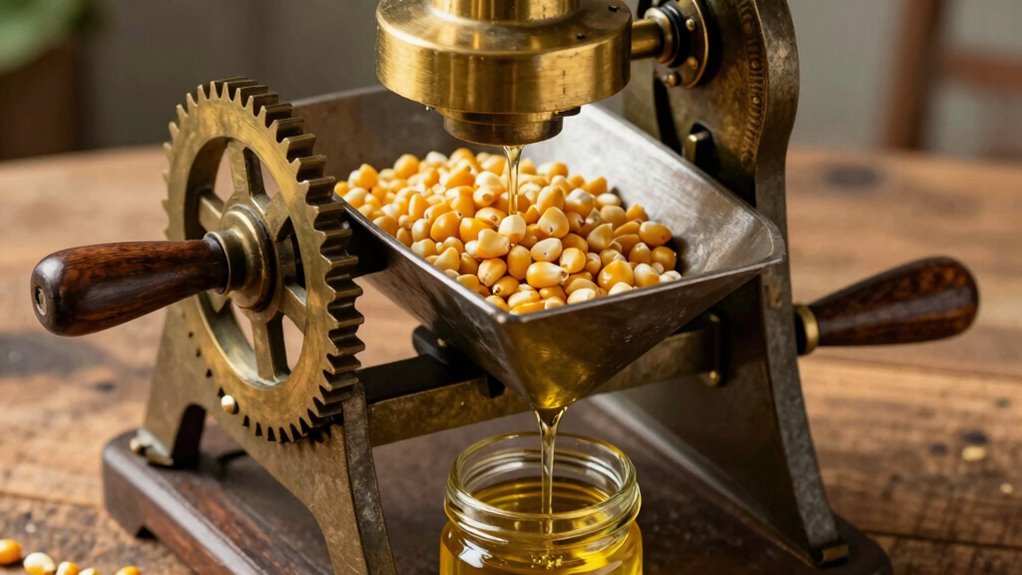
Your oil press’s efficiency directly affects how much oil you get from each batch. Factors like press design and material quality influence extraction efficiency, leading to variability in your yields. Understanding these points helps you optimize your process and get more consistent results. Additionally, small systems play a crucial role in controlling and improving efficiency in your oil pressing process, as implementing automated testing can help identify issues early and maintain consistent quality. Proper maintenance routines can also enhance press longevity and performance over time. Regularly reviewing auditory processing assessments can support troubleshooting and optimize your overall operation, especially since oil extraction techniques significantly impact yield outcomes.
Extraction Efficiency Factors
Efficiency plays a crucial role in determining how much oil you can extract from your pressing process. Factors like seed storage quality and press maintenance directly influence extraction outcomes. Poor seed storage can lead to moisture or mold, reducing oil yield. Regular press maintenance ensures smooth operation, preventing blockages or uneven pressing. Other key factors include:
- Proper seed preparation and cleaning
- Consistent pressing pressure
- Correct temperature control
- Ideal pressing duration
- Regular equipment calibration
- Monitoring extraction efficiency helps identify areas for process improvement and maximize oil yield.
Oil Yield Variability
The efficiency of your oil press directly influences how much oil you can recover from each batch, leading to noticeable variability in your yields. Poor seed storage can reduce seed quality, lowering oil extraction efficiency and causing inconsistent results. Additionally, differences in seed moisture content and cleanliness affect pressing performance. Even with a high-quality press, variations in seed batches mean yields won’t be uniform. The amount of oil you extract impacts your overall oil refining process; less oil means more refining effort and potentially lower-quality final products. To minimize variability, store seeds properly and ensure consistent seed quality. Regularly maintain your equipment and adjust pressing parameters as needed. Recognizing and managing these factors helps you achieve more predictable yields and optimize your oil production.
Which Processing Techniques Help Maximize Oil Extraction?
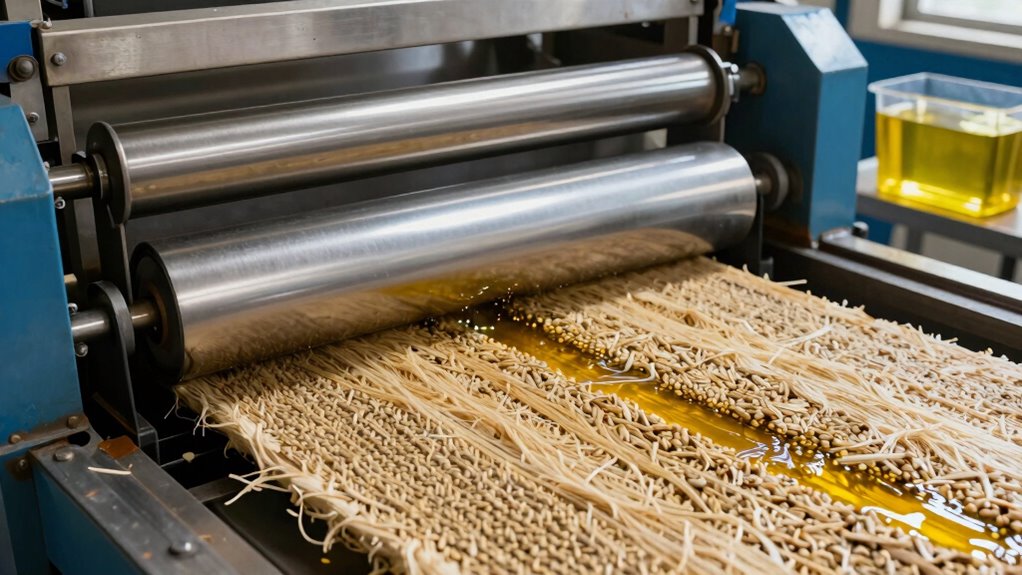
Selecting the right processing techniques can substantially boost oil extraction yields. Proper seed storage preserves seed quality, preventing moisture loss and spoilage that reduce oil content. Using cold-pressing methods minimizes heat, maintaining oil quality and maximizing yield. Oil refining removes impurities, improving extraction efficiency. Consider pre-treatments like roasting or crushing to break down seed cells and release more oil. Techniques such as solvent extraction can recover additional oil from seeds with low yields. To optimize results, guarantee equipment is well-maintained and calibrated. Remember, effective seed storage and thorough oil refining are key to maximizing extraction. Incorporating these methods can significantly improve your oil yield, making your process more efficient and profitable.
What Are Typical Oil Yields for Common Nuts and Seeds?
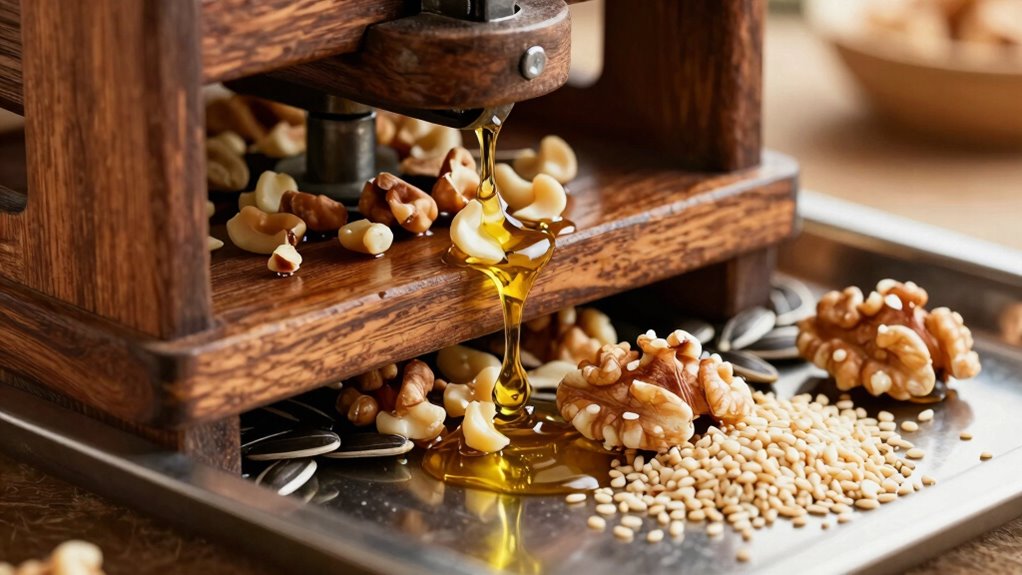
Many common nuts and seeds have well-established oil yields that vary considerably depending on their type and processing methods. Understanding typical yields helps you set realistic expectations for seed extraction and nut oil production. For example, almonds usually yield about 50-60%, while sunflower seeds can produce 40-50%. These percentages indicate how much oil you can expect relative to the raw material weight. Here’s a quick overview:
| Nut/Seed | Typical Oil Yield (%) |
|---|---|
| Almonds | 50-60% |
| Sunflower Seeds | 40-50% |
| Sesame Seeds | 50-55% |
| Cashews | 30-40% |
| Walnuts | 50-65% |
Knowing these figures helps you gauge the efficiency of your seed extraction process and the potential nut oil yield.
Why Might Your Actual Oil Yield Be Lower Than Expected?
Several factors can cause your actual oil yield to fall short of expectations. Poor seed storage can lead to moisture absorption or mold, reducing oil content. Inadequate equipment maintenance might cause malfunctions or inefficiencies, lowering extraction success. Additionally, seeds stored too long or improperly can degrade, decreasing oil quality. Here are some common issues:
- Moisture or mold in seeds from improper storage
- Dull or dirty pressing equipment
- Incorrect pressing temperature
- Seeds that are over-dried or damaged
- Inconsistent seed quality or batch variation
Ensuring proper seed storage and regular equipment maintenance helps optimize yield. When seeds are stored correctly, they retain their oil content longer. Well-maintained equipment prevents mechanical failures, ensuring maximum extraction. Addressing these factors will help you get closer to your expected oil yield.
How Can You Improve Your Oil Extraction Results?
To boost your oil extraction results, start by optimizing your seed preparation and equipment setup. Proper seed storage is essential; keep seeds in a cool, dry place to prevent mold and deterioration, which can reduce oil yield. Ensure seeds are clean and free from debris before pressing to maximize extraction efficiency. Regular equipment maintenance is vital—check for wear, clean components thoroughly, and calibrate your press regularly to maintain optimal pressure and temperature. Using well-maintained equipment prevents blockages and guarantees consistent operation. Additionally, consider adjusting pressing parameters based on seed type and moisture content. These steps help you achieve higher yields, reduce waste, and improve the overall efficiency of your oil extraction process.
What Are Realistic Goals Based on Actual Oil Press Yields?
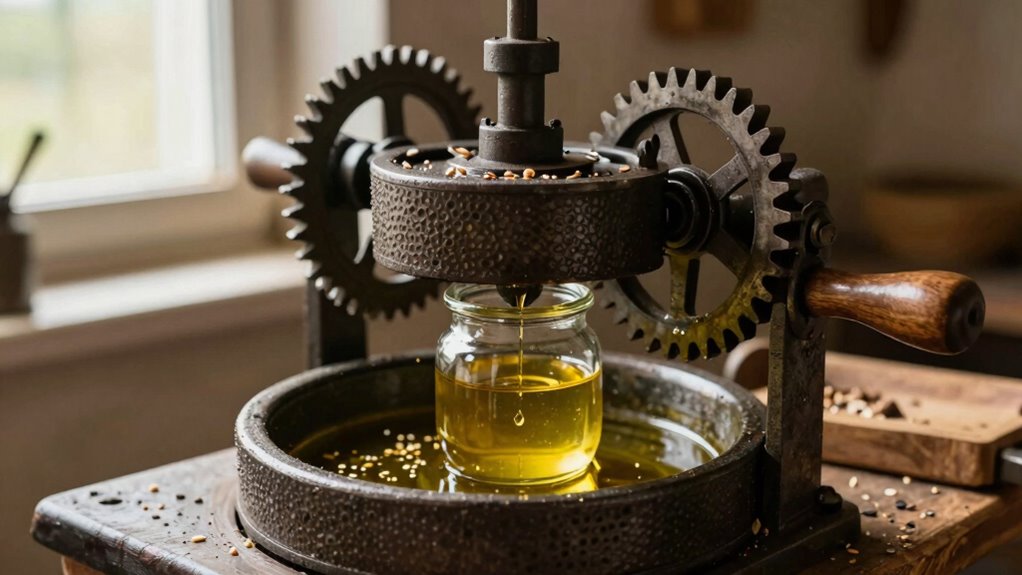
Understanding achievable oil yields helps you set realistic expectations and improve your overall process. Based on actual oil press yields, your goals should consider factors like seed storage conditions and oil filtration efficiency. Realistic targets vary depending on seed type and pressing method but generally fall within certain ranges. To optimize results, focus on:
- Proper seed storage to prevent moisture loss
- Consistent pressing techniques
- Accurate oil filtration to remove impurities
- Managing seed moisture content
- Regular equipment maintenance
Recognizing these variables helps you avoid overestimating yields and ensures steady progress. Remember, while some seeds yield more oil, others may produce less due to natural variance. Setting attainable goals based on actual yields keeps you motivated and guides improvements in your pressing process.
Frequently Asked Questions
How Do Weather Conditions Affect Seed Oil Content?
Weather conditions, especially climate variability and seasonal changes, directly impact seed oil content. You’ll find that droughts or excessive rainfall can reduce seed quality and oil yield. Cold temperatures might slow seed development, while warm, consistent weather enhances oil accumulation. By understanding these patterns, you can optimize harvest timing and storage conditions, ultimately improving your oil extraction results despite fluctuating weather influences.
Can Storage Duration Impact Oil Press Efficiency?
Storage duration does impact oil press efficiency, affecting the quality, yield, and processing ease. Extended storage can lead to seed degradation, loss of oil content, and increased moisture, which hinder extraction. You’ll want to monitor storage impact regularly, keep seeds in ideal conditions, and understand efficiency factors. Proper storage preserves seed integrity, maximizes oil yield, and ensures your pressing process remains efficient and productive over time.
Are There Differences in Yields Between Manual and Automatic Presses?
You’ll notice differences in yields between manual and automatic presses. Manual presses often require you to make manual adjustments, which can lead to inconsistent results if not done carefully. Automatic presses, on the other hand, use automatic calibration to optimize pressure and extraction, typically providing more consistent yields. So, if you want reliability and efficiency, automatic presses are generally better, but manual presses can still be effective with proper adjustments.
What Role Does Seed Quality Play in Oil Extraction Success?
Seed quality greatly influences your oil extraction success. When you choose high-quality seeds with good seed selection and high oil content, you’ll likely get better yields and richer oil. Poor quality seeds or those with low oil content can reduce output and affect oil quality. Always opt for fresh, well-preserved seeds to maximize your oil press efficiency and guarantee you get the most oil possible from each batch.
How Do Oil Press Settings Influence Final Oil Quantity?
Think of your oil press like a musical instrument; the right settings hit the perfect note. By adjusting press calibration and considering seed moisture, you optimize oil extraction. Too tight, and you might crush seeds inefficiently; too loose, and you lose potential oil. Fine-tuning these settings guarantees you get the maximum oil yield, making your process more efficient and your harvest more rewarding.
Conclusion
By understanding typical yields and optimizing your techniques, you can substantially improve your oil press results. For instance, if you start with 10 pounds of sunflower seeds, you might expect around 2.5 pounds of oil. By adjusting pressure, temperature, and seed quality, you could boost that yield. Stay realistic about expectations, and keep experimenting to get the most out of your oil pressing process.
Halloween Picks
halloween
As an affiliate, we earn on qualifying purchases.