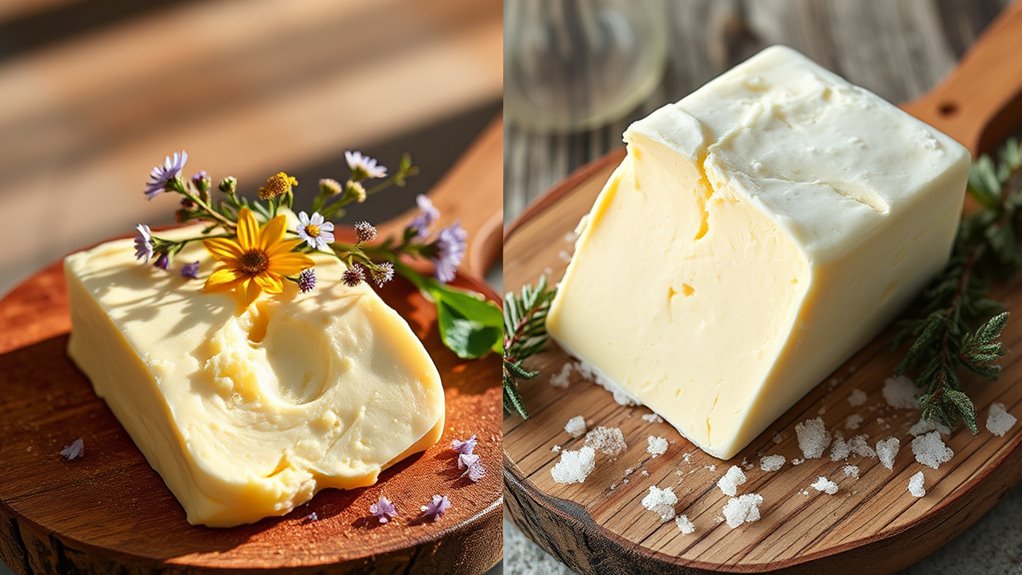

Seasonality really affects butter’s flavor, texture, and fat content. In spring, butter is creamier and more vibrant in flavor due to fresh grass in cows’ diets, giving it a rich hue from beta-carotene. Winter butter, on the other hand, tends to be firmer and paler, with less complex flavors as cows rely on stored feed. Understanding these differences can help you choose the right butter for your cooking needs. There’s plenty more to discover about how seasonality impacts butter!
Key Takeaways
- Spring butter has a richer flavor and vibrant yellow color due to high beta-carotene levels from fresh grass.
- Winter butter is paler and firmer, reflecting the cows’ diet of stored feed, leading to less complex flavors.
- Seasonal diet changes affect the fat content, with winter butter often having higher fat but a firmer texture.
- Spring butter enhances delicate dishes, while winter butter’s milder taste suits hearty recipes and provides necessary creaminess.
- Understanding seasonal variations in butter can improve culinary outcomes and ingredient choices in cooking and baking.

As the seasons change, so does the flavor and quality of butter, making it essential to understand the impact of seasonality on this beloved dairy product. Butter production cycles are influenced by the cows’ diet, which varies markedly throughout the year. In spring, when pastures are lush and green, cows graze on fresh grass, leading to a rich and vibrant flavor profile in the milk they produce. This results in butter that’s not only creamier but also has a more pronounced taste. You might notice that spring butter has a brighter yellow hue, which is a direct reflection of the beta-carotene found in the grass.
On the flip side, during winter months, cows often rely on stored feed like hay and silage, which can lead to different seasonal flavor variations in the butter. The lack of fresh grass means that the butter may taste less complex, with a more muted flavor profile. You may find winter butter to be paler and slightly firmer due to a higher fat content but lower levels of the vibrant flavors you’d expect in spring. The change in diet impacts not just the taste but also the texture, making it crucial to consider the season when choosing butter for your culinary needs.
Understanding these seasonal impacts can enhance your cooking and baking experiences. For instance, if you’re looking to create a rich, flavorful sauce or pastry, you’ll want to reach for spring butter. Its creamy texture and robust flavor can elevate your dishes, making them more enjoyable. Conversely, if you’re making a hearty winter stew, the more subdued winter butter can still provide the necessary fat and creaminess, just without the extra depth of flavor. Regular selection of seasonal butter can improve indoor air quality in your culinary environment, as fresher ingredients often lead to better-tasting dishes.
It’s fascinating how something as simple as butter can vary so much throughout the year. By paying attention to these seasonal changes, you can make more informed choices that align with your cooking preferences. So, the next time you’re in the dairy aisle, think about the season and its impact on butter production cycles. Whether it’s the lushness of spring or the more restrained qualities of winter, each season brings its own unique flavors to your table. Embrace these differences and enjoy the wonderful world of seasonal butter!

Spring Sunrise Grass-Fed Organic Ghee 16 oz Keto & Paleo Non-GMO
- Premium Clarified Butter: Made from organic grass-fed cows
- Pure & Simple Ingredients: Non-GMO, gluten-free, casein-free
- High Smoke Point: Up to 485°F for versatile cooking
As an affiliate, we earn on qualifying purchases.
As an affiliate, we earn on qualifying purchases.
Frequently Asked Questions
How Does Climate Affect Butter Fat Composition?
Climate influences butter fat composition by affecting milk variability. When temperatures fluctuate, the cows’ diets change, impacting the nutrients and fatty acids in their milk. For instance, during warmer months, cows might graze on lush grass, producing milk with higher fat content. Conversely, colder months can lead to lower fat levels due to less diverse diets. So, the climate directly shapes the quality and characteristics of the butter you enjoy.
Can Butter Be Made Year-Round?
Yes, you can make butter year-round. While butter production cycles can vary, advancements in dairy farming allow for consistent butter availability. Seasonal dairy farming typically aligns with animal feed availability, but modern practices, like using silage, enable cows to produce milk throughout the year. This means you can enjoy fresh butter regardless of the season, ensuring you always have a delicious ingredient for your cooking and baking needs.
What Are the Health Implications of Seasonal Butter?
Ah, the perennial debate! Seasonal nutrient variations in butter can affect its health implications. You might find that spring butter, rich in beta-carotene, contributes to better heart health, while winter butter often contains higher saturated fats. Consumer health perceptions also play a role; some believe seasonal butter is inherently healthier. Ultimately, choosing butter based on its season can enhance your diet, but moderation is key, regardless of the season’s bounty.
How Does the Diet of Cows Influence Butter Fat?
The diet of dairy cows markedly influences butter fat. When cows graze on fresh pasture, their milk tends to have higher levels of beneficial omega-3 fatty acids, resulting in creamier butter. Conversely, if they eat grain-based diets, the butter fat can become less rich. By prioritizing pasture grazing, you can guarantee that the butter you enjoy is not only tastier but also healthier, reflecting the cows’ natural diet and seasonal variations.
Are There Flavor Differences Between Spring and Winter Butter?
Yes, you’ll notice distinct flavor profiles between spring and winter butter. Spring butter often tastes like a sunlit meadow, bursting with fresh, grassy notes, while winter butter can bring a creamier, richer depth, reminiscent of cozy evenings by the fire. These sensory differences arise from the cows’ diets, which change with the seasons, affecting the milk and, ultimately, the butter’s taste. So, your choice can truly elevate a dish’s flavor!
Conclusion
In conclusion, the seasonality of butter really highlights how spring and winter fats differ. Did you know that butter made in spring can contain up to 15% more beta-carotene than its winter counterpart? This natural variation not only affects the color but also the flavor profile, giving spring butter a richer taste. So, next time you spread some on your toast, consider the season and how it impacts your butter’s quality and taste!