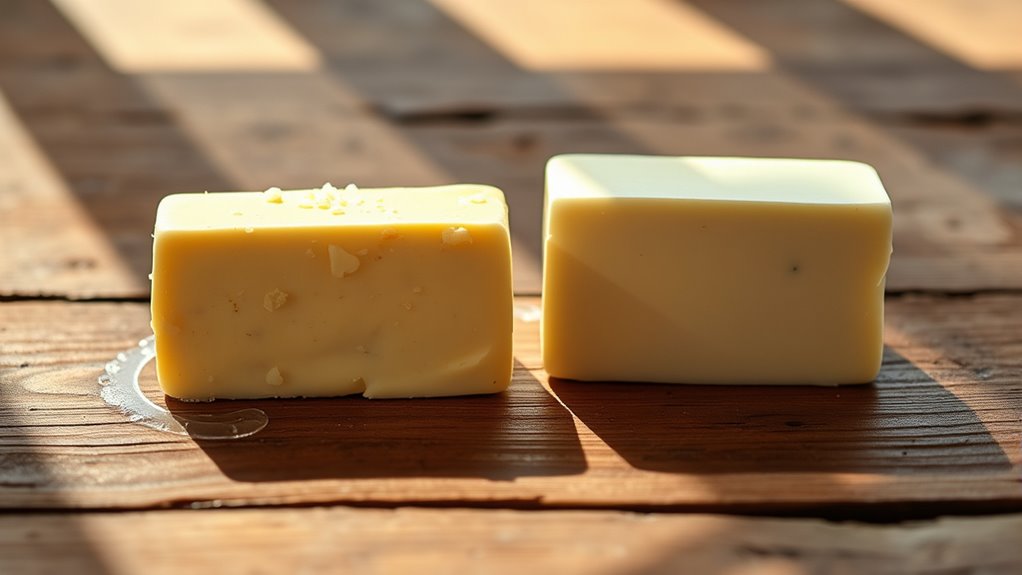

Cultured butter typically lasts 3 to 4 weeks in the fridge thanks to its fermentation process, while sweet cream butter remains good for about 1 to 2 weeks. The beneficial bacteria in cultured butter help inhibit spoilage, extending its shelf life. If you’re storing butter, make sure to keep it in airtight containers and consider freezing if you want to maintain quality for months. Discover how to best use both kinds of butter in your cooking.
Key Takeaways
- Cultured butter lasts about 3 to 4 weeks in the fridge, while sweet cream butter lasts 1 to 2 weeks.
- Fermentation in cultured butter produces lactic acid, which naturally inhibits spoilage, extending its shelf life.
- Sweet cream butter is more susceptible to oxidation, leading to quicker flavor deterioration.
- Both types of butter should be stored in airtight containers to maintain quality and prevent spoilage.
- Freezing cultured butter preserves it for several months, while sweet cream butter is best frozen in smaller portions.
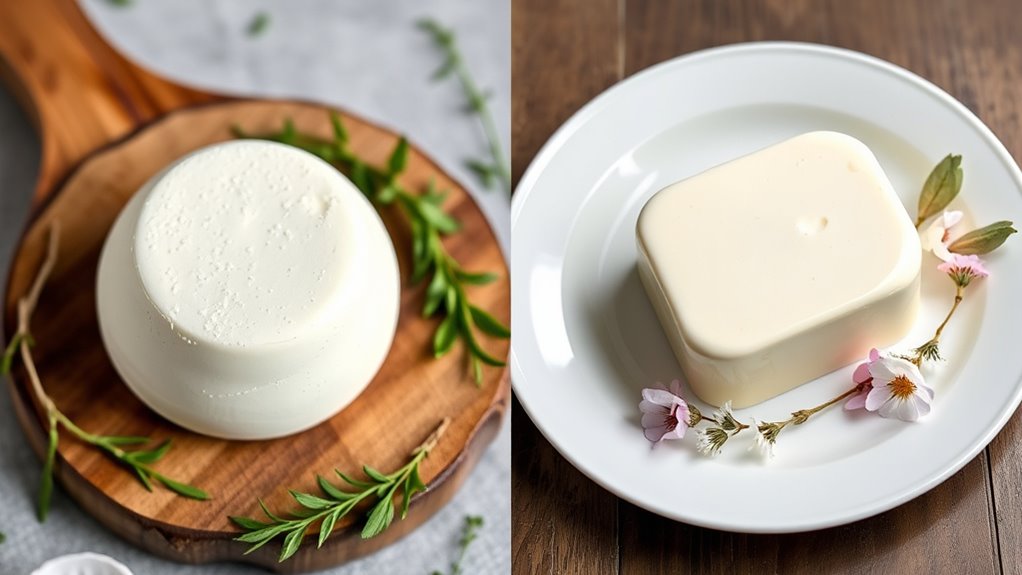
When you’re deciding between cultured and sweet cream butter, understanding their shelf life can make all the difference in how you store and use them. Cultured butter undergoes a fermentation process where beneficial bacteria are added to cream before churning. This not only gives it a tangy flavor but also enhances its preservation. The fermentation process creates lactic acid, which naturally inhibits the growth of spoilage-causing bacteria. As a result, cultured butter can last longer than sweet cream butter, typically around three to four weeks in the fridge when properly stored.
On the other hand, sweet cream butter is made from pasteurized cream without the fermentation process. While it’s delicious and versatile, it generally has a shorter shelf life. Sweet cream butter can maintain its quality for about one to two weeks in the fridge. After that, it may start to develop undesirable flavors and odors due to oxidation. If you’re planning to use it frequently, you might find it more convenient to buy smaller quantities to ensure freshness.
Sweet cream butter offers a creamy, mild flavor but has a shorter shelf life of one to two weeks in the fridge.
When contemplating how to store these butters, remember that both should be kept in airtight containers to minimize exposure to air and light, which can lead to rancidity. If you find yourself with excess butter, you might want to consider freezing it. Cultured butter freezes well, retaining its quality for several months. Sweet cream butter can also be frozen, but it’s best to divide it into smaller portions for easier use later on. Just remember to wrap it tightly to avoid freezer burn.
One important aspect to note is that the preservative effects of cultured butter aren’t just about shelf life; they also affect flavor. The tanginess from the fermentation process can enhance the taste of many dishes, making it a favorite among chefs and home cooks alike. In contrast, sweet cream butter is prized for its creamy, mild flavor, making it perfect for baking and spreading. Additionally, understanding how market volatility can impact ingredient preferences may influence your butter choices based on availability and pricing.
Ultimately, your choice between cultured and sweet cream butter should depend on your cooking and baking needs. If you want something with a longer shelf life and a unique flavor profile, cultured butter might be the way to go. If you prefer a more straightforward, creamy taste, sweet cream butter will serve you well. Whatever you choose, understanding their differences can elevate your culinary experience.

KITCHENDAO One-handed Airtight Butter Dish with Lid for Countertop and Refrigerator Door Shelf, Butter Holder with One Press to Open/Close Secure Latching Buckle for West/East Coast Butter (White)
- Suitable for Eastern and Western Butter: Capacity for various butter types
- One-Handed Open/Close: Secure latching buckle for easy operation
- Keeps Butter Fresh: Sealing ring maintains freshness and airtight seal
As an affiliate, we earn on qualifying purchases.
As an affiliate, we earn on qualifying purchases.
Frequently Asked Questions
Can I Freeze Cultured or Sweet Cream Butter?
Yes, you can freeze both cultured and sweet cream butter. Freezing preserves the freshness and flavor, making it a great option for long-term storage. Cultured butter benefits from freezing as it maintains its unique tangy flavor, while sweet cream butter’s creamy texture remains intact. Just make sure to wrap them tightly in airtight packaging to prevent freezer burn. When you’re ready to use them, thaw in the fridge for the best results!
How Should I Store Butter for Maximum Freshness?
To store butter for maximum freshness, use airtight storage containers and keep it at a consistent temperature. You’ll want to seal butter tightly to prevent exposure to air and odors. Refrigerate it for long-term storage or keep it in a butter dish at room temperature for short periods. Remember to monitor the temperature, as too much heat can spoil your butter quickly. With these tips, you’ll enjoy fresh butter every time.
Does Butter Go Bad if Left Out?
Yes, butter can go bad if left out too long. While it can sit at room temperature for a few days, its flavor starts to degrade after about a week. If you want to keep that rich butter flavor intact, it’s best to store it in the fridge. Just remember, even refrigerated butter has a storage duration of several months, so use it before it loses its freshness!
Are There Different Types of Cultured Butter?
Yes, there are different types of cultured butter. For example, imagine you’re at a farmer’s market and you come across a stall selling artisanal varieties made with unique dairy cultures. One might be infused with herbs, while another features a tangy flavor from specific bacterial cultures. Each type offers a distinct taste and texture, showcasing the diversity in cultured butter. You can explore these options to elevate your culinary creations!
How Can I Tell if Butter Has Spoiled?
You can tell if butter has spoiled by checking for butter mold, which appears as fuzzy spots on the surface. Additionally, look for any discoloration; fresh butter should be a consistent yellow or white. If it smells sour or off, that’s another sign it’s time to toss it. Always store butter properly to extend its freshness, but if you notice any of these signs, it’s best to err on the side of caution.
Conclusion
In the world of butter, cultured and sweet cream varieties represent more than just flavors; they symbolize choices in life. Just as cultured butter’s tangy depth offers a rich experience, sweet cream butter embodies simplicity and comfort. Understanding their shelf life helps you savor each moment, ensuring that you appreciate the freshness of today while acknowledging the flavors of yesterday. So, choose wisely and relish the journey, because every bite tells a story of time well spent.