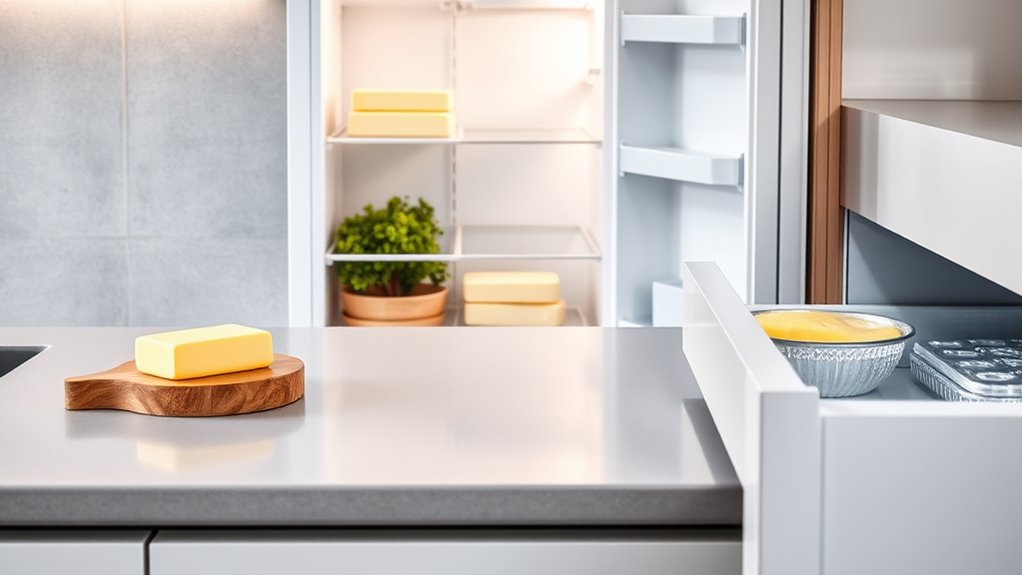

Butter lasts about 1-2 weeks at room temperature if stored properly. In the fridge, it can stay fresh for up to 3 months unopened, and even longer if you keep it sealed. For the longest shelf life, freeze it! When wrapped tightly, butter can last up to a year in the freezer. Always check for signs of spoilage before use. Want to know more storage tips? There’s plenty to explore!
Key Takeaways
- At room temperature, butter lasts 1-2 weeks; store in a covered dish to prevent rancidity.
- In the refrigerator, unopened butter can last up to 3 months, or 6 months if properly stored.
- For long-term storage, butter can be frozen for up to 1 year when tightly wrapped and placed in an airtight container.
- Signs of spoilage include off smells, color changes, mold growth, or unpleasant taste; discard if any are present.
- Always verify freshness before use and consider portioning before freezing for convenience.
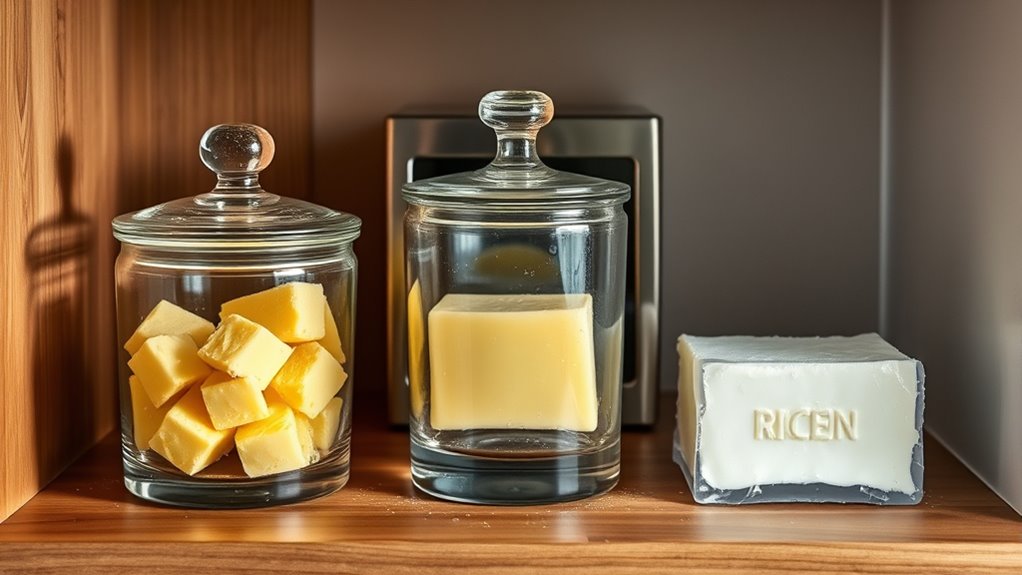
Have you ever wondered how long butter actually lasts? It’s a common question, especially since butter is a staple in many kitchens. Understanding butter’s shelf life can save you from tossing out spoiled food and help you enjoy its rich flavor for longer. Generally, butter can last quite a while, but its longevity depends on how you store it.
Wondering how long butter lasts? Proper storage can help you enjoy its flavor and avoid spoilage.
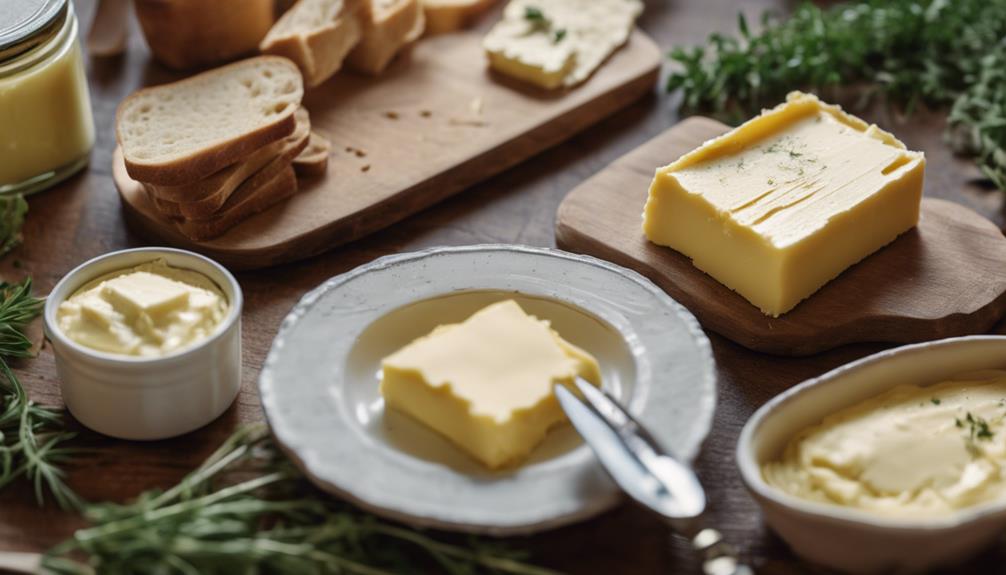
When you keep butter at room temperature, you can typically enjoy it for about one to two weeks. However, this is only if you follow some butter storage tips. Make sure to keep it in a butter dish with a lid or wrap it tightly in foil or parchment paper. This protects it from light and air, which can cause it to go rancid. If you live in a warmer climate, it’s best to store it in the fridge to prevent it from spoiling too quickly.
In the fridge, butter can last much longer—up to three months or even six months if it’s unopened. Just remember to keep it in its original packaging or an airtight container. This helps maintain its flavor and prevents it from absorbing odors from other foods. If you notice any off smells or changes in color, it’s a sign that the butter’s gone bad.
For the longest shelf life, freezing butter is your best bet. If you plan to stock up, freeze it in portions. Wrap the butter tightly in plastic wrap, then place it in an airtight container or freezer bag. When frozen, butter can last for up to a year. Just be sure to label it with the date so you can keep track of how long it’s been stored. Data analytics can be beneficial in monitoring how often you use butter and managing your stock efficiently.
When you’re ready to use frozen butter, simply transfer it to the fridge to thaw. You might also try grating frozen butter directly into your recipes—this can be a handy trick for baking! Always check for signs of spoilage before using any butter that’s been stored for a while.

KITCHENDAO One-handed Airtight Butter Dish with Lid for Countertop and Refrigerator Door Shelf, Butter Holder with One Press to Open/Close Secure Latching Buckle for West/East Coast Butter (White)
- Suitable for Eastern and Western Butter: Capacity for various butter types
- One-Handed Open/Close: Secure latching buckle for easy operation
- Keeps Butter Fresh: Sealing ring maintains freshness and airtight seal
As an affiliate, we earn on qualifying purchases.
As an affiliate, we earn on qualifying purchases.
Frequently Asked Questions
Can I Use Expired Butter Safely?
You can use expired butter safely, but you should check it first. Start with the smell test; if it smells off or rancid, it’s best to toss it. Taste a small bit to assess the butter flavor; if it’s still pleasant, it’s likely fine to use. However, if the butter has developed any unusual colors or textures, it’s safer to discard it. Always trust your senses when in doubt!
How Can I Tell if Butter Is Spoiled?
Spotting spoiled butter is like finding a needle in a haystack—until you know what to look for. Check for any butter mold, which appears as fuzzy spots, and toss it if you see any. Also, pay attention to color change; if it turns darker or develops an off hue, it’s time to say goodbye. Finally, give it a sniff—if it smells sour or rancid, you’ll know it’s past its prime.
Does Butter Go Bad Faster in the Pantry?
Yes, butter can go bad faster in the pantry. When you store it at room temperature, it’s exposed to light, air, and heat, which can shorten its shelf life. To keep your butter fresh longer, use butter storage tips like keeping it in a butter dish with a lid or wrapping it tightly. If you’re not using it quickly, consider refrigerating it to extend its freshness and maintain quality.
Can I Refreeze Butter Once Thawed?
Yes, you can refreeze butter once it’s thawed, but keep in mind that the texture might change slightly. When you thaw butter, it can become softer, and refreezing might affect its creaminess. To maintain quality, follow storage tips like wrapping it tightly in foil or plastic wrap. If you notice any off smells or changes in color, it’s best to discard it. Enjoy your butter in any dish, just be mindful of its condition!
What’s the Best Way to Store Butter?
To store butter effectively, keep it in its original packaging or an airtight container to maintain freshness. If you’re using it regularly, a butter dish at room temperature works well for short-term use. For longer butter shelf life, refrigerate it, and for extended storage, freeze it in portions. Always check for signs of spoilage, and remember these storage tips to enjoy your butter at its best!
Conclusion
In summary, whether you keep butter in the pantry, fridge, or freezer, knowing how long it lasts helps you make the most of it. Remember, if it’s kept tightly sealed, it stays fresh; if it’s stored properly, it stays flavorful; and if you check for signs of spoilage, it stays safe. So, enjoy your butter in all its creamy glory, and don’t let it go to waste—store it right, use it wisely, and savor every bite!