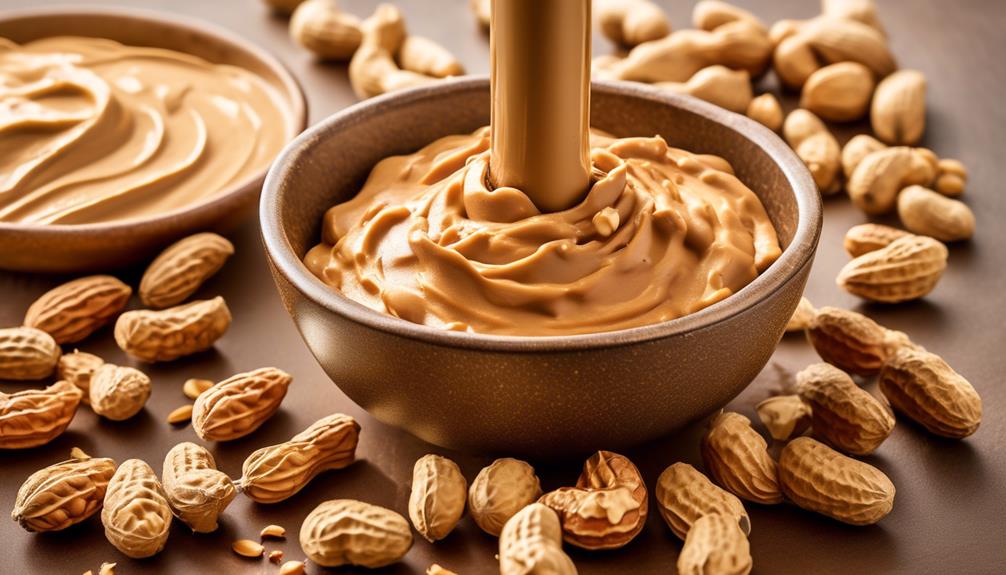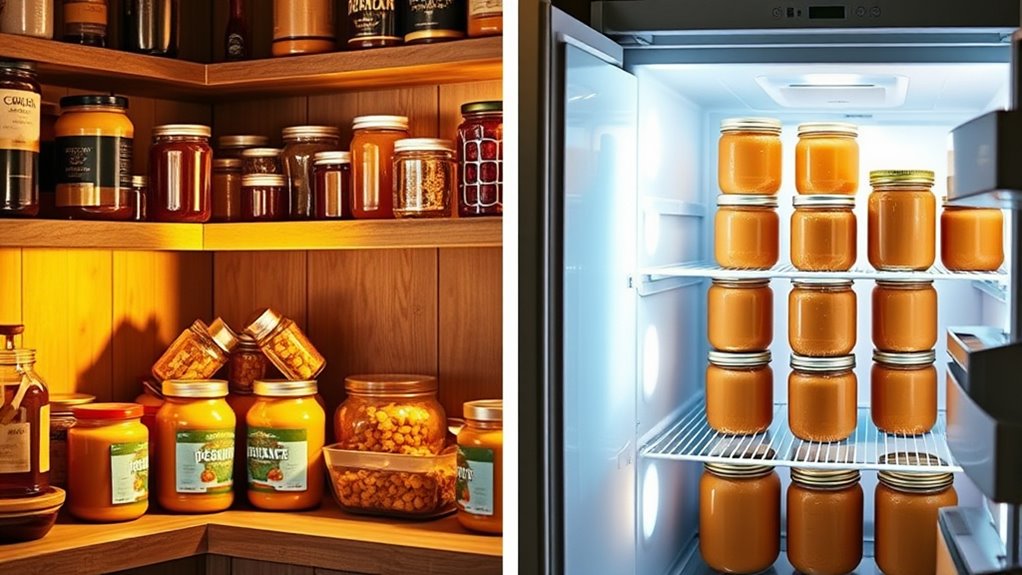

When it comes to storing peanut butter, it really depends on how often you use it. If you’re a daily user, keeping it in the pantry offers a softer, creamier texture that’s easy to spread. On the other hand, if you only use it occasionally, the fridge can help extend its shelf life and reduce oil separation. Just remember to stir well before using, and there’s more to uncover about getting the best from your peanut butter.
Key Takeaways
- Pantry storage keeps peanut butter softer and creamier, ideal for regular use and easy spreading.
- Refrigeration extends shelf life and slows oil separation, preserving freshness for less frequent use.
- Natural peanut butter may require stirring regardless of storage method to maintain consistency.
- Cold peanut butter is thicker and harder, often needing pre-softening before use.
- Choose pantry for quick access and refrigeration for longer-lasting quality based on usage frequency.

Have you ever wondered how to store peanut butter for maximum freshness? The way you store it can markedly impact its taste and texture. Peanut butter can be a staple in your pantry, but knowing whether to keep it there or in the fridge is vital for maintaining its quality. Many folks enjoy natural peanut butter, which contains only peanuts and salt, and you might have noticed that it tends to separate over time. That’s because of the natural oils that rise to the top. So, if you’re not careful, you could end up with a jar of peanut butter that’s hard to spread and less enjoyable.
Storing peanut butter correctly is essential for preserving its taste and texture, especially with natural varieties that separate over time.
When you keep your peanut butter in the pantry, it’s convenient, and it’s usually at room temperature, which makes it easy to spread on toast or mix into recipes. However, you might need to stir it occasionally to combat oil separation. Those natural oils are part of what makes peanut butter delicious, but they can make the texture inconsistent if left unchecked. To prevent this, simply give the jar a good stir before each use. If you find that oil separation is a recurring issue, you might want to think about refrigerating your peanut butter.
Storing your peanut butter in the fridge can help extend its shelf life, especially for natural varieties that lack preservatives. Cold storage slows down the process of oil separation, so you won’t have to deal with that annoying layer of oil on top as often. However, refrigeration can change the consistency, making your peanut butter thicker and harder to spread. If you prefer a creamier texture, you might want to stick with the pantry. You can always let the jar sit at room temperature for a while before using it to help soften it up.
Ultimately, the choice between pantry and fridge storage comes down to your personal preference. If you consume your peanut butter regularly, keeping it in the pantry is likely the way to go. But if you’re a sporadic user or prefer a longer shelf life, the fridge is your best bet. Just remember to stir well and enjoy every delicious bite of your peanut butter, regardless of where you store it! Additionally, proper storage methods can help maintain essential color accuracy which is crucial for preserving the taste of your food products.

SKIPPY Peanut Butter, Creamy, 7 g protein per serving, 80 oz.
- Size: 80 oz jar of peanut butter
- Ingredients: Four simple ingredients
- Flavor: Sweet and savory peanut flavor
As an affiliate, we earn on qualifying purchases.
As an affiliate, we earn on qualifying purchases.
Frequently Asked Questions
Can I Freeze Peanut Butter for Long-Term Storage?
Yes, you can freeze peanut butter for long-term preservation! To do this, use proper freezing techniques: scoop the peanut butter into an airtight container or freezer bag, leaving some space for expansion. Seal it tightly, label it with the date, and pop it in the freezer. When you’re ready to use it, thaw it in the fridge or at room temperature. Just remember, the texture might change slightly after freezing.
Does Peanut Butter Go Bad if Left Out?
Yes, peanut butter can go bad if left out too long. Even though it’s made with natural oils, exposure to air and heat can alter its texture and flavor. You might notice it becoming rancid or developing an off taste. Storing it in a cool, dark place helps maintain its quality. If you see any separation of oils or an unusual smell, it’s best to toss it. Enjoy your peanut butter fresh!
How Can I Tell if Peanut Butter Is Spoiled?
You can tell if peanut butter is spoiled by checking for shelf life indicators like changes in color, texture, or smell. If you notice any unusual odor, a separation of oil that’s excessive, or mold, it’s best to toss it out. Spoilage symptoms often include a rancid smell or an off taste when you sample it. Trust your senses; if it seems off, it probably is, so don’t take any chances!
Is Natural Peanut Butter Different in Storage Needs?
Yes, natural peanut butter does have different storage needs. Since it contains no preservatives, it’s more prone to spoilage. You’ll notice oil separation at the top, which is normal. Before using, just stir it back in. For longer freshness, you might want to store it in the fridge. However, if you prefer a softer texture, keeping it in the pantry is fine—just remember to check for any off smells or unusual changes.
Can I Store Peanut Butter in a Glass Jar?
Yes, you can store peanut butter in a glass jar! Glass jars are excellent storage containers since they’re non-reactive and keep your peanut butter fresh. Just make sure the jar is airtight to prevent moisture and air from getting in. While plastic containers can also work, glass offers a more eco-friendly option. Choose a jar type that fits your needs, and your peanut butter will stay delicious for longer!
Conclusion
In conclusion, where you store your peanut butter can affect its taste and texture. If you prefer a creamy and spreadable consistency, keep it in the pantry. For longer shelf life and less oil separation, the fridge is a better choice. Imagine a family enjoying a cozy Sunday morning, spreading pantry-stored peanut butter on warm toast, savoring its rich flavor together. Ultimately, it’s about your preference, so choose what works best for your taste buds!