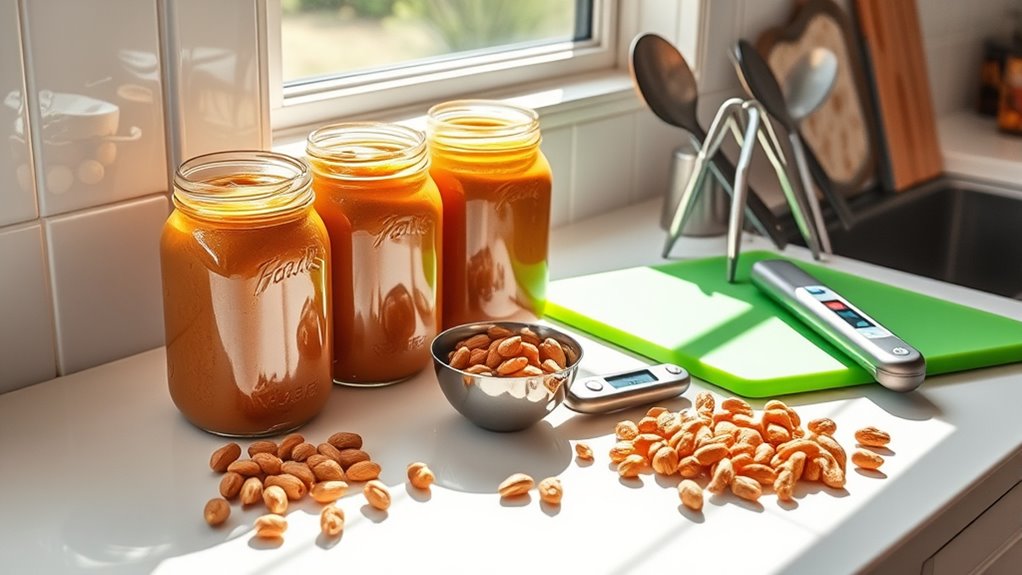
When making homemade peanut butter, start with fresh, high-quality peanuts and make certain they’re clean. Use a sanitized food processor to blend them, adding flavorings slowly. Store your peanut butter in an airtight container in the fridge for up to two weeks, discarding it at the first sign of spoilage. Keep allergens in mind by checking labels and maintaining clean utensils. Following these safety tips will help you enjoy delicious peanut butter without worry, and there’s more to learn!
Key Takeaways
- Use high-quality, fresh peanuts and rinse them to eliminate dust and debris before blending.
- Maintain a clean workspace and ensure all utensils and equipment are sanitized to prevent contamination.
- Store homemade peanut butter in an airtight container, preferably refrigerated, to extend its shelf life.
- Be vigilant for signs of spoilage, such as off smells or mold, and discard if any are present.
- For allergy safety, use alternative nuts or seeds and verify allergen information to prevent cross-reactivity.
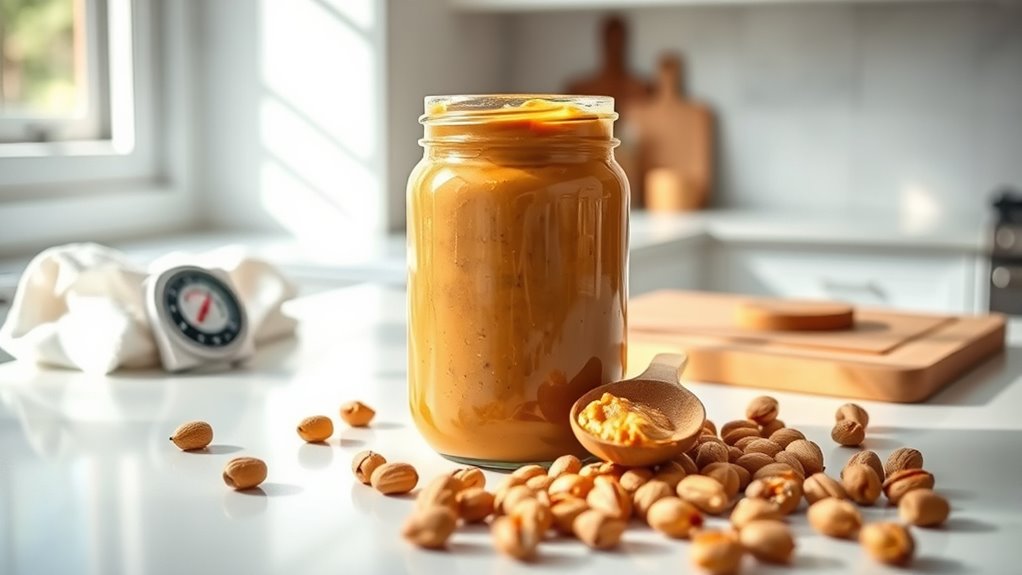
Making homemade peanut butter is easier than you might think, and it’s a delicious way to enjoy a healthy snack. With just a few ingredients and a food processor, you can whip up a creamy or crunchy spread that’s perfect for sandwiches, smoothies, or straight from the spoon. However, you must keep food safety in mind, especially if you or someone in your household has a nut allergy.
Homemade peanut butter is simple to make and a tasty, healthy snack option. Just blend fresh peanuts and enjoy!
When you start making your peanut butter, ensure you’re using fresh, high-quality peanuts. Rinse them under cold water to remove any dust or debris. If you’re concerned about allergies, consider using an alternative nut or seed, like sunflower seeds, to avoid cross-contamination. Always check the labels to ensure that the nuts are processed in a facility free from allergens. This precaution is vital, as even trace amounts can trigger severe reactions in those with nut allergies.
Once you have your peanuts ready, it’s time to blend. Toss them into the food processor and pulse until they reach your desired consistency. You can add a pinch of salt or a drizzle of honey for extra flavor. Just be sure to taste as you go! Homemade peanut butter doesn’t contain preservatives, so its shelf life is shorter than store-bought varieties. Generally, it’ll last about two weeks in the refrigerator, but you might find it disappearing faster than that!
Storing your peanut butter properly is essential for maintaining its freshness. Use an airtight container to keep out moisture and air, which can lead to spoilage. If you notice any off smells or signs of mold, it’s best to toss it out. Remember that homemade peanut butter can separate, so give it a good stir before each use. Additionally, consider incorporating unique beetroot recipes into your baby’s diet for a nutritious twist on healthy eating.
If you’ve made a larger batch, consider freezing some for later. Peanut butter freezes well and can last up to three months in the freezer. Just be sure to portion it out in smaller containers, so you can easily grab what you need without thawing the entire batch.
Frequently Asked Questions
Can I Use Roasted Peanuts Instead of Raw Peanuts for Homemade Peanut Butter?
Yes, you can use roasted peanuts instead of raw peanuts for homemade peanut butter. In fact, roasted peanuts give your peanut butter a deeper flavor and creamier texture. If you prefer a nuttier taste, roasted peanuts are the way to go. Just make sure they’re unsalted if you want to control the saltiness in your spread. So, grab those roasted peanuts and blend them up for a delicious homemade treat!
How Long Does Homemade Peanut Butter Last in the Refrigerator?
Homemade peanut butter typically lasts about two to three weeks in the refrigerator. Think of it like a blooming flower; it needs care and attention. To prevent spoilage, keep an eye out for indicators like an off smell or mold. Just like you wouldn’t ignore a wilting plant, don’t ignore signs that your peanut butter might be going bad. Proper storage guarantees you enjoy that rich flavor for as long as possible!
Is It Safe to Make Peanut Butter With Flavored Oils?
Yes, it’s generally safe to make peanut butter with flavored oils, but you should prioritize food safety. Using high-quality, food-grade flavored oils can enhance the flavor, but be cautious about added ingredients that might spoil. Confirm the oils are fresh and stored properly to prevent cross-contamination. Always taste your creation and check for any off flavors. If anything seems off, it’s best to discard it. Enjoy your delicious, flavored peanut butter!
Can I Add Sweeteners or Salt to My Homemade Peanut Butter?
Yes, you can add sweeteners or salt to your homemade peanut butter. Just make sure the sweeteners you choose are safe for consumption. Popular options like honey or maple syrup work well, but be cautious with sugar alternatives, as some may not be safe for everyone. When it comes to salt addition, a little can enhance flavor without compromising safety. Taste as you go, and enjoy your personalized peanut butter creation!
What Equipment Do I Need to Make Peanut Butter at Home?
To make peanut butter at home, you’ll need a food processor or blender, a spatula for scraping, and a clean, sanitized jar for storage. Think of your kitchen as a castle; your equipment is the armor protecting your creation. Make certain your equipment’s safe to use, and practice kitchen hygiene by washing your hands and surfaces thoroughly. With the right tools and a clean environment, you’re ready to craft your delicious spread!
Conclusion
As you savor your homemade peanut butter, remember it’s more than just a spread; it’s a symbol of care and creativity. Each scoop reflects your dedication to safety and quality, ensuring that every bite is not only delicious but also healthy. By following these food safety tips, you’re not just protecting your creation; you’re nurturing the heart of your kitchen. So, spread the love, and let your homemade peanut butter remind you of the joy in every meal.