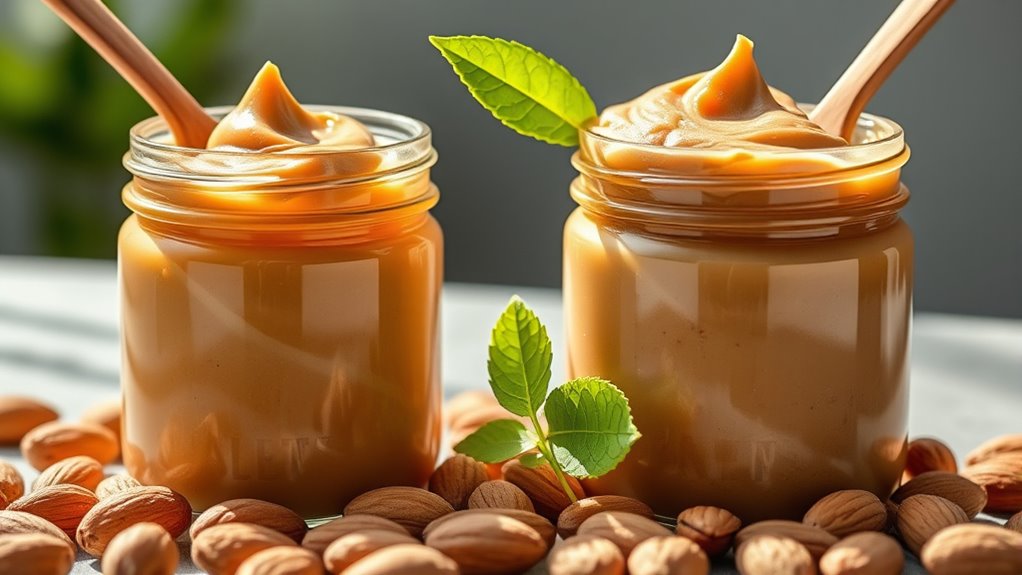

When comparing peanut butter and almond butter, each has unique nutritional benefits. Peanut butter packs more protein, which is great if you’re active and need energy. Almond butter, however, is loaded with vitamins like E and minerals such as magnesium, making it a lighter choice for those watching calories. Both provide healthy fats that keep you full. So, it really depends on your dietary needs and taste preferences. There’s more to discover about their uses and benefits!
Key Takeaways
- Peanut butter is typically higher in protein, making it beneficial for muscle-building and energy needs.
- Almond butter contains more vitamins and minerals, particularly vitamin E and magnesium, supporting overall health.
- Both nut butters provide healthy fats that promote fullness and heart health through omega-3 fatty acids.
- Almond butter generally has a lighter calorie and fat profile, suitable for calorie-conscious diets.
- Check labels for added sugars or oils in both options to ensure a healthier choice.
When it comes to choosing between peanut butter and almond butter, which one truly reigns supreme? Both options have their loyal fans, but they offer distinct flavor profiles and ingredient origins that can influence your choice. If you’re looking for a creamy spread that packs a punch, peanut butter might be your go-to. Its rich, nutty flavor comes from roasted peanuts, making it a beloved staple in many households. You can enjoy it straight from the jar, spread on toast, or in your favorite recipes. Plus, the sweetness and saltiness of traditional peanut butter can be quite addictive.
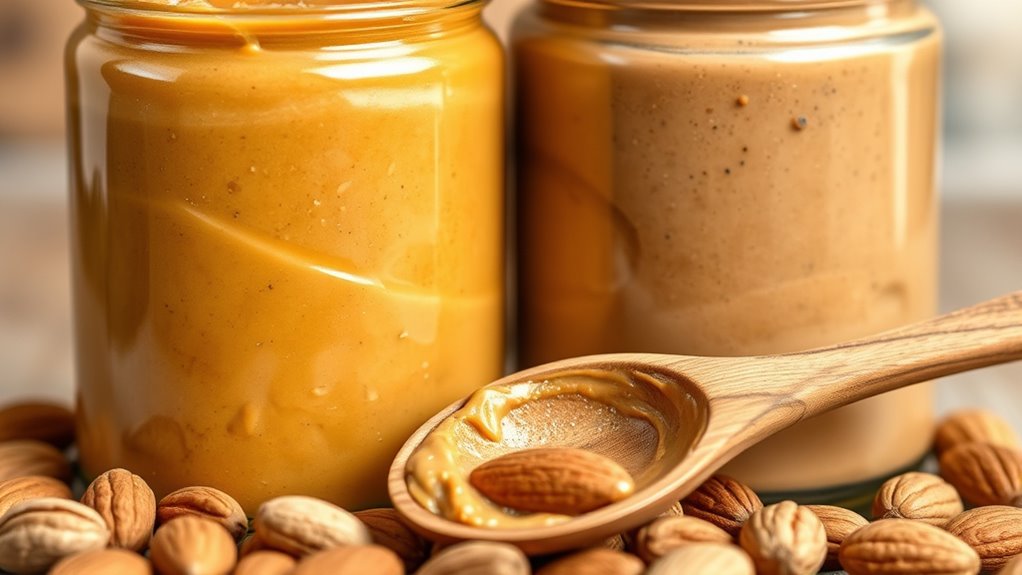
Choosing between peanut butter and almond butter? Each has its unique flavor and appeal, perfect for different tastes and recipes.
On the other hand, almond butter brings a different taste to the table. With a slightly sweeter and more delicate flavor, almond butter offers a unique twist for those who want something different. Made from ground almonds, its ingredient origins are rooted in a nut that’s often celebrated for its health benefits. Almond butter tends to be a bit more versatile in terms of pairings, whether you’re slathering it on fruit, blending it into smoothies, or using it in baking. The subtle taste of almond butter can elevate your dishes without overpowering them.
When considering nutrition, both nut butters have their merits. Peanut butter is usually higher in protein, giving it an edge if you’re focused on muscle-building or maintaining energy levels throughout the day. It’s also rich in healthy fats, which can help keep you feeling full. However, almond butter comes loaded with vitamins and minerals, particularly vitamin E and magnesium, which can support overall health. If you’re counting calories or watching your fat intake, almond butter can often be a lighter choice, though it’s essential to check the labels, as some brands add unnecessary sugars or oils. Additionally, both nut butters can provide important nutrients, like omega-3 fatty acids, which contribute to heart health.
Ultimately, your choice may come down to your personal taste and dietary needs. If you crave a bold, hearty flavor, peanut butter is likely your best bet. But if you prefer a smoother, more subtle spread with added health perks, almond butter could be the better option. Both bring unique flavors and benefits to your diet, so why not embrace the diversity? You can switch it up based on your meal or snack, enjoying the best of both worlds.

SKIPPY Creamy Peanut Butter Spread, No Sugar Added Peanut Butter, 7 g Protein Per Serving, 40 Oz Jar
- Simple Ingredients: Peanuts, palm oil, and salt
- High Protein Content: 7 grams per serving
- Nutritious and Delicious: Made from real roasted peanuts
As an affiliate, we earn on qualifying purchases.
As an affiliate, we earn on qualifying purchases.
Frequently Asked Questions
Can I Substitute Almond Butter for Peanut Butter in Recipes?
Yes, you can substitute almond butter for peanut butter in recipes. Just keep in mind the nutritional differences; almond butter typically has more vitamin E and magnesium, while peanut butter is higher in protein. The flavor profiles also differ; almond butter has a milder, nuttier taste compared to the richer, earthier notes of peanut butter. Adjust your expectations accordingly, and you might find a new favorite twist on your favorite dishes!
Are There Any Allergies Associated With Almond Butter?
Yes, there are allergies associated with almond butter. If you have an almond allergy, consuming almond butter can trigger severe reactions, including hives, swelling, or even anaphylaxis. Additionally, some people might have a nut intolerance, leading to digestive issues when they eat almond products. It is crucial to consult with a healthcare professional if you suspect you have any allergies or intolerances before incorporating almond butter into your diet. Stay safe!
How Should I Store Peanut Butter and Almond Butter?
To store peanut butter and almond butter, keep them in a cool, dry place. If you’ve opened them, it’s best to refrigerate for longer shelf life. Make sure to tightly seal the jar to prevent air exposure. For natural nut butters, stir well before storing, as oil separation is common. Follow these storage tips, and you’ll enjoy your nut butter for weeks without losing flavor or texture!
Is One Type of Butter Better for Weight Loss?
When it comes to weight loss, almond butter might be slightly better for you. It generally has a lower calorie count and higher fiber content, which can help you feel fuller longer. However, the fat content in both is healthy, so moderation is key. Peanut butter’s rich taste can satisfy cravings, but its calorie comparison shows it can be denser. Ultimately, choose what you enjoy most while keeping an eye on portion sizes!
Can Children Eat Almond Butter Safely?
Yes, children can eat almond butter safely, but you should be aware of almond allergy risks. Introduce it gradually, especially if there’s a family history of nut allergies. Most kids digest nut butter well, but watch for any signs of intolerance. If they’ve had other nuts without issues, almond butter can be a nutritious option. Always consult with your pediatrician if you’re unsure or if your child has known allergies.
Conclusion
In the great nut butter showdown, both peanut butter and almond butter have their perks. If you’re looking for a classic, creamy taste, peanut butter’s your go-to. But if you want a trendy, nutrient-packed option, almond butter might be your pick. Just like choosing between vinyl records and digital playlists, it all boils down to your personal preference. Whichever you choose, spread it on toast or mix it into smoothies—both are delicious ways to power up your day!