Butter is a classic water-in-oil emulsion where tiny water droplets mix with fat, creating a creamy texture. For this to work, emulsifiers like milk proteins play a essential role, keeping everything together and preventing separation. As butter cools, fat crystallizes, forming a structure that locks in water and stabilizes the emulsion. Proper temperature control is critical to maintain its quality and flavor. Continue exploring to discover more about what makes butter so unique.
Key Takeaways
- Water-in-oil emulsions, like butter, consist of water and fat, with stability being essential for texture and preventing separation.
- Emulsifiers, particularly proteins in milk, play a crucial role in maintaining the mixture of oil and water in butter.
- Fat crystallization occurs during cooling, forming a network that stabilizes the emulsion by trapping water droplets.
- Temperature fluctuations can disrupt the crystalline structure, negatively affecting butter’s texture and flavor over time.
- Different butter types, such as European-style, benefit from higher fat content, enhancing emulsion stability and overall flavor richness.
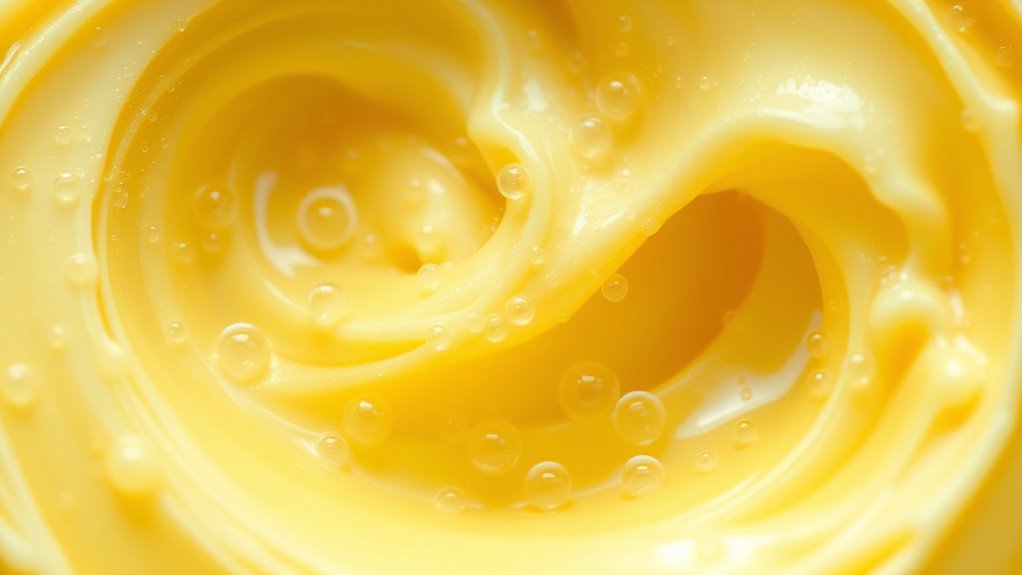
Have you ever wondered how water-in-oil emulsions manage to blend two seemingly opposite substances? These emulsions, like butter, combine water and fat in a way that creates a delicious and stable mixture. The magic lies in the science of emulsion stability and fat crystallization. Understanding these concepts can help you appreciate the intricate process that transforms simple ingredients into a creamy, spreadable delight.
When making butter, you’re effectively creating a water-in-oil emulsion. The process begins with cream, which contains water and fat. By churning the cream, you’re breaking the fat globules apart and allowing them to come together, trapping some of the water inside. This is where emulsion stability becomes pivotal. If the emulsion isn’t stable, the water will separate from the fat, leaving you with a greasy mess rather than the smooth texture you desire.
To achieve emulsion stability, you need to consider the role of emulsifiers, which are substances that help keep the oil and water mixed. In the case of butter, the proteins in milk act as natural emulsifiers, helping to bind the water and fat together. Without these proteins, your butter wouldn’t hold its consistency, and you’d struggle to spread it on your toast.
Another important factor is fat crystallization. As the butter cools, the fat begins to crystallize, forming a solid structure that helps maintain the emulsion. This crystallization process creates a network that locks in the water droplets, preventing them from separating from the fat. If the temperature fluctuates too much during storage or preparation, you risk disrupting this delicate balance, leading to a compromised texture and flavor.
You might also notice that different types of butter have varying levels of emulsion stability. For instance, European-style butters often have a higher fat content, which can enhance the emulsion’s stability and create a richer flavor. The key is to find the right balance between fat and water, along with the emulsifiers, to achieve the perfect buttery spread.

Dazey Butter Churner – Cheese Cloth, Shaping Paddles, Recipe Book INCLUDED- Hand Crank Manual Butter Maker- Create Delicious Homemade Butter With Your Own Hand Crank Dazey Churner
- Create Homemade Butter: Make butter with just heavy cream
- Bonus Cheese Cloth & Anti-Slip Mat: Includes cheese cloth and anti-slip mat
- Butter Paddles & Recipe Book: Includes beech wood paddles and recipes
As an affiliate, we earn on qualifying purchases.
As an affiliate, we earn on qualifying purchases.
Frequently Asked Questions
What Are Common Uses for Water-In-Oil Emulsions Outside of Butter?
You’ll find water-in-oil emulsions in various applications beyond butter. They’re commonly used in dairy alternatives, like creamers and non-dairy spreads, providing a rich texture. In industrial settings, these emulsions function as lubricants, reducing friction and wear in machinery. You might also encounter them in cosmetic products, where they help create smooth, long-lasting textures. Their versatility makes them essential in both food and industrial applications, enhancing performance and user experience.
How Do Emulsifiers Affect the Texture of Water-In-Oil Emulsions?
Emulsifiers play a vital role in modifying the texture of water-in-oil emulsions. By reducing surface tension, they help blend water and oil, creating a smoother and creamier consistency. Different emulsifier types, like lecithin or mono- and diglycerides, can enhance stability, preventing separation and improving mouthfeel. When you choose the right emulsifier, you can achieve the desired texture, whether you want it thick and rich or light and airy.
Can Water-In-Oil Emulsions Be Used in Cosmetics and Skincare?
Absolutely, water-in-oil emulsions are widely used in cosmetic formulations! In fact, around 60% of skincare products feature this type of emulsion. They provide rich textures and long-lasting moisture, making them ideal for creams and lotions. Their unique structure helps to lock in hydration while delivering active ingredients effectively. So, if you’re looking for smooth, luxurious skincare applications, water-in-oil emulsions are definitely worth considering in your beauty routine!
What Are the Health Benefits of Consuming Butter as a Water-In-Oil Emulsion?
Consuming butter as a water-in-oil emulsion offers several health benefits. You’ll enjoy its nutritional benefits, including vitamins A, D, E, and K, which support your overall health. The healthy fats in butter can also promote heart health by improving cholesterol levels when consumed in moderation. Plus, the creamy texture enhances your meals, making it easier to incorporate these nutritious fats into your diet for better health outcomes.
How Does Temperature Influence the Stability of Water-In-Oil Emulsions?
Imagine a delicate dance, where temperature fluctuations lead to chaos in a water-in-oil emulsion. When you heat it, the oil can thin, destabilizing the mixture. Conversely, cooling can thicken it, but if it’s too cold, the water droplets may clump together. To maintain emulsion stability, you need to carefully control the temperature. A steady temperature keeps those tiny droplets suspended, ensuring your emulsion stays smooth and creamy, just like you want it.
Conclusion
In conclusion, mastering water-in-oil emulsions opens up a world of culinary possibilities, especially in creating rich, creamy butter. Imagine whipping up a luxurious garlic herb butter that melts effortlessly over freshly grilled vegetables. By understanding the science behind emulsions, you can elevate your cooking and impress your guests. So, next time you’re in the kitchen, remember that a little science goes a long way in crafting delicious, velvety spreads that enhance any dish.