Compound butter is an easy way to boost the flavor of your dishes. Start by mixing softened butter with fresh herbs, spices, or other ingredients like sun-dried tomatoes and garlic. Roll the mixture into a log and store it in the fridge or freezer for later use. You can slice off portions when needed, melting it over meats or vegetables for a rich taste. Want to explore creative combinations? There’s more to discover about this versatile kitchen staple.
Key Takeaways
- Combine softened butter with fresh herbs and flavorings like garlic or smoked paprika for a rich taste.
- Finely chop all ingredients before mixing to ensure even flavor distribution.
- Store compound butter in log shapes, sealing tightly to maintain freshness in the refrigerator or freezer.
- Use sliced portions to enhance grilled meats, vegetables, or pasta dishes for effortless flavor elevation.
- Experiment with sweet variations incorporating honey or cinnamon for unique spreads suitable for breakfast or desserts.
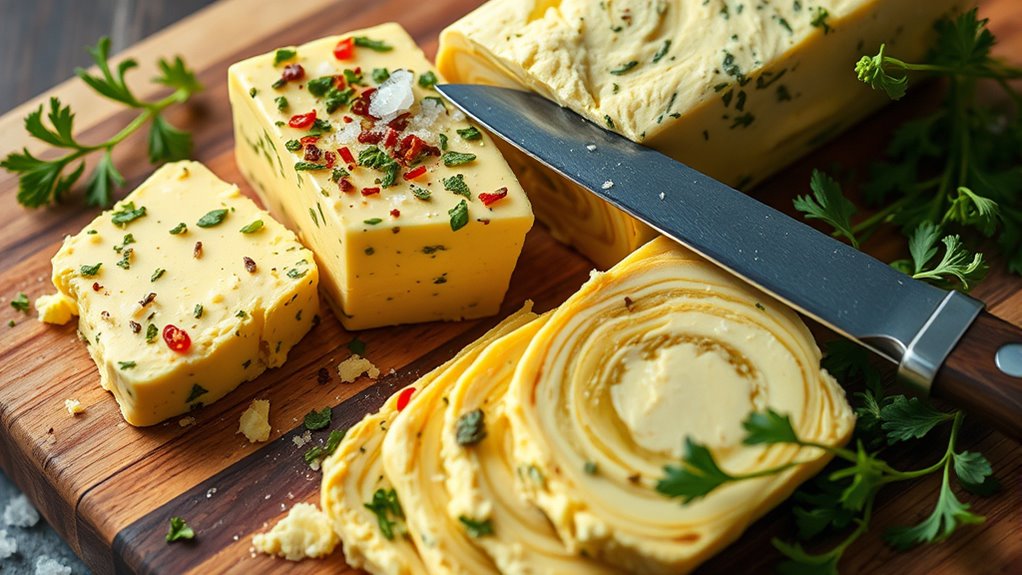
When you want to elevate your cooking effortlessly, compound butter is a game changer. It’s an easy way to add depth and flavor to your dishes without spending hours in the kitchen. By mixing softened butter with various herbs, spices, or other flavorings, you create a versatile ingredient that can enhance everything from grilled meats to roasted vegetables. You might be surprised at how simple it is to whip up your own compound butter, and once you try it, you’ll likely want to experiment with different combinations.
Start by choosing your herb combinations. Fresh herbs like parsley, chives, dill, or basil work wonderfully, but you’re not limited to just those. Think about your favorite flavor profiles. For a Mediterranean twist, mix in some sun-dried tomatoes and oregano. If you’re feeling adventurous, why not try a blend of smoky paprika and garlic? The possibilities are endless, and you can tailor them to suit your taste or the meal you’re preparing. Just chop your chosen herbs finely, mix them into softened butter, and you’re well on your way to creating a delicious compound butter.
Choose your favorite fresh herbs and flavor combinations to create a delicious, customizable compound butter that enhances any dish.
After you’ve made your butter, you’ll want to store it properly. A good storage tip is to roll the butter into a log shape using parchment paper or plastic wrap. Twist the ends to seal it tightly, and then refrigerate it. This method makes it easy to slice off portions whenever you need them. If you’ve made a large batch, consider freezing some. Compound butter freezes well, and you can simply slice off what you need later on. Just remember to label your logs so you know what flavor is inside, especially if you’ve made several different varieties.
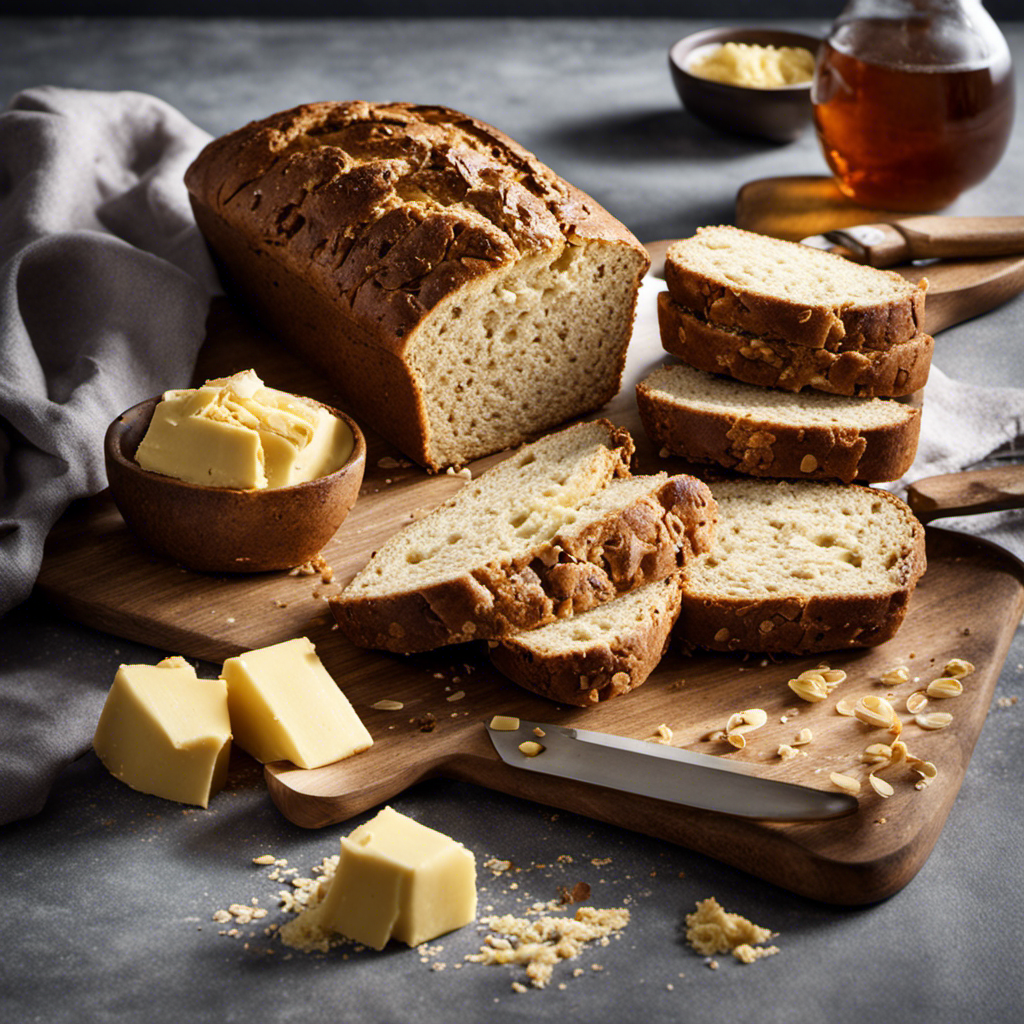
Using compound butter is straightforward. Just take a slice and let it melt over your dish—whether it’s a steak, fish, or even pasta. You’ll notice how the flavors meld beautifully, creating a rich, decadent finish. Don’t limit yourself to just savory dishes, either. You can whip up a sweet version by mixing in ingredients like honey or cinnamon, perfect for spreading on warm bread or pancakes.
With just a little creativity and some simple storage tips, you can transform your everyday meals into gourmet experiences with compound butter. So get started, and enjoy the delightful flavors you’ll bring to your table!

Ptalniy Silicone Butter Molds with Lid & Spatulas – Large Cavity, Non-Stick Homemade Butter Making Mold, Reusable & Easy to Clean, with Tablespoon Marking Lines, Purple
- High-Elasticity Silicone: Durable and seamless construction
- Temperature Resistant: Withstands -40℉ to 446℉
- Complete Set Included: Lid and spatulas for convenience
As an affiliate, we earn on qualifying purchases.
As an affiliate, we earn on qualifying purchases.
Frequently Asked Questions
How Long Can Compound Butter Be Stored in the Fridge?
You can store compound butter in the fridge for up to two weeks. To guarantee it stays fresh, wrap it tightly in plastic wrap or store it in an airtight container. Always check for spoilage signs, like an off smell, discoloration, or mold before using it. If you spot any of these, it’s best to toss it. For longer storage, consider freezing it; it can last up to six months in the freezer.
Can I Freeze Compound Butter for Later Use?
Yes, you can freeze compound butter for later use! To do this, use proper freezing techniques: portion the butter into small amounts and wrap them tightly in plastic wrap or aluminum foil. You can also place it in an airtight container or freezer bag. Label each portion with the date and flavor for easy identification. For best quality, use it within three months, but it can last longer if stored properly.
What Are Some Unique Flavor Combinations for Compound Butter?
You can experiment with unique flavor combinations for compound butter by mixing sweet and savory elements. Try combining honey with rosemary for a delightful twist or blend cinnamon with brown sugar for a sweet treat. For herb and spice options, consider mixing garlic with parsley and lemon zest for a fresh flavor, or combine smoked paprika with thyme for a bold kick. These combinations will elevate your dishes and impress your guests!
Is There a Dairy-Free Alternative for Making Compound Butter?
Yes, you can use vegan margarine or other plant-based alternatives to create a delicious dairy-free version of compound butter. Remarkably, about 3% of the global population follows a vegan diet, highlighting the demand for these options. Just blend your favorite herbs, spices, or other flavorings into the vegan margarine, and you’ll have a tasty spread that fits your dietary needs. Enjoy experimenting with flavors while keeping it plant-based and satisfying!
Can I Use Olive Oil Instead of Butter in Compound Butter?
Yes, you can use olive oil instead of butter in your compound butter recipes. This olive oil substitution not only makes your dish vegan but also adds a rich flavor. Just mix your favorite herbs or spices with the olive oil until you reach the desired taste. Keep in mind that the texture will differ, so use it in ways that complement its liquid form, like drizzling over vegetables or pasta. Enjoy!
Conclusion
In summary, mastering compound butter isn’t just about flavor; it’s about transforming the ordinary into the extraordinary. With a few simple ingredients and a little creativity, you can elevate any dish from mundane to magnificent. So, why settle for bland when you can spread joy with every bite? Embrace the art of flavoring fat, and let your culinary imagination run wild—because the best meals aren’t just eaten; they’re experienced.