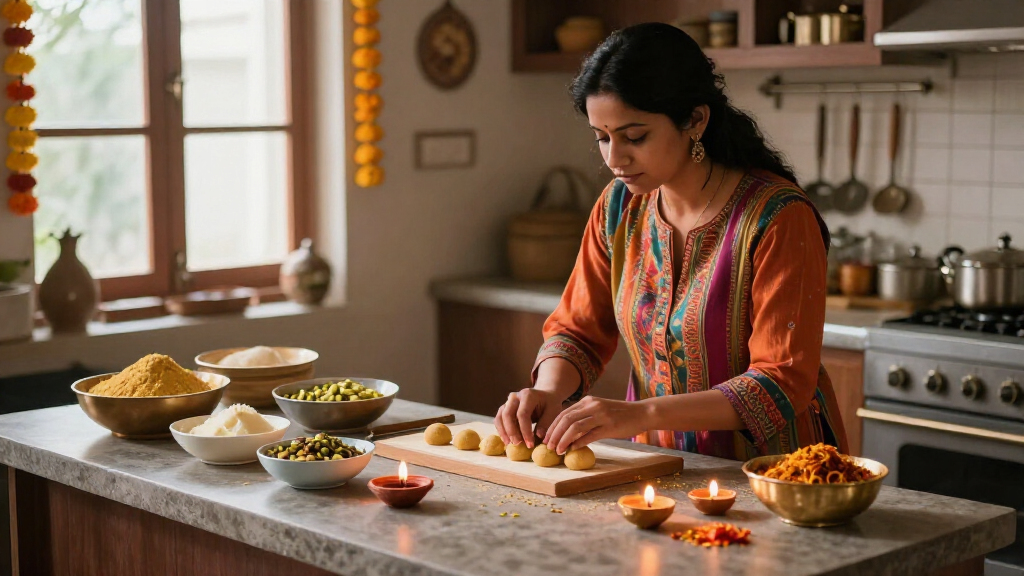
Preparing mithai at home has become a cherished tradition for many households during Diwali, offering a personal touch that store-bought sweets simply cannot replicate. When selecting the right kit, I prioritize ease of use, authenticity of taste, and the clarity of instructions provided. My top recommendation is the Plastic Modak Maker Mold Set for those who want to shape traditional sweets with precision and minimal cleanup. For those seeking convenience without compromising on flavor, Praimsingh’s Ladoo Mix stands out as a reliable choice for quick festive preparation. Meanwhile, Praimsingh’s Barfi Mix offers a unique blend of Trinidadian and Indian influences, perfect for families looking to experiment with cross-cultural flavors.

Get kitchen staples and gadgets delivered free with Prime
- Fast, free delivery on millions of items
- Prime Video, Amazon Music and more included
- Member-only deals all year
The main tradeoff in this category lies between hands-on shaping and pre-mixed convenience. Plastic molds require you to prepare the dough or filling yourself, offering creative control but demanding more effort. In contrast, mix-based kits handle the flavor profile for you, reducing prep time but limiting customization. I will guide you through these distinctions to help you decide which approach aligns with your Diwali celebration goals.
Key Takeaways
- The Plastic Modak Maker Mold Set is ideal for families who enjoy the tactile process of shaping sweets and want durable, reusable tools.
- Praimsingh’s Ladoo Mix offers a hassle-free solution for making traditional Indo-Caribbean ladoo, perfect for last-minute festive preparations.
- Praimsingh’s Barfi Mix provides a unique culinary twist by blending Trinidadian and Indian sweet traditions, suitable for adventurous home cooks.
- Plastic molds require you to source your own ingredients, offering flexibility in taste but requiring more preparation time compared to mixes.
- Mix kits often lack detailed ingredient transparency, so checking for allergens or dietary restrictions is necessary before purchase.
| Plastic Modak Maker Mold Set – Small & Medium (3-Fold), Orange |  | Best Overall for Hands-On Shaping | Brand: Garden Of Arts | Number of Pieces: 2 | Item Dimensions: 2.76 x 2.76 x 0.79 inches | VIEW LATEST PRICE | See Our Full Breakdown |
| Praimsingh’s Ladoo Mix |  | Best Value for Traditional Indo-Caribbean Flavors | Product type: Ladoo mix | Cuisine: Indo-Caribbean | Use: Prepare ladoo sweets at home | VIEW LATEST PRICE | See Our Full Breakdown |
| Praimsingh’s Barfi Mix |  | Best for Experimental Cross-Cultural Sweets | Product type: Barfi mix | Cuisine: Trinidadian and Indian | VIEW LATEST PRICE | See Our Full Breakdown |
| Diwali mithai making kit | Product type | Cuisine |
|---|---|---|
| Plastic Modak Maker Mold Set | — | — |
| Praimsingh’s Ladoo Mix | Ladoo mix | Indo-Caribbean |
| Praimsingh’s Barfi Mix | Barfi mix | Trinidadian and Indian |
More Details on Our Top Picks
Plastic Modak Maker Mold Set – Small & Medium (3-Fold), Orange
This mold set distinguishes itself by offering a reusable, hands-on approach to creating modaks, which are traditionally associated with Ganpati but have found a place in broader Diwali mithai assortments. Unlike the mix-based options, this kit requires you to prepare the dough and filling, giving you complete control over the sweetness level and ingredient quality. The 3-fold design is a standout feature, as it allows for easy release of the modak without breaking the delicate structure, a common issue with cheaper, single-piece molds.
Compared to the Praimsingh’s mixes, this product demands more effort but rewards you with a customizable experience. The food-grade, BPA-free plastic ensures that no harmful chemicals leach into the food, a critical consideration for families serving children. However, it is limited to shaping modaks, whereas the mixes provide ready-to-use flavor bases. This tool is best suited for those who enjoy the therapeutic aspect of cooking and want to teach children the art of sweet-making.
Pros:- Made from high-grade, food-safe plastic
- Dishwasher and hand washable for easy cleaning
- Compact 3-fold design saves storage space
- Includes two sizes for versatile modak shapes
Cons:- Limited to only orange color option
- Only two size options available
- Requires separate preparation of dough and filling
Best for: Home cooks who enjoy shaping sweets manually and want a durable, reusable tool for multiple festivals.
Not ideal for: Those looking for a quick, one-step solution or who do not want to prepare dough from scratch.
- Brand:Garden Of Arts
- Number of Pieces:2
- Item Dimensions:2.76 x 2.76 x 0.79 inches
- Item Weight:0.06 kg
- Material:Plastic (BPA Free)
- Color:Orange
- Capacity:108 ml
Our verdict“This mold set is the most versatile tool for those who value customization and durability over convenience.”
Praimsingh’s Ladoo Mix
This mix targets a specific niche: families with Indo-Caribbean heritage who want to recreate authentic ladoo flavors without sourcing obscure spices. It stands in contrast to the modak mold, which is a tool rather than a food product, by providing the core flavor profile directly. The primary advantage here is speed; you can have a batch of ladoos ready in a fraction of the time it takes to mix, cook, and shape dough from scratch. This makes it an excellent backup option for busy Diwali schedules.
However, the lack of detailed ingredient transparency is a significant drawback compared to the clear material specs of the plastic mold. You must rely on the package instructions, which may not always be as detailed as dedicated recipe books. While the mold offers longevity, this mix is a consumable, meaning you need to repurchase it for every celebration. It is best suited for those who prioritize taste consistency and time-saving over the creative process of cooking.
Pros:- Makes traditional ladoo at home
- Suitable for festive occasions
- Easy to use
Cons:- No package size or ingredient details provided
- Single-use consumable product
- Limited to ladoo preparation
Best for: Busy households wanting to prepare traditional Indo-Caribbean ladoo quickly for festive gatherings.
Not ideal for: Individuals with strict dietary restrictions who require full ingredient lists or those who prefer making sweets from basic pantry staples.
- Product type:Ladoo mix
- Cuisine:Indo-Caribbean
- Use:Prepare ladoo sweets at home
Our verdict“A convenient choice for specific cultural tastes, though it lacks the transparency and reusability of other options.”
Praimsingh’s Barfi Mix
Praimsingh’s Barfi Mix offers a unique proposition by blending Trinidadian and Indian culinary traditions. This kit is distinct from the Ladoo Mix in its end product; barfi requires setting and cutting, offering a different texture and presentation style. For hosts who want to diversify their Diwali platter with something less common than standard gulab jamun or ladoo, this mix provides a reliable foundation. It simplifies the often tricky process of achieving the right sugar consistency for barfi.
Compared to the modak mold, this option is far less interactive but yields a more uniform result. The primary concern, similar to the Ladoo Mix, is the absence of specified preparation times and dietary information. This creates uncertainty for first-time users who need to estimate cooking durations. It makes the most sense for those who have already tried the Ladoo Mix and are interested in expanding their repertoire with a different type of Indian sweet that has a global twist.
Pros:- Designed for making traditional barfi at home
- Easy-to-follow preparation instructions
- Suitable for festivals and family gatherings
Cons:- Preparation time is not specified
- Ingredients and dietary information are not provided
- Limited to barfi preparation
Best for: Cooks interested in making barfi with a unique Trinidadian-Indian flavor profile for diverse guest lists.
Not ideal for: Those who need precise timing instructions or who are uncomfortable with opaque ingredient sourcing.
- Product type:Barfi mix
- Cuisine:Trinidadian and Indian
Our verdict“An interesting option for flavor experimentation, though it requires some guesswork regarding timing and ingredients.”
How We Picked
When evaluating these Diwali mithai making kits, I focused on three primary criteria: ease of preparation, versatility of use, and material quality. For the molding tools, I looked for food-grade safety and durability, ensuring the items can withstand repeated use during multiple festivals. The mix-based products were assessed based on their cultural authenticity and the clarity of their intended use cases, particularly for families with diverse culinary backgrounds.
I also considered the storage and cleanup implications of each option. Reusable molds offer long-term value but require careful washing, while disposable mixes eliminate cleanup but generate packaging waste. My selection process aimed to balance these factors to present options that cater to different levels of culinary engagement, from those who want to craft every detail to those who prefer a streamlined approach.
| Diwali mithai making kit | Product type | Cuisine |
|---|---|---|
| Plastic Modak Maker Mold Set | — | — |
| Praimsingh’s Ladoo Mix | Ladoo mix | Indo-Caribbean |
| Praimsingh’s Barfi Mix | Barfi mix | Trinidadian and Indian |
Factors to Consider When Choosing Diwali Mithai Making Kits
Choosing between a shaping tool and a food mix fundamentally changes your Diwali preparation experience. I break down the key factors to consider before making a purchase.Tool vs. Mix: The Core Decision
The first decision is whether you want to shape sweets yourself or cook from a base mix. The Plastic Modak Maker is a tool; it does not provide food. You must buy flour, sugar, ghee, and fillings. This allows for total control over sweetness and ingredients, which is beneficial if you have allergies or prefer organic components. In contrast, Praimsingh’s Ladoo and Barfi Mixes are consumables. They provide the flavor base, drastically reducing shopping time and complexity. If your primary goal is to save time, the mixes are superior. If your goal is to engage in the craft of mithai-making, the mold is the only viable option among these three.
Cultural Specificity and Flavor Profiles
Not all mithai kits are created equal in terms of cultural alignment. The modak mold is traditionally linked to Ganpati but is widely used for various rice-flour-based sweets during Diwali. It is versatile in that you can use any filling. The Praimsingh’s mixes, however, are specific to Indo-Caribbean and Trinidadian traditions. If your family has roots in these regions, these mixes will taste more authentic to your heritage than generic supermarket mixes. For a standard North Indian Diwali platter, you might find the flavor profiles of these mixes distinct, so consider your guests’ palates before committing to a specific cuisine.
Transparency and Dietary Considerations
A significant differentiator between these products is ingredient transparency. The modak mold lists its material clearly as BPA-free plastic, giving you peace of mind about safety. The Praimsingh’s mixes, unfortunately, do not provide detailed ingredient lists or dietary information in the provided descriptions. This is a critical gap for anyone managing diabetes, nut allergies, or vegan diets. If dietary restrictions are a concern, I recommend contacting the manufacturer directly or choosing a mold where you control every ingredient. Without this clarity, the mixes carry a higher risk of accidental non-compliance with dietary needs.
Frequently Asked Questions
Can I use the Plastic Modak Maker for other Diwali sweets?
While the Plastic Modak Maker is specifically designed for the intricate shape of modaks, its utility is limited to doughs that can be pressed and released cleanly. It is not suitable for liquid-based sweets like rasgulla or hard candies. However, you can experiment with other firm doughs, such as those used for certain types of coconut-based sweets or dry fruit bars, provided they have the right consistency. The 3-fold design helps with release, but complex shapes may still stick if the dough is too moist. It is best to stick to modaks or similar pressed sweets for the best results.Are the Praimsingh’s mixes suitable for people with nut allergies?
The product descriptions for both the Ladoo and Barfi mixes do not explicitly list ingredients or allergen warnings. This lack of transparency means that you cannot assume they are safe for individuals with nut allergies. Many traditional Indian sweets use cashews, almonds, or pistachios as garnishes or base ingredients. If you are preparing food for guests with allergies, I strongly advise against using these mixes unless you can obtain a full ingredient list from the manufacturer. Opting for a mold where you source your own ingredients is a safer alternative for allergy-sensitive households.How do I clean the Plastic Modak Maker after use?
The Plastic Modak Maker is designed for easy maintenance, being both hand washable and dishwasher safe. For hand washing, soak the molds in warm, soapy water immediately after use to prevent the dough from hardening in the crevices. Use a soft brush or sponge to gently remove any residue from the 3-fold sections. If using a dishwasher, place the molds on the top rack to avoid direct heat exposure, which could warp the plastic over time. Ensuring they are completely dry before storing prevents mold growth and maintains the hygiene of the food-grade material.What is the difference between the Ladoo Mix and the Barfi Mix?
The primary difference lies in the final texture and preparation method. The Ladoo Mix is designed to create round, dense balls of sweet dough, typically involving rolling or pressing. The Barfi Mix, on the other hand, is intended to produce a fudge-like square or diamond cut sweet that sets in a tray before being sliced. Barfi generally requires a setting time and precise temperature control for sugar syrup, whereas ladoo is often a no-cook or low-cook preparation. Choosing between them depends on whether you prefer the ease of rolling (ladoo) or the presentation of cut squares (barfi).Do I need special ingredients for the modak molds?
You do not need special ingredients for the modak molds, but you do need a dough that is pliable and non-sticky. Traditionally, modaks are made from rice flour or a mixture of wheat flour and rice flour, often steamed or fried. You will need to prepare this dough separately, along with fillings such as jaggery, coconut, or dry fruits. Unlike the mixes, the mold does not provide the food, so you must source all components from your pantry. This allows for customization, such as using gluten-free flours or alternative sweeteners, which is not possible with the pre-mixed products.Conclusion
Selecting the right Diwali mithai making kit depends entirely on your available time and culinary goals. If you are looking for a reusable tool that allows for creative control and dietary customization, the Plastic Modak Maker Mold Set is my top pick. It is ideal for families who want to involve children in the cooking process and value long-term utility. For those prioritizing speed and cultural authenticity, particularly within the Indo-Caribbean community, Praimsingh’s Ladoo Mix offers a convenient solution for traditional flavors. Finally, if you are eager to experiment with cross-cultural sweets and have the time to manage setting processes, the Praimsingh’s Barfi Mix provides a unique twist on classic Indian confectionery. I recommend assessing your kitchen’s workflow and dietary needs before choosing between a hands-on tool and a convenient mix.