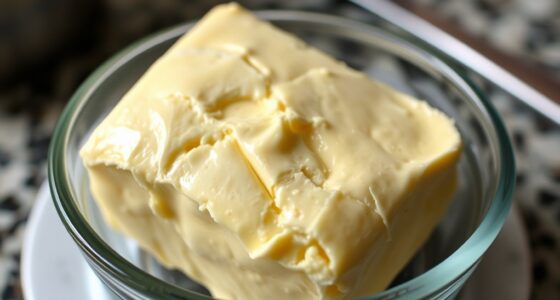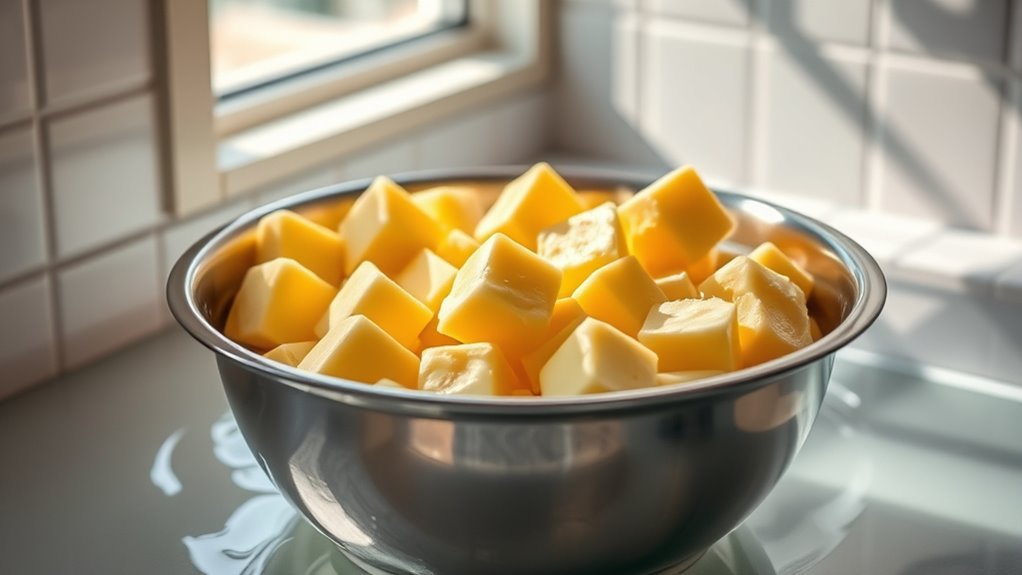

To thaw butter quickly, safely, and evenly, cut it into smaller pieces to speed up the process. Use a microwave on the defrost setting, checking every 10 seconds to prevent melting. Alternatively, leave it on the countertop for 30 minutes to an hour, cutting it into cubes for faster softening. Grating frozen butter can also expose more surface area for rapid thawing, ensuring you get the perfect texture for your baked goods. Discover more techniques to optimize your results!
Key Takeaways
- Cut butter into smaller pieces or cubes to increase surface area and speed up the thawing process.
- Use the microwave’s defrost setting, checking every 10 seconds to prevent melting.
- Allow butter to thaw on the countertop for 30 minutes to 1 hour, monitoring to maintain soft texture.
- Grate frozen butter for rapid softening, exposing more surface area for quicker thawing.
- Combine methods, such as grating and countertop thawing, to efficiently achieve the ideal butter consistency.
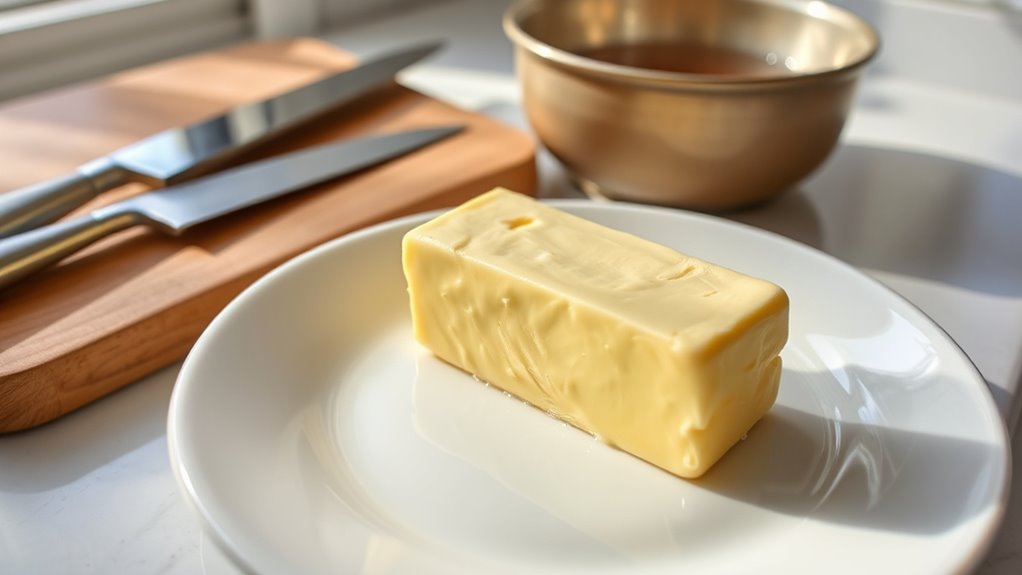
Have you ever found yourself in the middle of a recipe only to realize your butter is still frozen? It’s a frustrating moment, especially when you’re craving that perfect texture for your cookies or cake. Luckily, there are quick and effective ways to thaw butter so you can get back to baking without a hitch. You can choose between microwave methods and countertop techniques, depending on how much time you have and how you prefer to work.
If you’re in a hurry, microwave methods are your best bet. Simply cut the butter into smaller pieces; this helps it thaw more evenly. Place those pieces on a microwave-safe plate. Use your microwave’s defrost setting, checking every 10 seconds to ensure you don’t accidentally melt the butter. You want it soft, not liquid, so be patient. If you find that your butter’s edges are starting to melt while the center remains frozen, you can rotate the pieces for even thawing. This method can take only a minute or two, making it ideal for last-minute baking sessions.
On the other hand, if you’re not in a rush, countertop techniques could work wonders. Simply take your butter out of the refrigerator and leave it on the counter for about 30 minutes to an hour. If you’re looking to speed things up a bit, cut the butter into smaller cubes or thin slices. The increased surface area allows for quicker thawing. Just keep an eye on it to avoid any melting. This method not only preserves the butter’s integrity but also guarantees that it reaches that perfect softened state, which is so important for certain recipes.
Another trick you might consider is grating frozen butter with a box grater. This method is particularly useful for recipes that require a flaky texture, like pie crusts. The grated butter will soften quickly as it’s exposed to the warmth of the other ingredients, blending seamlessly without the need for thawing.
Frequently Asked Questions
Can I Refreeze Butter After Thawing It?
Yes, you can refreeze butter after thawing it, but there are some things to keep in mind. If you’ve thawed it in the fridge, it’s safe to refreeze. However, if it’s been left at room temperature for more than two hours, it’s best to toss it. Proper butter storage is essential, so always use airtight containers or wrap it tightly to maintain quality when using freezing methods.
How Long Can Thawed Butter Be Stored?
Thawed butter’s like a fleeting summer sunset—beautiful but temporary! You can safely store it in the fridge for about one to two weeks. Just make sure you wrap it tightly to keep it fresh. Follow those refrigeration guidelines, and your butter will stay delicious for that short time. If you don’t use it, consider freezing it again, but remember, that’ll change its texture! Enjoy every decadent bite while it lasts!
Does Thawing Affect Butter’s Flavor?
Thawing doesn’t substantially affect butter’s flavor, so you shouldn’t worry too much. The thawing impact mostly relates to texture rather than taste. However, if butter’s been frozen for a long time, it might develop off-flavors due to freezer burn. To keep your butter tasting fresh, always store it properly before freezing. Enjoy your butter in recipes without stressing about its flavor after thawing! You’ll still get that delicious richness you love.
Can I Thaw Flavored Butter the Same Way?
Absolutely, you can thaw flavored butter the same way! Just think of it as unwrapping a gift of flavor, ready to elevate your dishes. When you store flavored butter, the key is to maintain that delightful taste, so be gentle during thawing. Use methods that preserve its luscious essence, like a warm water bath. This way, you’ll ensure the flavors remain vibrant, making every bite a burst of deliciousness!
Is There a Specific Temperature for Thawing Butter?
There isn’t a specific temperature for thawing butter, but aiming for around room temperature is ideal. You’ll want to avoid high heat, as it can cause the butter to melt unevenly. Instead, let it sit out for about 30 minutes or use a gentle method, like grating or cutting it into smaller pieces. This way, you can guarantee it thaws properly without compromising its texture or flavor.
Conclusion
In conclusion, thawing butter doesn’t have to be a hassle. Whether you choose the microwave method or the warm water bath, you can bring your butter to a spreadable state quickly and safely. Just like a snowflake melting in the sun, your butter will transform into a creamy delight ready for your favorite recipes. Remember, the key is to keep an eye on it to ensure it thaws evenly. Happy baking!

Diana’s meticulous nature and editorial prowess set the gold standard for our content. With over a decade in the culinary and publishing industries, her guidance ensures that every article perfectly blends information and entertainment. A culinary experimenter, Diana loves whipping up new butter-based concoctions in her kitchen.